
Lieferung heute & morgen

Qualitätsgarantie

Willkommens-Angebote freischalten: KOSTENLOSE Lieferung | Bis zu 80 % RABATT | Kostenlose 30-Tage-JoyPlus-Testphase
App herunterladen
There’s a wide range of educational toys for toddlers to choose from. Building blocks, sorting games, role-play sets, toys that develop motor skills and Montessori toys all promise to encourage creativity and development. But not every product is right for a child’s age, your home or the way they actually like to play. Parents and grandparents should look closely at the product details rather than relying on colourful pictures or general marketing claims.
‘From 1 year’ and ‘from 2 years’ are not interchangeable. A construction toy for children from 1 year should have particularly large, easy-to-grip pieces. Toys for children from 2 years can involve more complex tasks, such as simple sorting, building from a template or role play.
It’s also important to read the safety information. If a set contains smaller accessories, adult supervision may be advisable or specifically recommended, even if the age recommendation is low.
A high piece count doesn’t automatically mean more variety. What matters is whether the pieces can be combined, sorted, stacked or used in different scenarios. A smaller set with a variety of shapes and functions may be more practical for everyday play than a large box containing mostly similar pieces.
For wooden toys for toddlers, smooth, rounded surfaces and clear information about the materials used are important. With plastic building blocks, look for sturdy connections, easy-to-grip shapes and simple cleaning. A storage box can also help prevent pieces from going missing and the toy becoming incomplete soon after purchase.
Check the manufacturer’s specific age recommendation and the size of the pieces. Large, easy-to-grip pieces are a good introduction to building and sorting. Simple actions such as stacking, fitting pieces into place and taking them out are suitable for younger children. Older toddlers can also explore colours, shapes and numbers, or make up little role-play stories.
Check what the toy is made from and how it can be cleaned. Wooden products should have no visible splinters or sharp edges. Plastic parts can often be wiped with a soft, slightly damp cloth; always follow the manufacturer’s specific care instructions. Damaged or loose parts should no longer be used.
Terms such as ‘educational toy’ or ‘Montessori toy’ don’t automatically indicate a particular level of quality. Instead, consider what the toy actually lets your child do. Can they match shapes, recognise colours, connect building blocks, coordinate movements or make up their own stories? This makes it easier to decide whether the product is right for your needs, for example, to develop fine motor skills through everyday play.
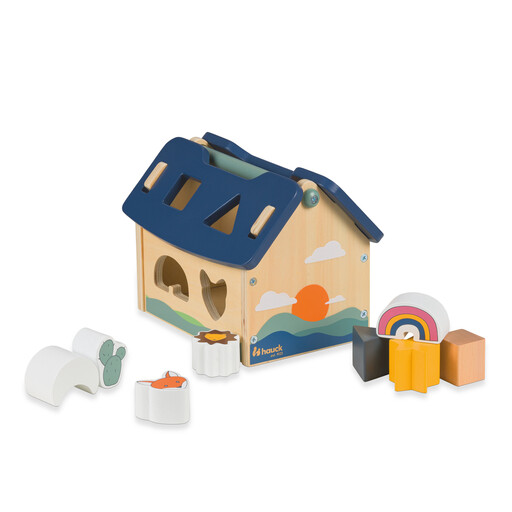
Why this product suits this shopper: Designed for children from 12 months, this shape-sorting house combines shape matching, colour recognition and storage in one compact wooden toy.
The eight pieces come in different shapes and can be stored inside the house. So the focus is not just on the number of pieces, but on a clear, engaging way to play.
According to the product information, the toy is made from FSC-certified wood and has a removable roof and a carry handle.
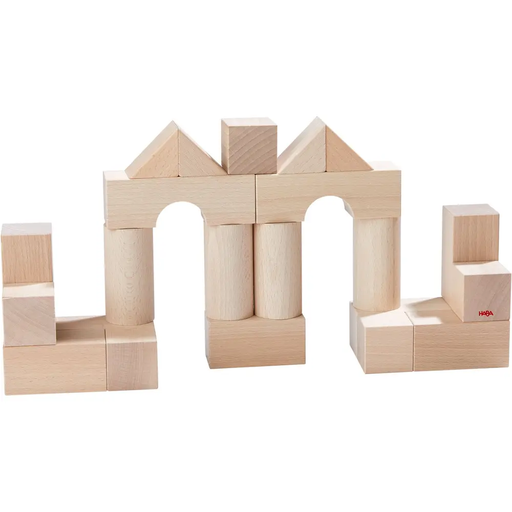
Why this product suits this shopper: The mix of cubes, cuboids, triangles, bridges and columns offers open-ended play, with no set building instructions to follow.
Rather than being limited to building one finished model, this set allows children to create different constructions. That can keep it in play for longer as they come up with their own building ideas.
According to the product information, the set contains 26 beechwood pieces and is designed for children from 12 months.
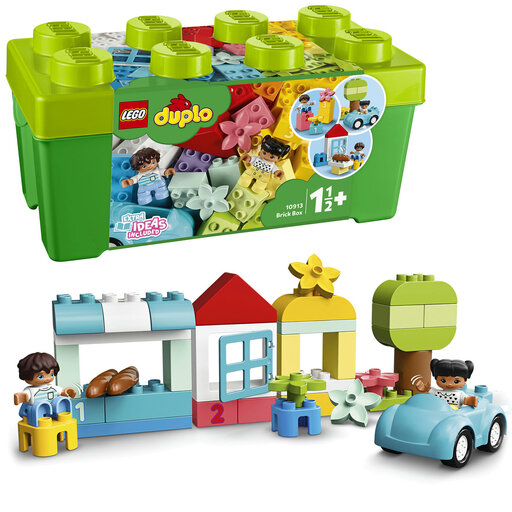
Why this product suits this shopper: This box is ideal for families looking to combine building blocks for toddlers with numbers, figures, vehicle parts and built-in storage.
The 65 pieces include a variety of elements, and they can all be packed away in the sturdy box after play. That makes everyday use easier.
According to the product information, the box contains 65 pieces, two figures, number bricks from 1 to 3 and a vehicle with rolling wheels.
We’ve put together a complete, regularly updated list of products that meet these strict selection criteria and fully comply with the safety regulations in force across the EU.
Large, easy-to-grip pieces for stacking, sorting and fitting together are suitable for children from 1 year. Examples include simple wooden building blocks, a shape sorter or age-appropriate toys that develop motor skills. Avoid small accessories unless they are specifically designed for this age group.
How long a toy stays interesting depends less on the number of pieces and more on the ways to play with it. Open-ended building blocks, sorting games with different levels of difficulty and sets that can be combined may hold a child’s interest for longer. Playing together with parents or siblings can also introduce new ways to use them.
There’s no single price that makes sense for every toy. Instead, compare the materials, number of pieces, storage, age suitability and versatility. A simple sorting game may be enough for what you need. A larger LEGO DUPLO educational toy could be a good choice if several children will use it to build and invent role-play scenarios.