
Lieferung heute & morgen

Qualitätsgarantie

Willkommens-Angebote freischalten: KOSTENLOSE Lieferung | Bis zu 80 % RABATT | Kostenlose 30-Tage-JoyPlus-Testphase
App herunterladen
Educational toys for toddlers should offer more than a short-lived distraction. Parents, grandparents and childcare professionals often look for products that are age-appropriate, fit easily into everyday life and offer a variety of ways to play. At the same time, the sheer number of similar products can make it difficult to choose.
Three common misconceptions often lead to poor decisions:
What matters, then, isn’t the number of features, but how well a toy suits a child’s stage of development, home environment and intended use.
For learning toys for children aged 1+, large pieces that are easy to grip are best. Small components, magnets, detachable accessories and objects that could be swallowed can pose a problem for this age group. Products labelled for ages 3+ shouldn’t be used earlier.
Look for:
The CE marking indicates that the supplier declares the product complies with applicable EU requirements. However, it isn’t an independent quality mark. For toys, it’s also worth checking whether standards such as EN 71 are mentioned. Always consider this information alongside the age recommendation and instructions for use.
Smooth, easy-care surfaces are practical for baby activity toys and baby motor skills toys. Plastic parts should have no visible rough edges. For foam modules, dimensions, covers and cleaning options are especially important.
Before buying, check:
A large motor skills module may be useful in a childcare setting, but difficult to store permanently in a small flat. For use on the go, compact cubes or sets with a storage bag are often more practical than extensive building systems.
Montessori toys is often used as a catch-all term. It’s more helpful to look at what the child actually does when playing: gripping, sorting, slotting, building, balancing, pretend cutting or making music. This makes it easier to judge whether a product is right for the skills you’d like to encourage.
The phrase ‘to support development’ describes a possible play opportunity, not a guaranteed developmental outcome. Children should be able to set their own pace.

Why it suits this profile: This compact cube combines several gripping, twisting and pressing activities in one space, and can be carried by its handle. It’s handy for smaller homes or when play moves from one room to another.
The recommended age of 1–3 years and product dimensions of 23 × 23 × 24 cm make the intended use clearer than a vague claim that it’s ‘for all ages’.
Eight described ways to play, ABS plastic, rounded edges and no batteries listed as included.
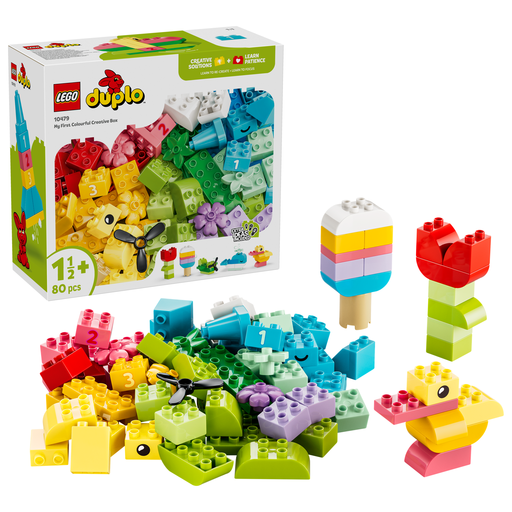
Why it suits this profile: According to the product details, this set is designed for children aged 18 months and over and contains 80 building blocks. It offers scope for free building as well as ideas for first models.
The number of pieces, recommended minimum age and model instructions are all specified. This makes it easier to assess what’s included before you buy.
Large blocks for toddlers, 80 pieces and opportunities for free building, along with simple number activities.
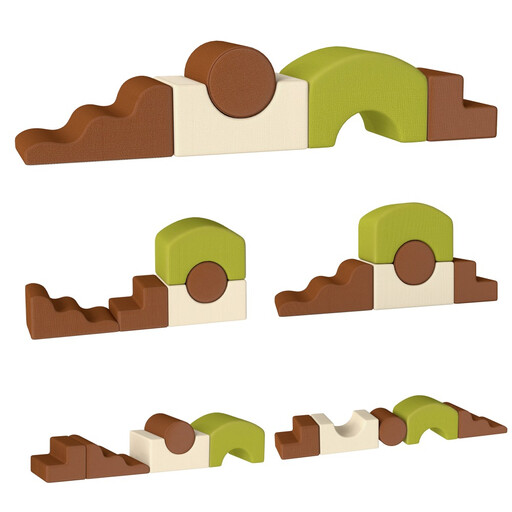
Why it suits this profile: Five soft EVA foam modules are suitable for movement activities at home or in a childcare setting. You can arrange them to suit the space and activity.
The soft design avoids the firmness typical of rigid climbing equipment. Check the surface underneath, seams and condition of the foam before use.
A five-piece EVA foam set designed for psychomotor activities in home or learning environments.
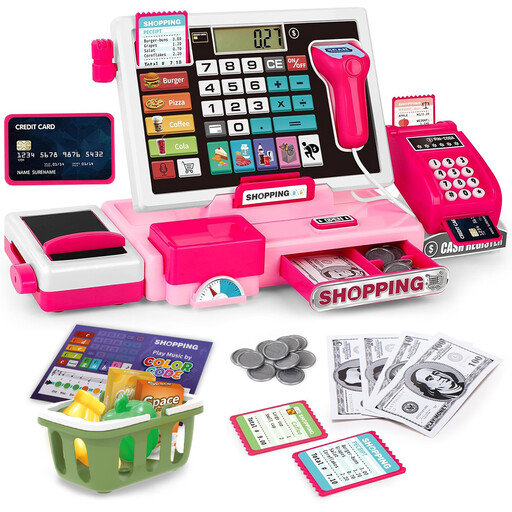
Why it suits this profile: This cash register set is designed for role play from age 3 and combines shopping scenarios with play money, a scanner, a basket and a credit card.
The age limit, warning about small parts and need for adult supervision are all clearly stated. Batteries aren’t included, so remember to buy them separately.
Calculator function, piano key mode, LED light and accessories for playing together.
Slot-in, sorting and building toys are great for fine motor skills. Magnetic building blocks should only be used from the stated minimum age because they contain small, powerful magnets, and should be checked regularly for damage.
A musical toy for toddlers should have adjustable volume. The drum set in the range is listed as having four illuminated drum pads, two cymbals and a microphone; batteries aren’t included. If you’re buying for a quieter room, it’s especially worth considering the volume both before you buy and during everyday use.
A gift for a toddler doesn’t have to be as big as possible. A manageable set with a clear age recommendation, good storage and plenty of open-ended ways to play is often a better choice than a bundle of accessories that are easily lost.
We’ve put together a complete, regularly updated list of products that meet these strict selection criteria and fully comply with the safety regulations in force in the EU.
Choose products with large, sturdy parts and simple activities such as gripping, sorting, twisting or slotting. Always check the specific age recommendation, and avoid sets with small parts or magnets if they aren’t designed for this age group.
Lifespan depends on the material, how heavily the toy is used, cleaning and storage. Check plastic parts for cracks and sharp edges. For foam modules, inspect the seams, covers and any signs of deformation. There’s no single lifespan that applies to every product.
Battery-powered learning toys may incur the cost of replacement batteries. Check whether batteries are included and what type is needed. Building, sorting and role-play sets without electronics generally have no ongoing energy costs, although lost or damaged parts may need to be replaced.