
Lieferung heute & morgen

Qualitätsgarantie

Willkommens-Angebote freischalten: KOSTENLOSE Lieferung | Bis zu 80 % RABATT | Kostenlose 30-Tage-JoyPlus-Testphase
App herunterladen
Educational wooden toys for babies and toddlers can support grasping, matching, coordination and independent play. However, it is not simply the wooden material or the term “educational” that matters. The recommended age, size of the pieces, workmanship and intended setting all determine whether a toy is genuinely suitable for everyday family life.
Wood is a material, but it is not a complete quality indicator. Check whether the edges are rounded, whether surfaces could splinter, and whether paints or finishes are clearly specified. For FSC-certified wooden toys, the FSC mark refers to the origin of the wood. It does not replace checking the age guidance, small parts or the specific workmanship.
A toy advertised for babies and children up to six years old is not automatically suitable for every stage of development. A shape puzzle for babies with large knobs may be suitable from 12 months, while a magnetic maze with small balls may only be intended for children aged 3 and over. Pay attention to the manufacturer’s binding age guidance rather than relying only on general terms such as Montessori toys or educational toys for toddlers.
A complex activity board or large climbing feature requires space, supervision and often regular checks. For a small flat, a wooden puzzle from 1 year may be more practical than a substantial climbing frame. What matters is whether the toy suits the available space, the child’s attention span and your family’s everyday routine.
Small parts are particularly critical for children under 3 years old. The toy must only be used in accordance with the stated age range. Instructions such as “use under the direct supervision of an adult” must be incorporated into everyday use. Before every use, check whether any parts are loose, broken or damaged.
For a wooden toy from 12 months, handles should be easy to grip. Peg and inset puzzles with a few clearly recognisable shapes are generally easier for beginners to understand than products with lots of loose pieces. Babies under 12 months should only use products expressly intended for this age group, such as a wooden baby play gym.
The product dimensions determine how practical it is to use:
For larger products, you should also check the assembly instructions, maximum load and the need to inspect screws and connections regularly.
Look for information about the type of wood, finish, certification and cleaning. Smooth, rounded surfaces are easier to care for in everyday use. Wooden toys should not be left standing in water for extended periods; for many products, a soft, slightly damp cloth is sufficient. The manufacturer’s instructions take priority.
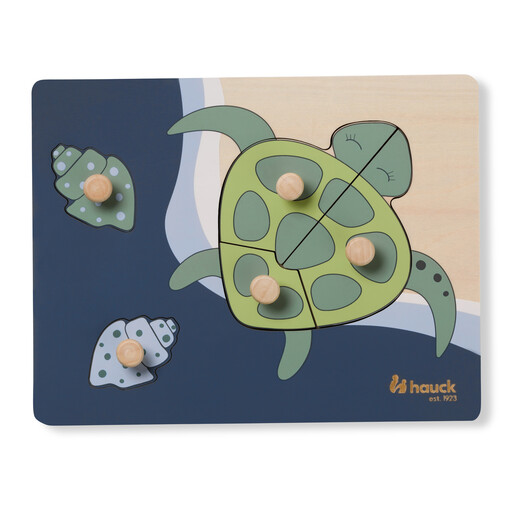
Why this product suits this profile: Measuring 22 × 17 cm, this compact inset puzzle is ideal for beginners and needs very little storage space. Wooden knobs make it easier to grip.
The age guidance from 12 months and the manageable number of puzzle shapes clearly define how it should be used. The product description states that it has rounded edges.
FSC-certified wood, wooden knobs and a compact design. The animal shape combines matching with naming and memory skills.
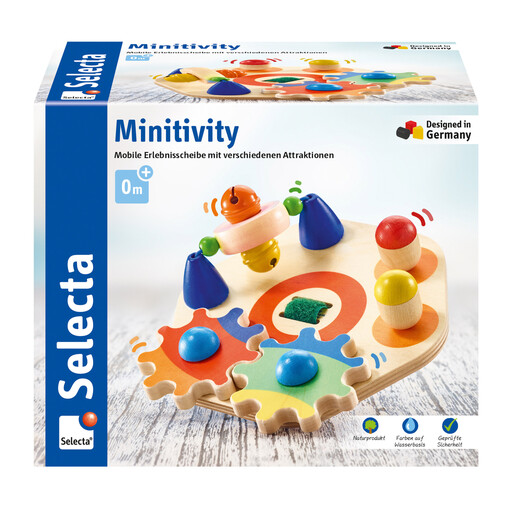
Why this product suits this profile: With three different play stations, it appeals to families looking for a versatile, compact wooden activity toy for everyday use.
The product description specifies natural wood, a size of 14 cm and hook-and-loop fasteners for attachment. This makes it easier to assess where it can be used before buying.
Rotating gears, moving elements and bell spinners in one product. According to the supplier, it is made in Germany and tested for harmful substances.
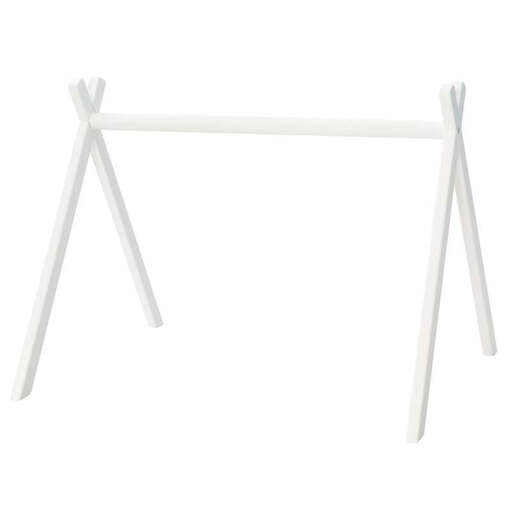
Why this product suits this profile: The play arch is intended for babies from 3 months and provides a fixed play station for grasping, touching and observing on a level surface.
The dimensions of 52 × 70 × 50.5 cm and the recommendation to use it on a level surface make the space required clear. Accessory sets are available separately.
Painted wood with wipe-clean surfaces, simple assembly and optional expansion with play sets available separately.
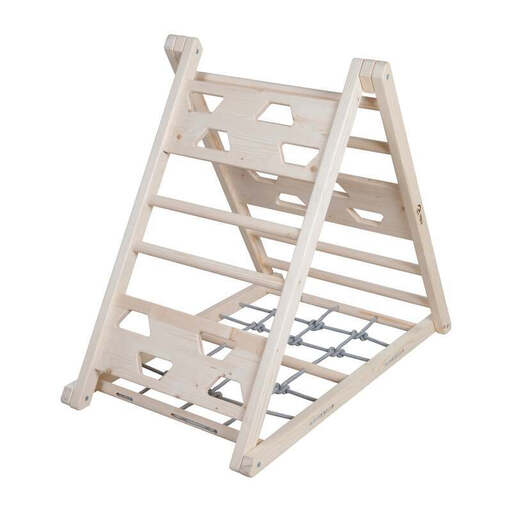
Why this product suits this profile: This larger movement toy is designed for children from 24 months and offers three sides with rungs, a climbing rope and hand grips.
The manufacturer’s specifications state dimensions of 85 × 63.5 × 97.5 cm, a maximum load of 50 kg and the need for direct supervision. The warning stating that it should only be used from 36 months also applies.
Solid wood, three different climbing surfaces and a stated maximum load of 50 kg. A mat is available separately.
We have put together a complete, regularly updated list of products that fully meet these strict selection criteria and the safety regulations applicable in the EU.
Suitable options may include inset puzzles with wooden knobs, simple shape-sorting toys and manageable activity toys. The specific age approval, piece size and supervision are the key factors. Children must not play unsupervised if the toy contains small parts.
The lifespan depends on the type of wood, workmanship, level of use and care. Wipe surfaces as instructed by the manufacturer, avoid soaking them for long periods and regularly check the edges, screws, finish and individual parts. Damaged or splintering elements should no longer be used.
“Montessori” is initially a term describing a design concept, not a standardised quality mark. Assess exactly what the toy enables the child to do: grasp, sort, balance or match. A suitable toy should be appropriate for the child’s stage of development, surroundings and intended style of play.