
Lieferung heute & morgen

Qualitätsgarantie

Willkommens-Angebote freischalten: KOSTENLOSE Lieferung | Bis zu 80 % RABATT | Kostenlose 30-Tage-JoyPlus-Testphase
App herunterladen
Educational wooden toys should do more than simply keep children occupied. They should also encourage suitable movements, independent exploration and creative play. However, choosing the right product is not always easy for parents, grandparents and relatives. Product descriptions often mention educational value, sustainability or Montessori-inspired design, while important details such as age suitability, small parts and space requirements may be less prominent.
That is why our selection is based on clear, easy-to-understand criteria. This helps you avoid choosing a toy that is quickly left unused or does not match the child’s stage of development.
Wooden toys can be robust, but the material alone does not determine how long they will last. Look for:
Care instructions are also important. Some products should only be wiped with a dry or slightly damp cloth. Moisture can cause wood to swell and damage the surface.
A wooden puzzle, stacking toy or activity board may be suitable for different age groups depending on its design. Small parts, magnets and marbles are particularly unsuitable for children under three. The age rating shown on the product is therefore not merely a recommendation about the level of difficulty.
Learning toys from 1 year are generally suitable when they feature large, easy-to-grip parts and simple shapes. For children aged three or four and over, matching games, wooden skill games and more complex construction sets can also be considered.
Sound, lights and numerous accessories can be interesting, but they may also increase the space required, assembly time or battery consumption. A simple activity toy can be more practical for everyday use if it does not need batteries and allows for different ways to play.
The key question is therefore: can the child use the toy independently, or will they need an adult’s help throughout?
Check the following before buying:
The CE marking and information about applicable toy safety requirements can help you make an informed choice. Product information, manufacturer details and warnings should also be provided in full. FSC certification relates to the origin of the wood and does not automatically cover every property of the finished toy.
Match the toy to the intended use:
Measure the available space before buying. Large play kitchens can reach a height of around 90 to 101 cm and require additional room for accessories. For battery-powered products, check whether batteries are included. Many mechanical games, stacking toys and classic wooden puzzles, on the other hand, have no ongoing energy costs.
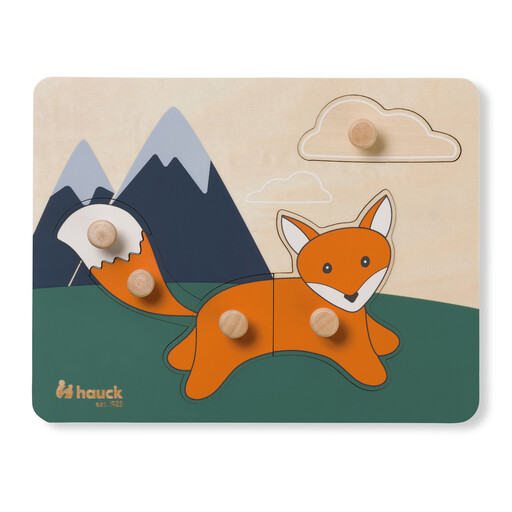
Why this product suits this profile: This wooden puzzle is designed for children aged 12 months and over, offering an easy introduction to shape-matching and sorting games.
The age guidance, wooden handles and simple peg-in design make the requirements clearer than with overloaded multifunctional sets.
Suitable from 12 months, with a wooden board, animal shapes and compact dimensions of 22 × 17 × 2 cm.
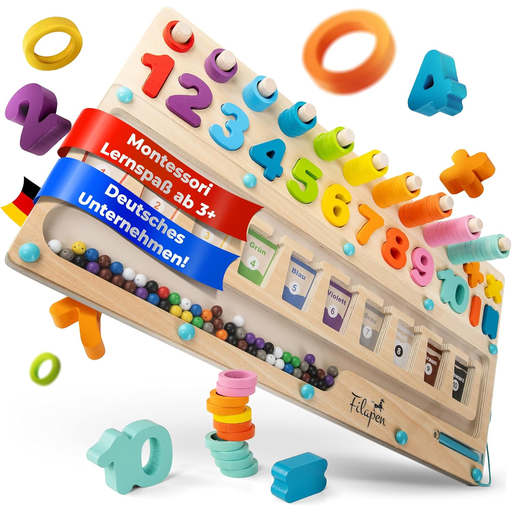
Why this product suits this profile: This wooden board combines a magnetic maze with colour matching and numbers from 1 to 10 in a compact format.
The specific play mechanics are clearly explained, while the product information also highlights the small parts and need for supervision.
Solid wood, no batteries, packaging dimensions of 23 × 43,5 × 4 cm and several matching activities.
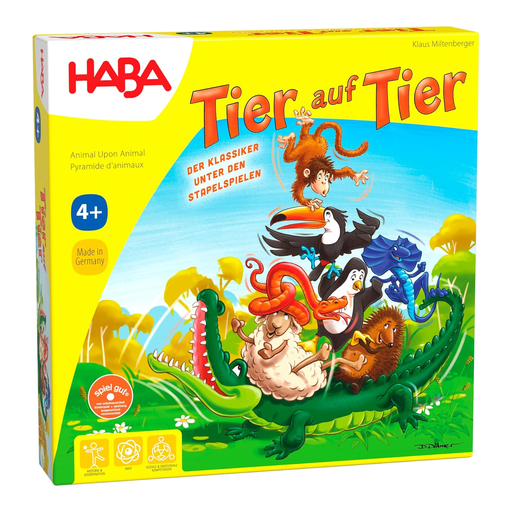
Why this product suits this profile: This stacking game is designed for two to four players aged four and over, but can also be played alone.
It offers a clear game format without batteries or lengthy assembly, although the small-parts warning must still be observed.
Wooden figures, dimensions of 22,2 × 22,3 × 4,9 cm, and the option to play alone or with others.

Why this product suits this profile: This height-adjustable play kitchen is designed for children aged three and over and provides plenty of scope for recurring role play.
The dimensions of 91 × 30 × 91 cm and the assembly requirement are clearly stated, so you can check the space needed before buying.
Height-adjustable design, wooden and metal accessories, plus light and sound functions powered by two AA batteries.
We have put together a complete, regularly updated list of products that fully meet these strict selection criteria and the safety regulations applicable in the EU.
Store wooden toys in a dry place, protected from direct moisture. With stacking games, puzzles and activity boards, check regularly for damaged, splintered or loose parts. Play kitchens also require checks of the screws, connections and battery compartments.
A tidy storage area helps prevent small components from getting lost. For a marble run or construction set, a labelled box is recommended. This keeps all the parts together so play can begin without a lengthy search.
For children aged 12 months and over, simple wooden puzzles, sorting games and stacking towers with large, easy-to-grip parts are suitable options. Check the specific manufacturer’s guidance, as the size and number of individual parts vary from product to product.
How long a toy lasts depends on its materials, build quality, how often it is played with and how well it is cared for. Products without electronic components can remain usable for a long time when stored in a dry place and checked regularly. Damaged or chipped parts should be replaced or discarded regardless of the toy’s age.
Classic wooden puzzles, stacking games and many wooden skill games do not require batteries. A play kitchen with light and sound functions or a DIY Bluetooth speaker, however, may require batteries or a power supply. Check before buying whether batteries are included.