
Lieferung heute & morgen

Qualitätsgarantie

Willkommens-Angebote freischalten: KOSTENLOSE Lieferung | Bis zu 80 % RABATT | Kostenlose 30-Tage-JoyPlus-Testphase
App herunterladen
Educational toys for children should do more than simply keep them occupied. They should also suit their age, interests and family’s everyday life. However, there are clear differences between educational toys, toys for developing motor skills, children’s puzzles and electronic learning products when it comes to safety, space requirements and actual usability.
Three common buying mistakes are particularly likely to lead to disappointment:
The manufacturer’s recommended age is the first filter. Toys for ages 1 and over, for example, should offer simple inserting, sorting and grasping activities with easy-to-understand elements. A wooden puzzle with handles or a shape-sorting game can provide children with their first experiences of colours, shapes and coordination.
For toys for ages 3 and over, options include games with rules, children’s puzzles with several pieces, magnetic mazes and role-play toys. From this age, children can usually follow simple sequences, but they still need adult supervision when playing with small parts.
Toys for ages 6 and over can include more complex challenges. Children’s brain teasers, logic games and more demanding educational games encourage independent problem-solving when the level of difficulty increases gradually.
Look out for:
The CE marking indicates that the supplier must declare and comply with the relevant EU requirements. However, it is not an independent mark of quality. Parents should therefore also check the manufacturer’s information, the materials and the product’s intended use. For wooden toys, an FSC statement may describe where the wood comes from, but on its own it says nothing about any other product characteristic.
A toy is more likely to be used regularly if it is easy to access and quick to tidy away. Compact products or toys with integrated storage are practical for smaller homes. A children’s workbench with 79 pieces offers plenty of role-play opportunities, but requires considerably more space than a motor skills board.
With electronic or musical educational toys, check the volume control, battery type and whether the toy can be switched off. For battery-powered products, the battery compartment and instructions should form part of your purchase decision. For use on the go, lightweight children’s travel games without batteries are often easier to use.
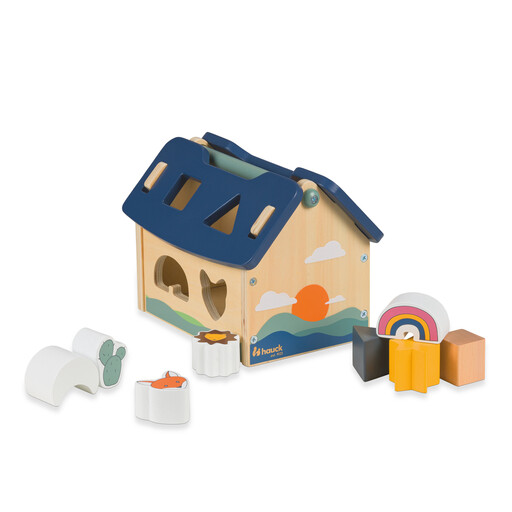
Why this product suits this profile: This shape-sorting game is designed for children aged 12 months and over, combining sorting, stacking and storage in one compact wooden house.
The age recommendation of 12 months and over, together with the manageable number of eight building blocks, makes it easy to get started without a large collection of accessories.
FSC-certified wood, carry handle and integrated storage; no batteries required.
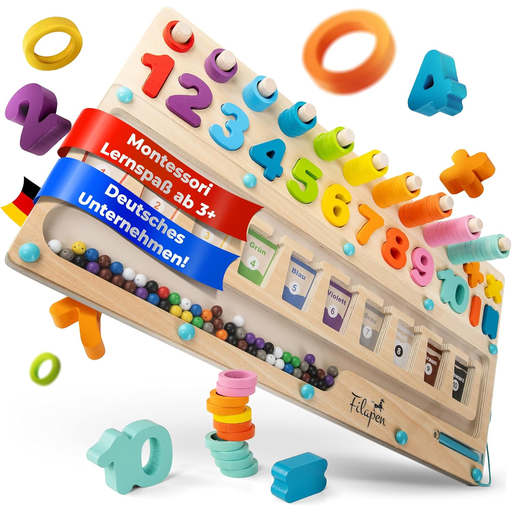
Why this product suits this profile: This wooden magnetic maze combines colour sorting with numbers from 1 to 10, so it can be used at different levels of difficulty.
The functions are clear: children guide the balls with the magnetic pen, then match colours and numbers.
Solid wood, packaging dimensions of 23 × 43,5 × 4 cm and battery-free use.
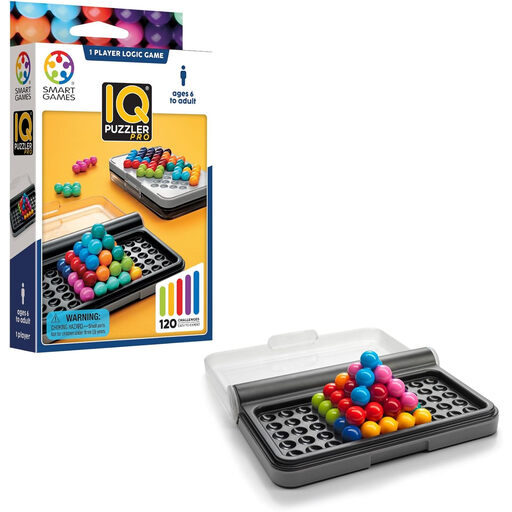
Why this product suits this profile: This solo game contains 120 challenges in 2D and 3D formats, making it suitable for children aged 6 and over as well as for use on the go.
The challenge booklet provides a clear progression instead of relying solely on changing sounds or decorative accessories.
Compact format, 13 pieces, for one player and no batteries required.
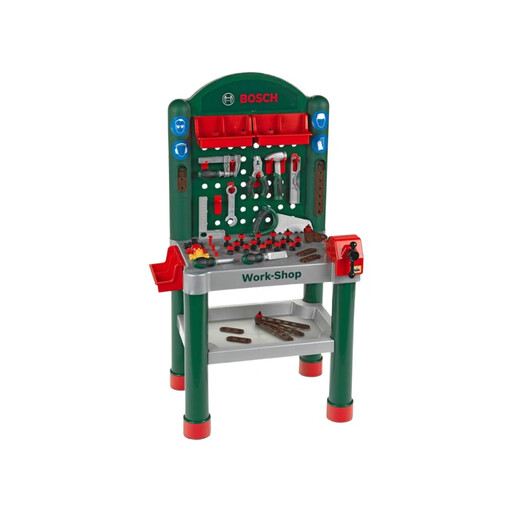
Why this product suits this profile: This 102 cm-high children’s workbench with 79 pieces is designed for children aged 3 and over who enjoy building and sorting as part of extended role play.
The list of accessories is clearly specified. The workbench also includes a vice, work surface and storage options.
Includes a screwdriver, pliers, hammer, saw and vice, among other accessories; assembly required.
We have put together a complete, regularly updated list of products that fully meet these strict selection criteria and the safety regulations applicable in the EU.
For nurseries, schools and childcare facilities, robust materials, straightforward parts management and easy cleaning are important. With a children’s workbench, all tools should be put back after play. For magnetic mazes, children’s puzzles and motor skills boards, check regularly whether any parts have come loose or edges have been damaged.
With board games for children, the number of players and playing time should suit your everyday routine. A game for two to four players with a short playing time is more suitable for family sessions than a long strategy game. Creative toys such as an LCD writing tablet require few accessories and can be used for drawing, taking notes or travelling.
Simple shape sorters, inserting games and large wooden puzzles with easy-to-grip pieces are suitable. Always check the specific age recommendation and any warning about small parts. Adults should remain within reach, particularly at the beginning.
Lifespan depends on the material, construction, use and storage. Wooden toys can be used for a long time if they are checked regularly. With electronic products, batteries, switches and cables or casing components are additional points to inspect.
Mechanical educational games such as children’s puzzles, magnetic mazes and many Montessori toys do not require batteries. Electronic educational toys and musical products, on the other hand, may need replacement batteries. You should therefore check the battery type and what is included before buying.