
Lieferung heute & morgen

Qualitätsgarantie

Willkommens-Angebote freischalten: KOSTENLOSE Lieferung | Bis zu 80 % RABATT | Kostenlose 30-Tage-JoyPlus-Testphase
App herunterladen
A play kitchen is more than just a toy. It's a hub of creativity where children playfully imitate everyday routines, develop social skills, and refine their fine motor skills. But the market is vast, and quality can vary dramatically. Before making a decision, it's crucial to understand the common pitfalls that often only become apparent after the purchase.
As your Joybuy Product Recommendation Officer, I'm here to help you navigate the jungle of options and make an informed choice. We'll focus on the facts to ensure you get a durable and safe product.
Many products overpromise and underdeliver. Pay close attention to these three points to avoid disappointment:
To avoid a bad purchase, you should focus on objective and verifiable criteria. The following three aspects are fundamental to making a good buying decision.
The material is a key determinant of the toy kitchen's durability, safety, and feel.
The kitchen's dimensions must be appropriate for the child to ensure comfortable and safe use.
The features determine the variety of play opportunities.
We have selected models from our range that are suitable for different needs and space constraints.
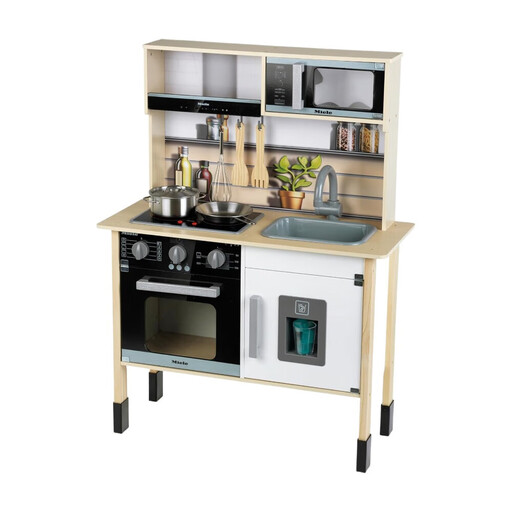
Why it's a great fit: Ideal for smaller children's rooms or as a first full-featured play kitchen. It combines a modern Miele design with a solid MDF construction and interactive features, without overwhelming the space.
The MDF engineered wood construction offers significantly more stability than basic plastic models. The electronics come from an established brand manufacturer.
Compact design with a premium feel. Features light and sound functions as well as metal and wooden accessories for a realistic play experience.
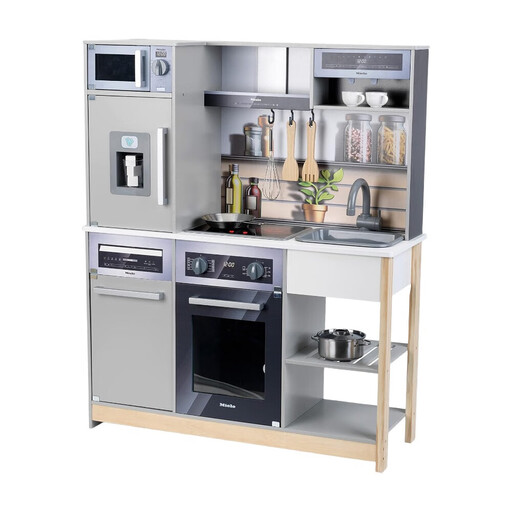
Why it's a great fit: For families looking for a durable, fully equipped, and robust wooden kitchen that can withstand play from multiple children. The FSC-certified wood and extensive features justify the investment.
The solid wood construction ensures maximum stability and durability. The features, including a refrigerator with an ice dispenser and an espresso machine, offer long-lasting play value.
Large, fully equipped Miele play kitchen made from FSC-certified wood, with realistic functions and high-quality metal and wooden accessories.

Why it's a great fit: Perfect for the garden or balcony. This kitchen is specially designed for play with sand, water, and natural materials. It encourages sensory experiences and creative play in the fresh air.
Weather-resistant glazed solid wood and a robust plastic basin are explicitly designed for outdoor use, where a normal toy kitchen would quickly be damaged.
Functional mud kitchen with a water container, tap, and removable basin. Promotes creative play with natural materials outdoors.
We have compiled a complete, up-to-date list of products that fully meet these strict selection criteria and European safety regulations.
Most manufacturers recommend play kitchens for children aged 3 and up. From this age, children begin to develop complex role-playing games and imitate everyday activities. For younger children from around 18 months, there are simpler, particularly stable models without small parts that could be swallowed. Always pay attention to the manufacturer's age recommendation.
A wooden play kitchen should be wiped down with a slightly damp cloth. Do not use harsh cleaning agents, as they can damage the paint or the wood. For more stubborn dirt, a mild soap solution can be used. Always wipe the surface dry afterwards to prevent the wood from swelling. Removable plastic sinks can usually be cleaned normally with water and washing-up liquid.
While many kitchens already come with a basic set of play kitchen accessories, additional accessories significantly expand the fun. Play food made of wood or fabric, more cooking utensils, a coffee machine, or a toaster can enrich the play world and create new incentives for creative role-playing.