Which egg cooker is right for you?

Prep with chilling in mind

If you’re cooking after a shift for the following day, plan the cooking, chilled storage and journey together. The German Federal Centre for Nutrition describes preparing food the night before and then storing it in the fridge; the German Federal Institute for Risk Assessment recommends keeping perishable foods chilled while travelling, too.

Preparing several lunchboxes

If you regularly need eggs for several portions, the capacity per batch is key. Rommelsbacher, for example, lists the ER 300 for up to three eggs and the ER 400 for up to seven.

Making the most of limited kitchen space

If you usually cook just one or two eggs, you can weigh a smaller capacity against the space it takes up and how easy it is to use. WMF lists the KÜCHENminis for one to two eggs; its smaller capacity won’t, however, cover larger batches in a single cycle.

What should you look for when buying?

Compact appliance for one or two eggs

A good fit if: you usually prepare just your own lunchbox and have limited space on your worktop.

The trade-off: it won’t have enough capacity for a larger batch.

Medium-sized appliance for up to three eggs

A good fit if: you regularly cook more than two and no more than three eggs at once.

The trade-off: for larger batches, you’ll need to run more cycles or choose an appliance with a higher capacity.

Larger appliance for several lunchboxes

A good fit if: you regularly prepare a batch for several people.

The trade-off: check how the specific model works; a higher capacity doesn’t guarantee the same cooking results for every egg.

What matters What to check when buying Who should consider it?
Cooking, storage and transport Check the hard-boiling controls on the specific model; cool the eggs appropriately after cooking and keep them chilled until you eat them. If I cook the night before, I plan for chilling and transport at the same time; around 36% of consumers prioritise cooking and chilling arrangements.
Getting the batch size right Compare the number of eggs you regularly need to cook at once with the capacity of the specific model. If you regularly prepare several lunchboxes, you’ll want to cook the number of eggs you need together; around 29% of consumers prioritise batch size.
Ease of use and cleaning Check how to remove the eggs, how the appliance signals when it’s ready and the care instructions; unplug it and let it cool before cleaning. After a late shift, I want to remove the eggs safely and clean any accessible parts without a fuss; around 21% of consumers focus first on ease of use and care.
Worktop space and ready signal Check the exact model’s dimensions and signal; don’t assume it’s especially quiet without noise measurements. With limited worktop space and late-night use, I want to know whether the appliance will fit and whether its signal will be acceptable at home; around 14% of consumers make this their priority.

Common misconceptions

  • A ready signal doesn’t mean your lunchbox is ready

    The signal tells you that the appliance’s programme has finished. It doesn’t cool the eggs or tell you how to store them until the following day.

    Plan the whole process, from cooking and cooling to chilled storage and transport.

    Allow extra time after cooking to remove the eggs, cool them and store them chilled.

  • A higher capacity isn’t automatically the better choice

    The appliances featured here range from small portions to larger batches. If you cook more eggs than you usually need, you may not use the extra capacity; a tray that’s too small, on the other hand, may mean running additional cycles.

    Count how many eggs you usually prepare at once and compare that number with the stated capacity of the specific model.

  • Removable parts don’t mean the whole appliance is dishwasher-safe

    WMF’s technical table states that the Stelio is not dishwasher-safe. For the Severin EK 3164, the manufacturer recommends cleaning the boiling bowl with a damp cloth.

    Check the care instructions for the heating bowl, lid and egg tray separately.

    If an appliance isn’t designed for the dishwasher, you’ll need to allow time for hand-washing.

  • Don’t take conflicting feature claims at face value

    For the Severin EK 3164, the advertising copy and technical table give conflicting information about electronic cooking-time monitoring.

    If this feature is important to your buying decision, check the specifications of the exact version before ordering.

Key brands at a glance

WMF

The WMF models featured here cover small portions and batches of up to seven eggs.

  • WMF says the KÜCHENminis holds one to two eggs, sizes S to XL, and comes with an integrated measuring cup and a ready signal.
  • WMF lists the Stelio for up to seven eggs and says it has a ready signal.
  • According to the technical table, the Stelio isn’t dishwasher-safe. These details apply to the models mentioned, not the entire range.

Rommelsbacher

The main difference between the ER 300 and ER 400 is their stated capacity: up to three and seven eggs respectively.

  • Rommelsbacher lists a doneness setting, electronically monitored cooking time, a removable egg tray and an audible signal for both models.
  • Time monitoring doesn’t measure the temperature at the centre of each egg, or guarantee identical results for eggs of every size.

Severin

According to the manufacturer, the EK 3164 is designed for up to six eggs and has a removable lid.

  • Severin lists an audible signal and provides cleaning instructions for the model.
  • The advertising copy and technical table conflict on whether it has electronic cooking-time monitoring. Don’t treat this feature as a confirmed specification.
  • The manufacturer recommends cleaning the boiling bowl with a damp cloth.

Philips

Philips describes the Egg Cooker 3000 Series HD9137/90 as suitable for different cooking preferences and poached eggs.

  • The manufacturer’s information lists soft-, medium- and hard-boiled eggs, as well as poached eggs.
  • Extra poaching functions won’t necessarily matter if you only want hard-boiled eggs for a lunchbox.

Emerio

The manufacturer describes the EB-123177 as a six-egg appliance with a light and English-language voice alert.

  • The manufacturer’s details on capacity and alerts apply to the EB-123177.
  • There’s no evidence that the comparison listing EB-123177.1 is an identical version. Don’t assume the EB-123177 specifications also apply to the model ending in .1.

Egg cookers for larger lunchbox batches

The Joybuy models below are designed for larger batches to fill several lunchboxes. Compare the stated egg capacity with what you regularly need.
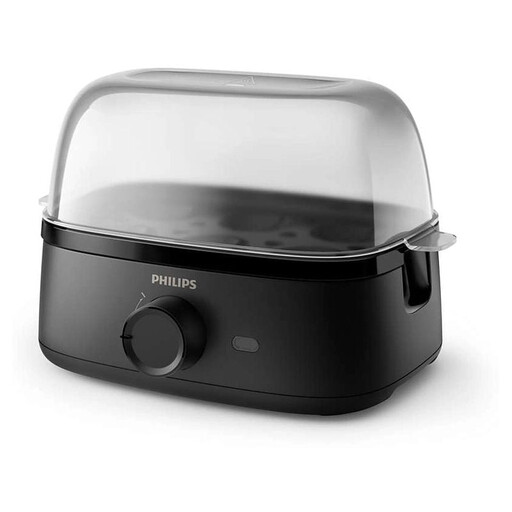
Philips 3000 Series HD9137/91 egg cooker

Philips 3000 Series HD9137/91 egg cooker, 6 eggs

A good fit if you want to cook up to six eggs at once for several lunchboxes.

The product description lists an insert for poached eggs, an audible ready signal and 400 W.

Hot steam may escape when you open the lid, so take care.

View at Joybuy
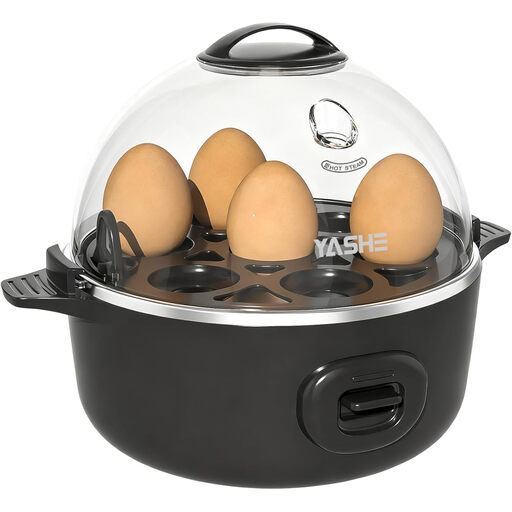
YASHE ZDQ-708 egg cooker for 7 eggs

YASHE ZDQ-708 egg cooker for 7 eggs

A good fit if you want to cook up to seven eggs in one cycle for several lunchboxes.

The product description states a capacity of seven eggs.

View at Joybuy
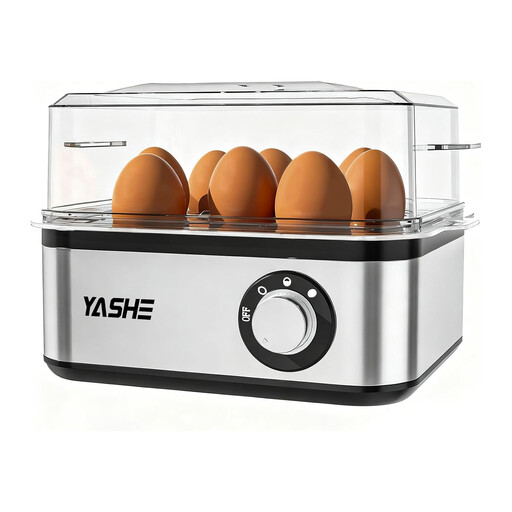
YASHE stainless steel egg cooker for up to 8 eggs

YASHE stainless steel egg cooker for up to 8 eggs

A good fit if you regularly prepare a larger batch of eggs for several lunchboxes.

The product description lists three cooking settings from soft to hard, overheat protection, an omelette pan and a measuring cup.

View at Joybuy
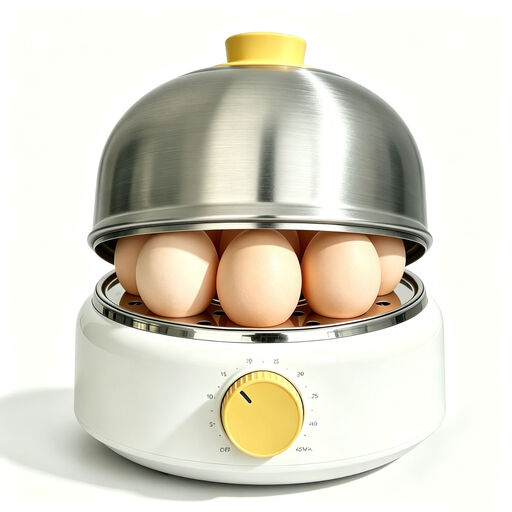
Stainless steel egg cooker for 7 eggs with doneness setting

Stainless steel egg cooker for 7 eggs with doneness setting

A good fit if you want to prepare up to seven eggs per cycle for several portions.

The product description lists a doneness setting, a 45-minute timer and overheat protection.

View at Joybuy
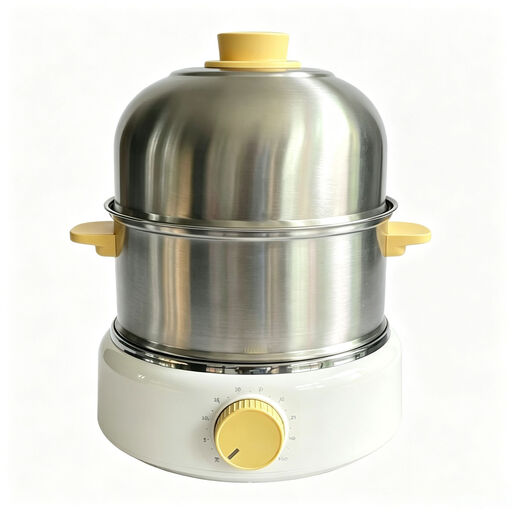
Stainless steel egg cooker for 18 eggs on 2 tiers

Stainless steel egg cooker for 18 eggs on 2 tiers

A good fit if you want to prepare particularly large batches for several lunchboxes.

The product description lists two tiers, a capacity of up to 18 eggs, a doneness setting, a timer and 400 W.

View at Joybuy

Frequently asked questions

Can I cook eggs after an evening shift for the next day’s lunchbox?

Yes. The German Federal Centre for Nutrition describes preparing food the night before and then storing it in the fridge. After cooking, cool the eggs appropriately and keep them chilled until you pack them. The German Federal Institute for Risk Assessment recommends a fridge temperature of between 2 °C and 7 °C for perishable foods, and keeping them chilled while travelling. This isn’t a blanket guarantee of how long every lunchbox will keep.

Does a hard-boiled setting automatically cook every egg safely through?

No. A doneness or time setting is an appliance control, not a measurement of the temperature inside the egg. The German Federal Institute for Risk Assessment gives a core temperature of at least 70 °C for at least two minutes as a guideline for killing relevant germs. Don’t mistake the setting on the appliance for a temperature reading.

What should I bear in mind when cleaning the appliance and dealing with hot steam?

For the EK 3164, Severin recommends unplugging the appliance before cleaning, letting it cool and wiping the boiling bowl with a damp cloth only. Follow the instructions for other models. A CHIP practical test also warns of the risk of scalding when removing some hot lids.

What are my rights if an egg cooker is faulty in Germany?

For a consumer purchase, the seller is responsible for the statutory two-year guarantee from the date you receive the goods. The European Union’s Your Europe website distinguishes these statutory rights from an additional commercial manufacturer’s guarantee. Check separately whether accessories or spare parts are available for the specific model.

Is the CE mark an independent quality mark for cooking results?

No. According to the European Union’s guidance, CE marking is required for products covered by relevant harmonised EU rules; by applying it, the manufacturer declares that the product meets the applicable requirements. There isn’t a central EU body that generally issues a certificate for this. The mark doesn’t assess the level of doneness or whether the appliance is suitable for the batch size you need.