Preparing several lunchboxes at once
If you’re preparing several eggs in one batch, the capacity of the specific model is what matters most. Rommelsbacher says the ER 300 holds 1–3 eggs; Philips states that the HD9137/90 can cook up to six eggs.


Choose the capacity based on how many eggs you actually prepare at once for lunchboxes. A small appliance will need extra batches for larger groups, while having more slots may not be useful for smaller portions. If the eggs will be eaten later, storage and chilling matter more than a keep-warm function. Before buying, also check the labelling on the specific appliance.
If you’re preparing several eggs in one batch, the capacity of the specific model is what matters most. Rommelsbacher says the ER 300 holds 1–3 eggs; Philips states that the HD9137/90 can cook up to six eggs.
If the lunchboxes will be eaten later, plan for storage and chilling separately from cooking. The German Federal Institute for Risk Assessment points out that inadequate cooling during transport and storage can allow harmful germs to survive and multiply.
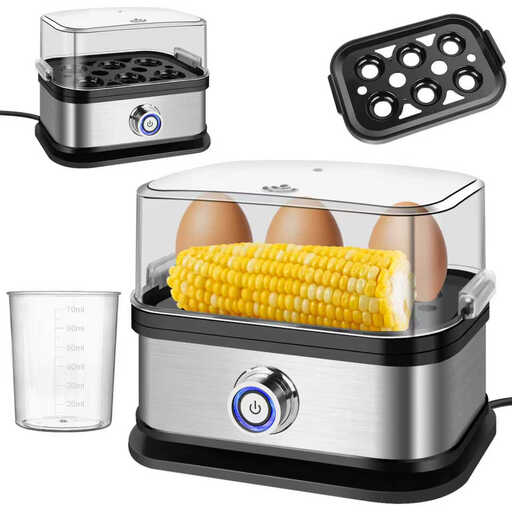
If you usually cook only one to three eggs, an appliance with a smaller capacity may suit your routine better than having unused cooking slots. The Rommelsbacher ER 300 has a removable egg holder for 1–3 eggs.
A good fit if: you usually prepare only a few eggs at a time and want to keep worktop space to a minimum.
The trade-off: For more than three eggs, the Rommelsbacher ER 300 requires additional batches.
A good fit if: you want to fill several lunchboxes in one batch; the Philips HD9137/90 and Severin EK 3169 are examples with six egg slots.
The trade-off: Philips describes water measuring, while Severin features electronic cooking-time monitoring. Egg size and starting temperature can affect the result.
A good fit if: you regularly need to cook this many eggs at once; WMF specifies seven, while Arendo specifies eight.
The trade-off: The extra capacity may not be useful for smaller portions; according to the manufacturer, the WMF Stelio has no keep-warm function.
| Buying priority | What to look for | Who is it most important to? |
|---|---|---|
| Capacity per batch | Count the eggs needed for all the lunchboxes you’re preparing at once, then compare this with the capacity of the exact model. | If I’m preparing several lunchboxes at once, I want to cook as many of the eggs as possible in one batch. That’s why around 36% of consumers put capacity per batch first. |
| Storage until mealtime | Plan chilling and transport in advance; don’t assume that fridge storage guidance applies to an unchilled lunchbox. | If the eggs won’t be eaten for several hours, I want to know how to store them properly until then. Around 29% of consumers prioritise storage between cooking and eating. |
| How well they’re cooked and ease of use | Check whether the specific model is controlled by time or water volume, and what adjustments may be needed for the egg size you usually use. | If I want to cook eggs to the same preferred consistency every time, ease of use and the available settings matter to me. Around 21% of consumers prioritise being able to control how well their eggs are cooked. |
| Cleaning and space requirements | Compare the space it takes up, removable parts and the cleaning instructions for the model you’re considering. | If storage space is limited or I need to clean the appliance after several batches, I want to know which parts can be removed. Around 14% of consumers prioritise ease of use and storage. |
An appliance with too few slots may mean extra batches when you’re preparing lunchboxes for a larger group.
Count the eggs you actually prepare at once, then choose the capacity of the specific model accordingly.
A beep lets you know when cooking has finished, but it doesn’t replace proper storage. The German Federal Institute for Risk Assessment warns that inadequate cooling during transport and storage can be a risk.
Plan how the cooked eggs will be stored from the time they’re ready until each meal, independently of the cooking functions.
For the Severin EK 3169, the manufacturer distinguishes between the inserts, which can be cleaned, and the cooking bowl, which should only be wiped with a damp cloth.
Check the instructions for the model you choose to see which parts are removable and dishwasher-safe.
According to Rommelsbacher, the ER 300 is designed for small batches of 1–3 eggs.
According to the manufacturer, the Philips HD9137/90 can cook up to six eggs or poach up to three.
According to the manufacturer, the EK 3169 combines six egg slots with electronic cooking-time monitoring.
According to the manufacturer, the Stelio egg cooker can hold up to seven eggs.
According to the manufacturer, the EIGHTCOOK 303600 is an example of an appliance for batches of up to eight eggs.
The Joybuy models shown here are designed for preparing batches of six to eight eggs at once. If meals will be eaten at different times, cooking functions don’t replace chilling: the German Federal Institute for Risk Assessment points out that inadequate cooling during transport and storage can allow harmful germs to multiply. Before buying, check the labelling on the specific appliance; the CE marking is a manufacturer’s declaration, not an independent quality mark.
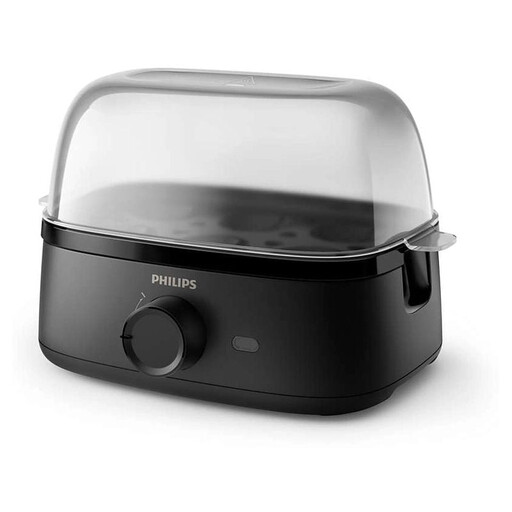 No image available
Designed for preparing up to six eggs in one batch for several lunchboxes.
Includes a poaching insert and audible signal; rated power is 400 W.
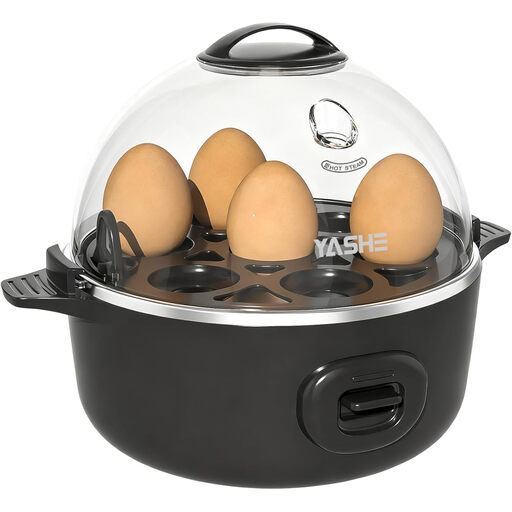 No image available
The stated capacity of seven eggs suits larger batches prepared together.
The product name specifies the colour as black.
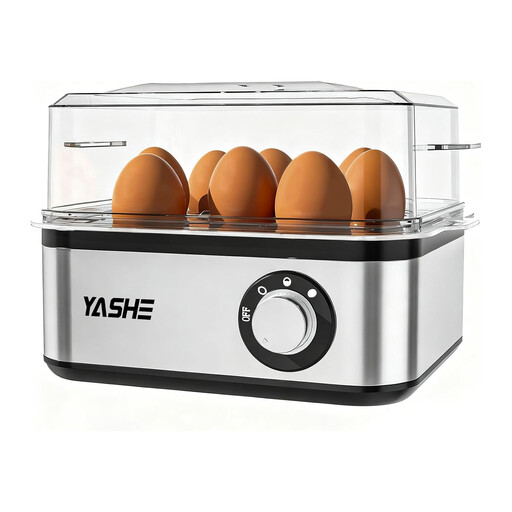 No image available
Designed for larger lunchbox batches, with capacity for up to eight eggs per cycle.
The product name lists three cooking settings and a measuring cup.
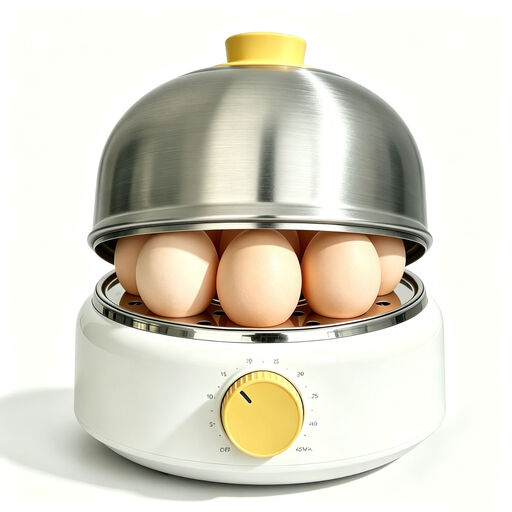 No image available
The stated capacity of seven eggs is suited to preparing several portions at once.
The product name lists a doneness setting, a 45-minute timer and overheat protection.
 No image available
Designed for preparing up to six eggs in one batch for several lunchboxes.
The product name lists 350 W and boil-dry protection.
Plan storage separately from cooking. The German Federal Institute for Risk Assessment warns that inadequate cooling during transport and storage can allow harmful germs to multiply; this doesn’t establish a generally safe period for an unchilled lunchbox.
No. Guidance for storing eggs in the fridge doesn’t automatically apply during transport. The German Federal Centre for Nutrition gives an approximate fridge life of two weeks for hard-boiled eggs; plan separately how you’ll keep lunchbox eggs chilled.
Follow the instructions for the specific model. For the EK 3169, Severin recommends unplugging the appliance and letting it cool before cleaning; the cooking bowl should only be wiped with a damp cloth. Philips recommends removing dirt and limescale from the heating element of the HD9137/90 after use.
No. The European Union distinguishes the legal guarantee for consumer goods sold in the EU, which lasts for at least two years, from a voluntary manufacturer’s guarantee. Check the specific terms of any guarantee in the relevant offer.
No. According to the European Union, the CE marking is the manufacturer’s declaration that the product meets the relevant EU requirements. Germany’s Electrical and Electronic Equipment Substances Ordinance (ElektroStoffV) governs the application of the marking to electrical appliances; check it on the specific appliance or in the offer.