Preparing several lunchboxes
If you’re planning several lunchboxes, the number of eggs cooked per cycle matters. Rommelsbacher lists a capacity of one to seven eggs for one egg holder.


Choose the capacity based on how many eggs you usually prepare at once for lunchboxes at your single cooking station: two to three eggs suit smaller quantities, while six to seven suit larger batches. Severin, WMF and Rommelsbacher list these capacities for specific models, but manufacturers’ stated egg counts are not evidence of comparative cooking performance. If the eggs will be eaten later, you’ll also need to store them appropriately and check the safety information for the exact appliance.
If you’re planning several lunchboxes, the number of eggs cooked per cycle matters. Rommelsbacher lists a capacity of one to seven eggs for one egg holder.
You’re preparing eggs ahead of time, so you’ll need to plan for storage as well as the level of doneness. The German Federal Office of Consumer Protection and Food Safety advises against keeping cooked egg dishes warm for long periods.
If you usually cook just a few eggs, a smaller appliance may suit the worktop space you have available. WMF lists a capacity of two eggs for the KÜCHENminis egg cooker, while the Severin EK 3163 holds up to three.
First, compare the number of eggs cooked per cycle with your usual needs. Then check the footprint, cooking controls and cleaning instructions for the exact model.
| Consideration | What to check before buying | Who is this especially important to? |
|---|---|---|
| Eggs per cycle | Check the capacity against the number of eggs you usually need for several lunchboxes. | If I’m preparing several lunchboxes at one cooking station, I want to cook the eggs I need in one batch if possible. Around 36% of consumers put getting the right batch size first. |
| Cooking level and storage | Check the cooking-level settings and plan how to store the eggs separately from your choice of appliance. | If the eggs won’t be eaten straight away, I want to consider both how they’re cooked and how they’ll be stored. Around 29% of consumers prioritise preparing and storing food for later. |
| Worktop space | Compare the appliance’s dimensions and egg capacity with the worktop and storage space available. | If I usually prepare only a few eggs, I don’t want to use more worktop space than necessary. Around 21% of consumers say space is their main concern. |
| Cleaning and accessories | Check which parts are removable and read the cleaning instructions for the exact model. | If I use an egg cooker regularly, I want to know how to clean the egg holder and other parts. Around 14% of consumers focus on cleaning and accessories. |
Cooking six or seven eggs per cycle may let you prepare a larger batch, but it doesn’t replace proper storage. The German Federal Institute for Risk Assessment notes that hard-boiled eggs with damaged shells can spoil more quickly.
Plan cooking and storage together, and make sure the shells remain intact.
A keep-warm function is no substitute for suitable storage. The German Federal Office of Consumer Protection and Food Safety advises against keeping cooked egg dishes warm for long periods.
Choose this feature only if you’ll use it for a suitable short period, and plan to store eggs properly if they’ll be eaten later.
Instructions can vary between models and individual parts. According to the manufacturer, WMF’s Stelio is not suitable for cleaning in a dishwasher.
Check the instructions for the exact model and each removable part before putting them in the dishwasher.
According to the manufacturer, the EK 3163 and EK 3169 are designed to cook up to three and six eggs respectively.
The KÜCHENminis egg cooker is designed for two eggs, while the Stelio holds up to seven.
The ER 300 is designed for one to three eggs, while the ER 400 holds up to seven.
The manufacturer describes the 6070 as an egg cooker that holds up to seven eggs.
The manufacturer describes the Ovomat Trio EG2341 as a compact model, while the Ovomat Super EG2301 is designed to cook up to seven eggs.
The following models may suit you if you’re preparing batches of different sizes. For any mains-powered appliance sold in Germany, check the safety and CE information for the exact model. EUR-Lex and Your Europe explain the requirements for electrical equipment covered by the EU Low Voltage Directive. CE marking is not an independent performance test.
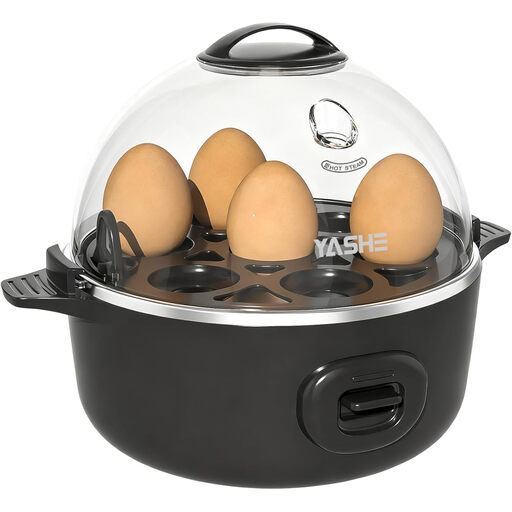 No image available
The stated capacity may be useful when planning several lunchboxes at one cooking station.
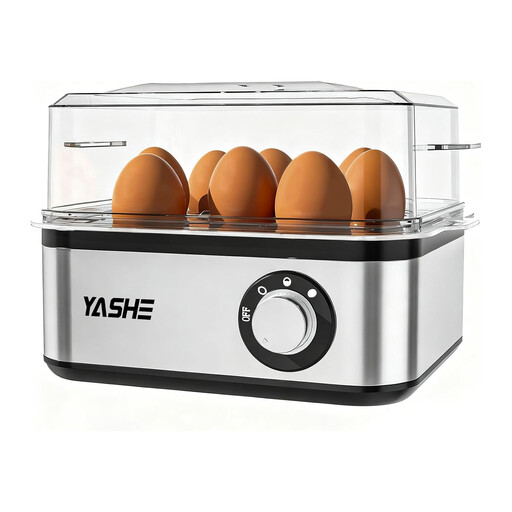 No image available
The capacity may be useful if you’re preparing several lunchboxes in one batch.
The product name lists soft, medium and hard settings, overheat protection, an omelette pan and a measuring cup.
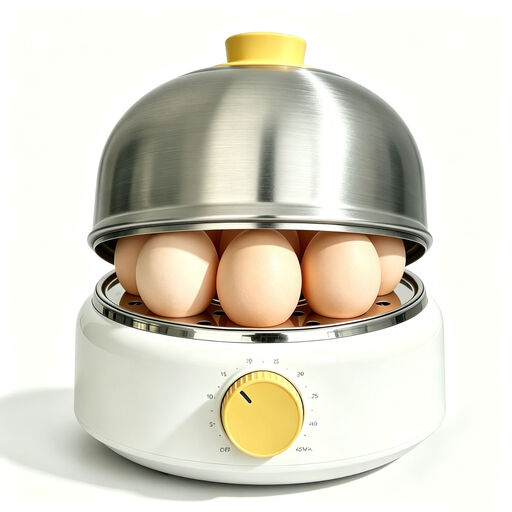 No image available
The stated capacity may help you check whether you can cook the number of eggs you need for several lunchboxes in one cycle.
The product name lists a doneness setting, a 45-minute timer and overheat protection.
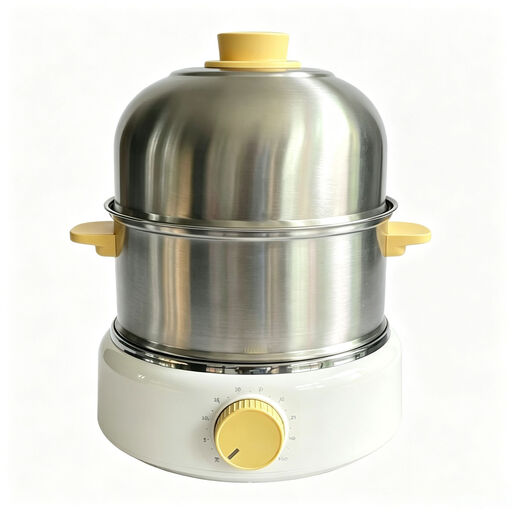 No image available
The stated capacity may be useful when preparing a larger batch at one cooking station.
The product name lists two tiers, a doneness setting, a timer and overheat protection.
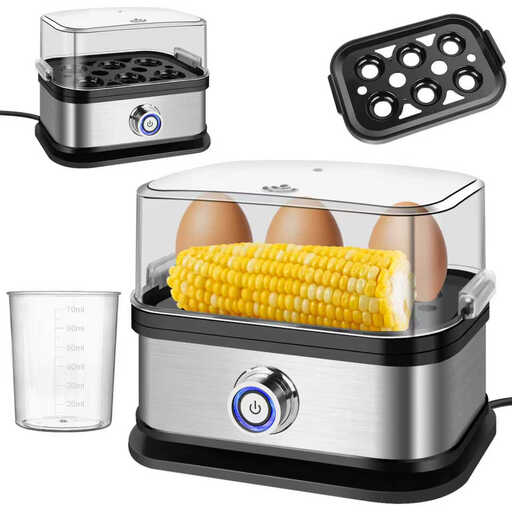 No image available
The stated capacity may suit several lunchboxes if cooking six eggs per cycle meets your needs.
The product name lists boil-dry protection and a multifunctional steam-cooking function.
First, count how many eggs you usually prepare at once. For up to three eggs, manufacturers list models such as the Severin EK 3163 and Rommelsbacher ER 300. For up to six or seven eggs, there are the Severin EK 3169 and WMF Stelio. Capacity alone doesn’t tell you what level of doneness the appliance will actually achieve.
For hard-boiled eggs that won’t be eaten straight away, the German Federal Institute for Risk Assessment advises against cooling them under cold water. Store them hygienically and make sure the shells are intact, as eggs with damaged shells can spoil more quickly.
Follow the instructions for the exact model and let the appliance cool before cleaning. Removable egg holders can make it easier to reach all areas. Don’t assume individual parts are dishwasher-safe unless the manufacturer says so.
In Germany, the retailer is generally responsible for dealing with faulty goods. The consumer advice centre says the statutory warranty lasts for two years from delivery. A manufacturer’s guarantee is separate and is subject to its own terms and conditions.
Electrical equipment covered by the EU Low Voltage Directive must meet safety and CE marking requirements, as explained by EUR-Lex and Your Europe. Check the marking and details for the exact model in the product listing. The CE mark is not an independent quality seal.