Preparing lunchboxes for several days
If you cook several eggs at once, choose a capacity that suits your usual batch. You’ll need to plan separately for storing and transporting the cooked eggs.


Choose the capacity based on how many eggs you actually prepare for your lunchboxes at a time. A compact cooker is enough for one or two eggs, while a larger appliance is more practical for several portions. Also compare whether you’d rather control how well the eggs are cooked by measuring the water or using a timer, and check how the parts can be cleaned. The cooker doesn’t replace suitable storage and cooling during transport.
If you cook several eggs at once, choose a capacity that suits your usual batch. You’ll need to plan separately for storing and transporting the cooked eggs.
If you usually prepare just one or two eggs, a compact cooker may be all you need and take up less worktop space.
If ease of use matters to you, compare measuring out the water with using a timer. The word “electronic” alone doesn’t tell you which method will suit your routine better.
First, count how many eggs you usually cook at once. Then compare how the cooker works and how easy it is to clean. Plan how to store the cooked eggs separately, regardless of the appliance’s size.
| Criteria | What to check | Who it matters to |
|---|---|---|
| Storage and transport | Plan the number of eggs around the space in your fridge and the conditions during your journey. The cooker’s capacity doesn’t tell you how long the eggs can be stored. | If I prepare eggs to take with me until lunchtime, I want to plan for storage and transport too. Around 36% of consumers prioritise this as part of their lunchbox routine. |
| Batch size | Choose based on the number of eggs you usually cook at a time, not just the number of people in your household. | If I’m preparing several lunchboxes at once, I want to be able to cook the right amount in one go. Around 29% of consumers prioritise batch size. |
| Cooking controls | Check whether you’d prefer to measure the water based on the size of the eggs and how well you want them cooked, or use a timer. | If I prefer a particular way of controlling how well my eggs are cooked, I compare the specific settings on each model. Around 21% of consumers prioritise the cooking controls. |
| Cleaning and handling | Check which parts can be removed and what the cleaning instructions say for the cooking plate, lid and insert. | If I use an egg cooker regularly, I want to know how easy its parts are to clean and handle after cooking. Around 14% of consumers pay particular attention to cleaning and handling. |
An appliance that holds several eggs determines how many you can cook at a time. It doesn’t tell you how to store the cooked eggs until you’re ready to eat them.
Plan the batch around the space in your fridge and your transport conditions. Guidance on storing eggs in the fridge can’t automatically be applied to a lunchbox without reliable cooling.
Preparing eggs also means finding a suitable way to store and transport them.
A feature description alone doesn’t prove that an appliance will cook eggs exactly how you want them.
Compare how the appliance actually works and any test results for the specific model, rather than assuming the word “electronic” tells you how well it performs.
Cleaning instructions may vary from one part to another. For the Severin EK 3166, the manufacturer recommends cleaning the cooking plate with a damp cloth.
Check the instructions for the specific model and for the cooking plate, lid and inserts before putting any parts in the dishwasher.
Following the instructions for cleaning the cooking plate is part of the ongoing care required with regular use.
According to the manufacturer, the ER 300 is designed for one to three eggs and has a timer for setting how well they are cooked.
The KÜCHENminis is designed for one or two eggs, while the Stelio holds up to seven, according to the manufacturer.
According to the manufacturer, the EK 3166 holds up to six eggs and electronically monitors the cooking time.
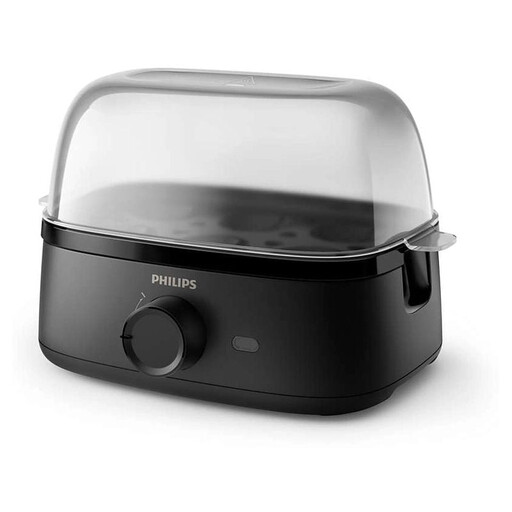
According to Philips, the 3000 Series HD9137/90 egg cooker offers soft, medium and hard settings, as well as a poaching function.
This selection includes egg cookers for lunchboxes, with models for single portions and for cooking several eggs at a time.
 No image available
For a larger batch of lunchbox eggs, if you want to cook up to six at once.
The product details list a poaching insert for up to three eggs and an audible ready signal.
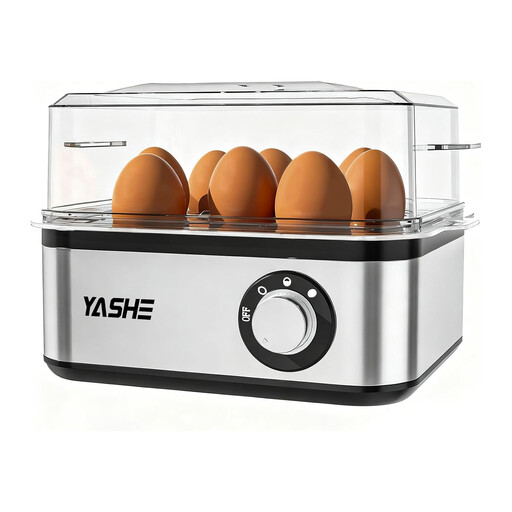 No image available
For larger batches, if you want to cook up to eight eggs at a time.
The product name lists three settings for soft, medium and hard eggs, as well as a removable poaching insert.
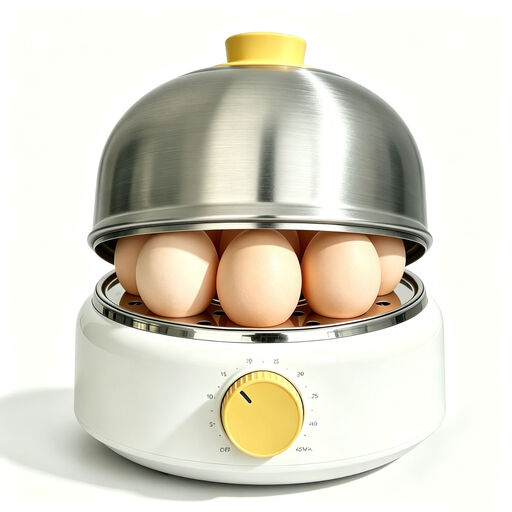 No image available
For several lunchboxes, if a batch of up to seven eggs suits your routine.
The product name lists cooking settings, a 45-minute timer and overheating protection.
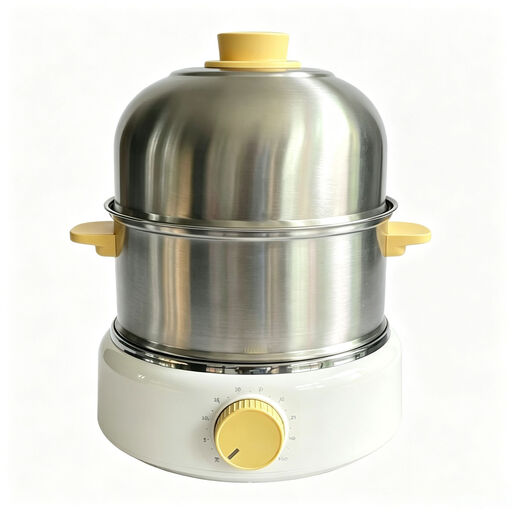 No image available
For particularly large batch-prep sessions, if you want to cook up to 18 eggs at once.
The product name lists a two-tier design, 400 W, cooking settings, a timer and overheating protection.
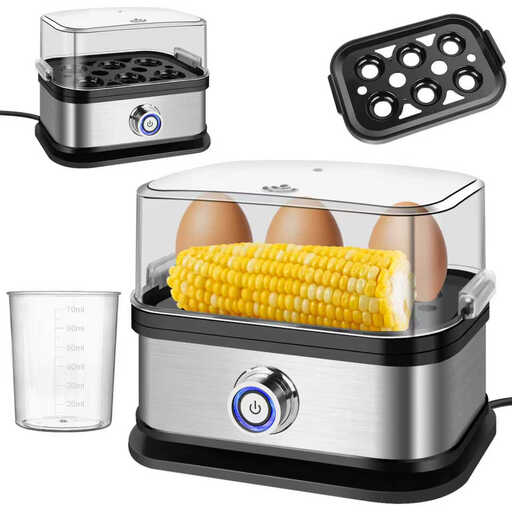 No image available
For several lunchboxes, if you want to cook up to six eggs at a time.
The product details list soft, medium and hard settings, as well as automatic shut-off and boil-dry protection.
Choose based on how many eggs you usually prepare at once. For the models described here, the manufacturers’ stated capacities range from one or two eggs for the WMF KÜCHENminis, to three for the Rommelsbacher ER 300, six for the Severin EK 3166 and up to seven for the WMF Stelio. With a smaller appliance, you’ll need to cook larger quantities in more than one batch.
Guidance for refrigerated storage shouldn’t be taken as a safe time limit for an unrefrigerated bag. The German Federal Institute for Risk Assessment points out that inadequate cooling during transport and storage can encourage the growth of harmful bacteria. Plan storage around your actual transport conditions; an egg cooker can’t take care of this for you.
Follow the instructions for your specific model. For the Severin EK 3166, the manufacturer recommends unplugging the appliance before cleaning, allowing it to cool and wiping the cooking plate with a damp cloth only. Instructions for individual inserts don’t automatically apply to the whole appliance.
For a consumer purchase from a retailer, statutory consumer rights generally apply against the seller. According to Your Europe, these rights last for at least two years from the date you receive the goods. A voluntary manufacturer’s guarantee is separate; check the terms of any repair service for the specific model.
Electrical equipment covered by the Low Voltage Directive, including equipment with a rated voltage of 50 to 1,000 V AC, must meet conformity requirements, including CE marking. The EU explains that CE marking indicates the manufacturer’s declaration that the product meets the relevant requirements; it isn’t an EU test certificate issued centrally. Whether a particular product listing meets the applicable requirements needs to be assessed separately.