Batch cooks who like to stock up
You want to make several portions of egg noodles at a time and are comparing the quantity per batch, the effort involved in making the dough and the space needed for storage.


If you want to prepare several portions of egg noodles with as little hands-on dough-making as possible, consider an automatic pasta maker with a suitable egg programme and a capacity that matches your batch size. A motorised roller is an alternative if you want to make your own dough and choose your ribbon pasta shape; it won’t knead the dough for you. With either type, remember to factor in cleaning and chilled or frozen storage.
You want to make several portions of egg noodles at a time and are comparing the quantity per batch, the effort involved in making the dough and the space needed for storage.
You enjoy making the dough yourself and want to choose the thickness and cut of your ribbon pasta.
You want to minimise the number of accessories that need washing by hand after each batch, so you check the care instructions for the exact model.
Start by comparing the type of machine and batch size you want. Then check what’s involved in preparing the dough, cleaning the machine and storing the pasta.
| What matters | What to look for when buying | Who is this especially important to? |
|---|---|---|
| Quantity per batch | Compare the total quantity you want with the minimum and maximum capacity. Check whether the figure refers to flour or finished pasta. | If I’m preparing several portions, I want to know how many batches I’ll need. Around 24% of consumers are likely to prioritise the right quantity per batch. |
| Egg dough and liquid | Check the egg programme and recipe instructions, and find out which ingredients the machine weighs or doses automatically. | If you regularly make egg dough, you’ll want the machine to handle the liquid in your own mixture reliably. Around 19% of consumers are likely to make how the machine handles egg dough their main buying consideration. |
| Shape and dough thickness | Check the ribbon pasta width or cutting attachments, the roller settings and the accessories included. | If I want to make rolled ribbon pasta, the shape I want matters more to me than fully automatic operation. Around 19% of consumers are likely to prioritise the shape and thickness of the pasta. |
| Storage | Think ahead about whether you can cook the amount you plan to make soon, or chill or freeze it in portions. | If you’re cooking ahead for future meals, you’ll want to plan the pasta around the fridge or freezer space you have available. Around 24% of consumers are likely to prioritise stocking up. |
| Cleaning | Read the care instructions for every part of the specific model that comes into contact with food. | If I often make several batches, I want to know which parts need washing by hand after each one. Around 14% of consumers are likely to consider cleaning effort their main buying concern. |
Manufacturers may quote different quantities. Without knowing the recipe and amount of liquid, you can’t directly compare the batch sizes.
Only compare figures based on the same measure, and plan how many batches you’ll actually need.
Philips notes that the Pastamaker HR2665/93 does not weigh the liquid you add. When making egg dough, measuring and adding the liquid is still part of the recipe preparation.
Check what the exact model weighs, displays or doses automatically.
A motorised roller rolls out dough you’ve already prepared. Depending on the model specifications, an automatic pasta maker can also mix and extrude the dough. With a roller, making the dough and feeding it through in portions are still jobs you’ll need to do yourself.
First decide how much of the dough preparation you want to do yourself, then check the motor and included cutters. You may need additional accessories for other cuts.
The care instructions for the Rommelsbacher PM 220 vary between the container and accessories. The auger and shaping inserts, for example, should be washed by hand.
Before buying, read the cleaning instructions for every part you’ll use after a batch.
The Pastamaker 7000 HR2665/93 is an automatic pasta maker with an egg programme.
The PM 220 Pastarella is an automatic pasta maker with built-in scales, controlled water dosing and inserts for ribbon pasta.
The automatic Nina has an egg programme and a manufacturer-stated capacity of 200–600 g of flour.
The Atlasmotor+ combines a motorised roller with cutters for rolled pasta.
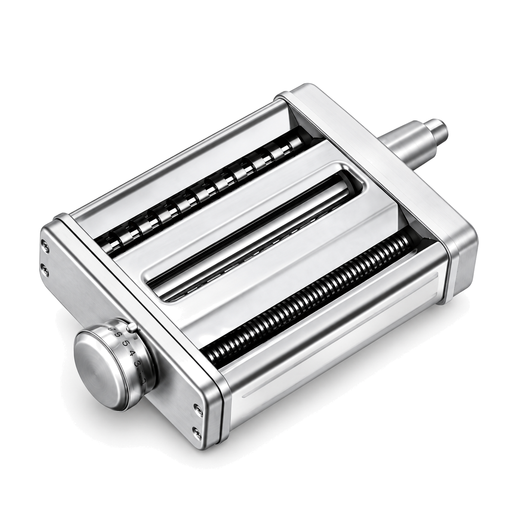
The 5KSM3MPA is a powered pasta attachment for compatible KitchenAid stand mixers.
This selection includes automatic pasta makers, a motorised roller and an attachment for a KitchenAid stand mixer. Choose according to whether you want to automate dough processing or shape the pasta sheets yourself.
 No image available
If you want to choose the dough thickness yourself, the product title lists seven settings.
 No image available
If you’re looking for an automatic pasta maker for home use, the product title lists nine shapes. Check that it includes the shape you want for your egg noodles.
 No image available
An automatic home pasta maker with interchangeable shaping inserts; the product title lists 180 W and nine shapes.
 No image available
If you already own a compatible KitchenAid stand mixer, an attachment is the right type for you. The product title lists a roller and cutters for fettuccine and spaghetti.
A compatible stand mixer is required.
 No image available
For smaller batches: according to the product information, the maximum amount of dough per batch is 200 g.
The product information says to wipe the main unit clean with a cloth and not rinse it.
Yes, as long as you plan how to store them. The German Federal Institute for Risk Assessment recommends keeping perishable food as cold as possible until it is prepared or eaten. Rommelsbacher recommends freezing fresh egg noodles and cooking them without thawing first. This is not a general guarantee of how long every homemade batch will keep.
Follow the instructions for the exact model. Rommelsbacher says the container and lid of the PM 220 may only occasionally be placed in the top rack of the dishwasher at a low temperature. The auger and shaping inserts, among other parts, should be washed by hand.
According to information from the European Union, CE marking is required when the relevant harmonised EU rules require it for that product. It is the manufacturer’s declaration of conformity, not an independent quality mark. Check the marking and product documents for the specific item you’re considering.
No. Your statutory rights apply to the retailer; a manufacturer’s guarantee is voluntary and subject to its own terms. The consumer advice centre therefore recommends checking who the retailer and guarantee provider are when dealing with spare parts or making a claim.