If you want to photograph both the whole maar lake and details on the far shore from the same accessible spot, optical focal length range is a key point of comparison: Panasonic specifies 24–360 mm for the Lumix TZ300, while Sony gives 24–200 mm for the RX100 VII, both in 35 mm equivalent terms. For wide views and closer subjects in changing light, a shorter, faster zoom may better suit your priorities. A prime lens means giving up optical zoom, while weather protection matters most on outings that are specifically wet or rugged. Stabilisation does not guarantee sharp shots at every shutter speed, nor does it prevent motion blur in moving subjects.
Who takes photos at the Eifel maars?
Maar walkers with a variety of subjects
If you want to capture both a landscape view and details on the opposite shore while out walking, an optical zoom range is useful, as you won't need to change lenses. Eifel Tourismus GmbH describes the Maare-Pfad as a route that takes in seven maars; Panasonic and Sony specify different optical focal length ranges for their cameras.
Landscape photographers in changing light
If you take wide views, reflections or closer subjects handheld, you can weigh up a shorter, faster zoom against greater telephoto reach. Canon specifies 24–100 mm in 35 mm equivalent terms and F1.8–2.8 for the PowerShot G7 X Mark III; Ricoh gives the GR IV a 28 mm prime lens in 35 mm equivalent terms.
Photographers out in wet weather
If you specifically want to take photos in wet or rugged conditions, check the protection rating of the exact model and weigh it against the telephoto reach you want. OM Digital Solutions specifies protection ratings for the Tough TG-7; these apply to that model and not to the brand as a whole.
What to consider when choosing
Travel zoom with a wide optical range
A good fit if: You want to photograph both wide views and distant details on the shore or hillside from an accessible spot. Panasonic specifies 24–360 mm in 35 mm equivalent terms and optical stabilisation for photos on the Lumix TZ300.
The trade-off: A long telephoto range is no substitute for good light or a sufficiently fast shutter speed when your subject is moving. Despite its zoom range, F.A.Z. Kaufkompass did not include the TZ300 among its image quality recommendations; this is the assessment of that particular review.
Compact zoom with a shorter telephoto range
A good fit if: You want to combine wide-angle shots with the occasional distant detail, without making maximum telephoto reach your priority. Sony specifies 24–200 mm in 35 mm equivalent terms for the RX100 VII.
The trade-off: 200 mm doesn't reach as far as the 360 mm specified by Panasonic for the TZ300. Compare optical focal length and digital magnification separately.
Faster short zoom
A good fit if: You mainly photograph wide views and closer subjects in changing light. Canon specifies 24–100 mm in 35 mm equivalent terms, F1.8–2.8 and lens-shift stabilisation for the PowerShot G7 X Mark III.
The trade-off: Its optical telephoto range is shorter than that of the TZ300 and RX100 VII. A wider maximum aperture doesn't guarantee that every shot will come out sharp without support.
Stabilised prime lens
A good fit if: You mainly frame your shots by choosing your position and don't need optical zoom. Ricoh specifies 28 mm for the GR IV and Fujifilm 35 mm for the X100VI, both in 35 mm equivalent terms; each manufacturer also specifies stabilisation for its camera.
The trade-off: You can't optically zoom in on distant details. F.A.Z. Kaufkompass named the X100VI as its favourite in the premium segment it tested; that verdict doesn't automatically answer the question of telephoto reach at a maar.
Rugged compact camera
A good fit if: Your main concern is specifically wet or rugged conditions. OM Digital Solutions specifies IPX8 and IP6X protection, as well as 25–100 mm in 35 mm equivalent terms, for the Tough TG-7.
The trade-off: Its specified focal length range reflects different priorities from a camera with a wide travel zoom. The protection ratings apply to this model.
When choosing a compact camera to use handheld at the Eifel maars, the main considerations are optical framing, shooting in changing light, a deliberately fixed angle of view and protection from wet weather.
| Buying priority |
What to check before buying |
Who it's most important for |
| Optical framing |
Compare both ends of the optical focal length range in 35 mm equivalent terms; don't count digital zoom as extra optical reach. |
If I want to photograph both the landscape and the opposite shore from the same viewpoint, the right optical framing matters. Around 36% of consumers put optical reach first. |
| Handheld photos in changing light |
Check the maximum aperture at both the wide and telephoto ends, as well as whether stabilisation for photos is specifically listed for the exact model. |
In changing light, I want to take wide views or closer shots handheld without making telephoto reach my top priority. Around 29% of consumers prioritise a wide aperture and stabilisation for this. |
| Fixed angle of view and portability |
Check that the fixed angle of view suits the viewpoints you have in mind; compare sensor size and model-specific stabilisation separately. |
If I want to take a camera with a deliberately fixed angle of view, I can do without optical zoom. Around 21% of consumers put this combination first. |
| Protection from wet weather |
Check the protection ratings and conditions of use for the exact model; don't assume that one model's protection applies to other cameras. |
For specifically wet or rugged conditions, I want verified protection to matter more than telephoto reach. Around 14% of consumers prioritise the weather protection of the exact model. |
Avoiding common buying mistakes
-
Counting digital zoom as extra optical zoom
Optical zoom and digital or Clear Image Zoom magnification don't describe the same optical reach. Sony lists these separately for the RX100 VII.
For distant subjects at a maar, start by comparing the optical focal length in 35 mm equivalent terms.
-
Assuming video and photo stabilisation are the same
Panasonic describes POWER O.I.S. for telephoto shots on the TZ300; the separately specified 5-axis HYBRID O.I.S.+ stabilisation is described by the manufacturer for video recording while moving.
Check the exact model's specifications for photo and video stabilisation separately.
-
Choosing a camera based on a review that doesn't suit your needs
F.A.Z. Kaufkompass names the Fujifilm X100VI as its favourite in the premium segment it tested. Fujifilm specifies a fixed focal length of 35 mm in 35 mm equivalent terms; this isn't an optical telephoto zoom for distant details on the shore.
First work out the angle of view you need and where you'll be standing before relying on reviews of a particular type of camera.
-
Assuming protection ratings apply to other cameras
The IPX8 and IP6X ratings apply to the OM System Tough TG-7 and not to compact cameras in general.
For specifically wet conditions, check the protection ratings and conditions of use for the exact model.
Camera brands to consider for photos at the Eifel maars
Panasonic
The Lumix TZ300 is an option if you want a wide optical travel zoom range, from wide-angle views to distant subjects.
- Panasonic specifies 24–360 mm in 35 mm equivalent terms and optical image stabilisation for photos on the TZ300.
- Despite its zoom range, F.A.Z. Kaufkompass found its image quality fell short of its recommendations. This review assessment applies to the TZ300.
Sony
The RX100 VII is a zoom alternative for wide views and distant subjects if 24–200 mm in 35 mm equivalent terms meets your needs.
- Sony specifies a 1.0-inch type sensor and an 8× optical zoom for the RX100 VII.
- Its specified telephoto end is shorter than the Panasonic TZ300's; this doesn't lead to a blanket conclusion about the image quality of either camera.
Canon
The PowerShot G7 X Mark III is worth considering as a short zoom for wide views and closer subjects.
- Canon specifies 24–100 mm in 35 mm equivalent terms, F1.8–2.8 and lens-shift stabilisation.
- Its specified optical range is shorter than that of the TZ300 and RX100 VII, so it doesn't reach as far into the telephoto range.
Ricoh
The GR IV is an APS-C compact camera with a fixed wide angle of view rather than a zoom.
- Ricoh specifies 28 mm in 35 mm equivalent terms and 5-axis sensor stabilisation.
- There is no optical telephoto zoom. The manufacturer's stated potential stabilisation effect isn't an independent real-world test.
Fujifilm
The X100VI is a prime-lens option with a narrower angle of view than the Ricoh GR IV.
- Fujifilm specifies APS-C, 35 mm in 35 mm equivalent terms and sensor-shift stabilisation.
- The prime lens doesn't offer optical telephoto zoom. F.A.Z. Kaufkompass's verdict for the premium segment it tested isn't a specific recommendation for distant subjects at a maar.
OM System
The Tough TG-7 prioritises model-specific protection ratings over long telephoto reach.
- OM Digital Solutions specifies IPX8, IP6X and 25–100 mm in 35 mm equivalent terms for the TG-7.
- The protection and focal length specifications apply to this model, not to the brand as a whole.
Camera deals on Joybuy
The Joybuy products below range from zoom and 360° cameras to action cameras for wide views and on-the-go shooting. If you want to photograph distant details on the shore from the same spot, check in particular whether the model has optical telephoto zoom: a wide-angle lens or a 360° view isn't the same thing.
 No image available
Songdian digital camera, 8× optical zoom, 5K, 64 MP, white
If you're looking for a digital camera with optical zoom, this model is specified as having 8× zoom.
The product name also lists 5K, 64 MP photos and two lenses.
View on Joybuy
 No image available
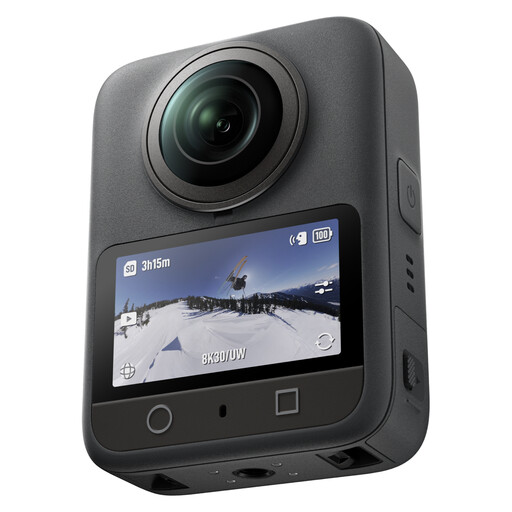
DJI Osmo 360 Standard Combo
If you're looking for a 360° camera for all-round views, this model is listed as the DJI Osmo 360 Standard Combo.
The product name lists 8K 360° video and 120 MP panoramic photos.
View on Joybuy
 No image available
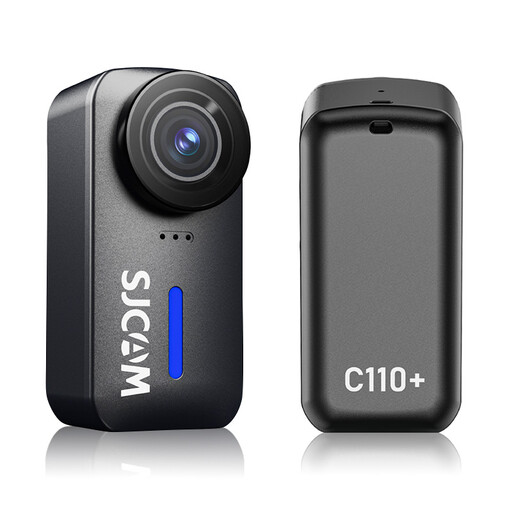
SJCAM C110+ 4K action camera
If you're looking for an action camera with a very wide angle of view, this model is specified with a 170° wide-angle lens.
The product name lists 20 MP photos and f/1.8. The waterproof rating of up to 30 m applies when used with the housing.
View on Joybuy
 No image available
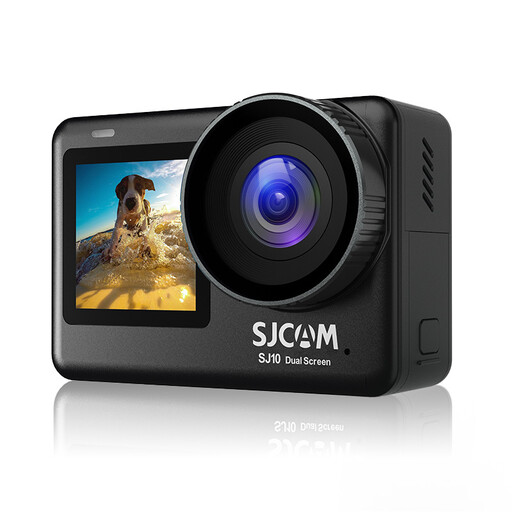
SJCAM SJ10 Pro Dual Screen action camera
If you're looking for an action camera with two displays, the product name lists a 2.33-inch touchscreen and a 1.3-inch selfie screen.
Other specifications in the product name include 20 MP photos, a 154° wide-angle lens and 6-axis gyro stabilisation. The stated waterproof rating of up to 30 m requires the housing.
View on Joybuy
 No image available
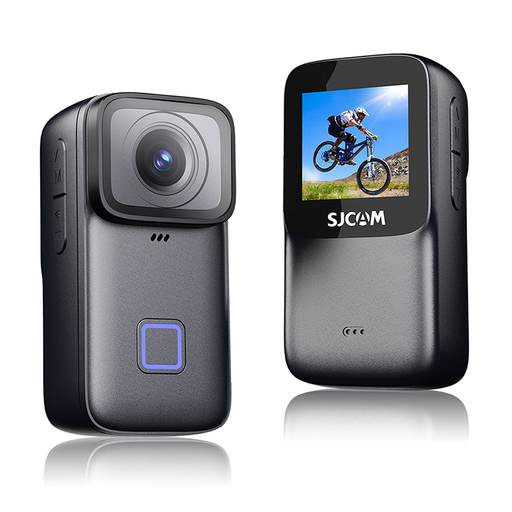
SJCAM C200 Pro 4K action camera
If you're looking for a particularly compact action camera, the product name gives its dimensions as 6.8 × 3.4 × 2.7 cm.
Other specifications include 20 MP photos, a 135° wide-angle lens and 6-axis stabilisation. The stated waterproof rating of up to 5 m without the housing, or up to 40 m with it, depends on these conditions.
View on Joybuy
Frequently asked questions
How can you avoid camera shake when photographing the opposite shore of a maar?
First check that the camera has enough optical reach and offers stabilisation for photos. Panasonic describes POWER O.I.S. for telephoto shots on the TZ300; the separately specified 5-axis HYBRID O.I.S.+ stabilisation is described by the manufacturer for video recording while moving. Stabilisation doesn't replace a sufficiently fast shutter speed for moving subjects.
What should you set up before your first walk?
Check the exact model to make sure your memory card and battery are ready, and find out how to use optical zoom, stabilisation and shutter speed. Fujifilm lists SD, SDHC and SDXC memory cards for the X100VI; this doesn't automatically apply to other models.
What should you check about what's included and your rights when buying online?
Check the specific listing to see whether a battery, memory card and charging accessories are included, rather than assuming every variant comes with the same items. Verbraucherzentrale distinguishes between the statutory warranty against the seller and a voluntary guarantee. According to its consumer guidance dated 13 August 2026, online purchases generally come with a 14-day right to cancel from the date you receive the goods; cancellation and claims relating to faulty goods are different matters.
Can you go down to the shore or leave the path at every Eifel maar?
No, you can't assume that this is allowed everywhere. Under section 23 of the Federal Nature Conservation Act, nature reserves are subject to specific rules that prohibit, in particular, activities that could damage or alter the area; the rules for the specific area are what matter. The Eifel National Park Authority requires visitors to stay on marked paths within the national park. This national park rule doesn't automatically apply to every maar in the Vulkaneifel.


