Which camera is right for you?

Photographers focusing on distant subjects

If you want to capture individual features on cliffs across the valley or further away, the optical telephoto range is what matters most. Nikon Germany describes telephoto lenses as a way to bring out details in distant landscapes.

Walkers who want both landscapes and details

If you want to shoot wide views as well as tighter compositions of rock formations on the same walk, check the actual range of lenses included in the kit. The Nikon Z50II twin-zoom kit and the Canon EOS R10 kit offer different combinations for these types of shot.

Walkers mindful of their kit

If you’re carrying your camera gear over longer distances, consider the weight, number of lenses, stabilisation and, where relevant, weather protection together. OM SYSTEM lists the OM-5 Mark II body at 418 g including battery and card, with an IP53 rating; Nikon describes the lenses in the Z50II twin-zoom kit as retractable.

What should you look for when buying?

Bridge camera with a powerful superzoom

A good fit if: you want to photograph very small, distant subjects without changing lenses. Nikon lists the COOLPIX P1100 as having an optical field of view equivalent to 24–3000 mm on a full-frame camera.

The trade-off: The additional 6000 mm figure refers to digital zoom, not a further optical telephoto range.

Bridge camera with a more moderate telephoto range

A good fit if: a fixed lens is all you need for wide views and distant formations. Sony lists the RX10 IV as offering a 24–600 mm full-frame equivalent range and a 1-inch sensor.

The trade-off: Its maximum field of view is not as tightly framed as the P1100’s. Sensor size and zoom range alone don’t determine which camera will give you better results in your conditions.

Wide-angle and telephoto zooms in a mirrorless camera kit

A good fit if: you want to use the right lens for landscapes and details. The Nikon Z50II twin-zoom kit includes 16–50 mm and 50–250 mm VR lenses.

The trade-off: You’ll be carrying two lenses and changing them when needed, so check the full kit name and what’s included.

Mirrorless camera with a travel zoom

A good fit if: you want to change lenses less often while walking. The Canon EOS R10 kit includes an RF-S 18–150 mm F3.5–6.3 IS STM lens.

The trade-off: Its telephoto reach is shorter than that of the Nikon twin-zoom kit. Canon also doesn’t list sensor-shift image stabilisation for the EOS R10.

Lightweight, weather-sealed camera body

A good fit if: you’re prioritising a lightweight body and documented weather protection for walks. OM SYSTEM lists the OM-5 Mark II at 418 g including battery and card, with an IP53 rating.

The trade-off: These figures apply to the body. You’ll also need to consider the weight and protection of the lens you attach.

Priority What to look for when buying Who it matters most to
Distant rock details Check the optical focal length, full-frame equivalent and digital zoom separately. If you want to frame distant rock formations as tightly as possible, optical telephoto reach should be your priority. Around 36% of consumers interested in this type of photography put it first.
Panoramas and details Compare the focal-length range included and the full selection of lenses in the kit. If you want to switch between wide landscapes and tighter shots of rock formations on a walk, you’ll need suitable fields of view for both. Around 29% of consumers prioritise this versatility.
Easy to carry on a walk Consider the body’s weight with battery and card, as well as the weight and number of lenses. If you’re walking longer distances with camera gear, the weight of the complete kit matters more than the body alone. Around 21% of consumers put portability first.
Camera shake when using a telephoto lens Check whether stabilisation is provided by the body, the lens or both. Bear in mind that manufacturers’ claims about stabilisation stops depend on the stated conditions. If you’re shooting handheld with a long telephoto lens, it’s important to have stabilisation suited to the camera and lens combination. Around 14% of consumers prioritise this.

Common buying mistakes

  • Mistaking digital zoom for extra optical reach

    On the Nikon COOLPIX P1100, 24–3000 mm is the optical field of view; the higher 6000 mm figure refers to digital zoom.

    When comparing cameras for distant subjects, start with the optical field of view and consider digital magnification separately.

  • Comparing camera bodies instead of complete kits

    A body or a kit with a standard zoom won’t necessarily include the same lenses as a twin-zoom kit. Nikon also notes that the Z50II twin-zoom kit reviewed here doesn’t include a charger.

    Before you buy, check the full model names, the lenses included and the rest of the box contents.

  • Assuming the lens has the same weather protection as the body

    The IP53 rating for the OM-5 Mark II body doesn’t automatically describe the protection offered by the lens combination attached to it.

    Check the protection ratings for the body and your chosen lens separately.

Key brands to consider

Nikon

Worth considering for a mirrorless camera kit with separate wide-angle and telephoto zooms, or a bridge camera with an exceptionally wide optical zoom range.

  • Nikon Germany lists 16–50 mm and 50–250 mm VR lenses for the Z50II twin-zoom kit, and an optical field of view equivalent to 24–3000 mm on a full-frame camera for the COOLPIX P1100.
  • The additional 6000 mm figure for the P1100 refers to digital zoom; it isn’t equivalent to an optical focal length.

Canon

Worth considering if you want to use a single travel zoom on a mirrorless camera for changing landscape compositions.

  • Canon lists an RF-S 18–150 mm F3.5–6.3 IS STM lens for the EOS R10 kit and 24.2 MP for the body.
  • Canon doesn’t list sensor-shift image stabilisation for the EOS R10, so check the stabilisation available in the specific lens.

Sony

Worth considering when comparing a bridge camera with a fixed zoom against an APS-C system with an additional telephoto lens.

  • Sony lists a 1-inch sensor and a 24–600 mm full-frame equivalent field of view for the RX10 IV. The E 70–350 mm lens is listed with optical stabilisation and a weight of 625 g.
  • The RX10 IV and E 70–350 mm represent different camera setups, so these specifications aren’t an independent comparison of image quality.

OM SYSTEM

Worth considering if you’re looking for a lightweight mirrorless camera body with documented weather protection for walks.

  • OM SYSTEM lists the OM-5 Mark II body at 418 g including battery and card, with an IP53 rating.
  • The body weight and protection rating don’t replace checking the weight and protection conditions of your chosen lens.

Panasonic

Worth considering when comparing a bridge camera with a fixed lens and long telephoto range.

  • Panasonic lists a 20–1200 mm full-frame equivalent field of view, 60x optical zoom and Power O.I.S. for the LUMIX FZ82D.

Joybuy products

The Joybuy models below cover different types of camera. For distant rock details, pay particular attention to whether the zoom is optical and which field of view is actually specified.
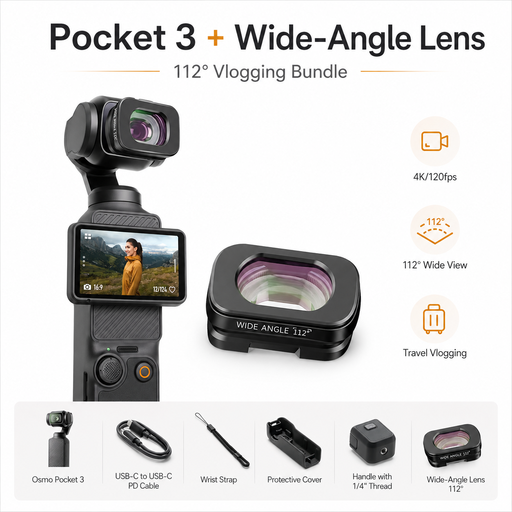
DJI Osmo Pocket 3 Standard Combo with ULANZI F35 112° wide-angle lens

DJI Osmo Pocket 3 Standard Combo + ULANZI F35 112° wide-angle lens

The wide-angle lens included in this bundle is designed for wider shots; it isn’t a telephoto zoom for distant rock details.

The bundle includes a 1-inch CMOS camera and a 3-axis gimbal.

View at Joybuy
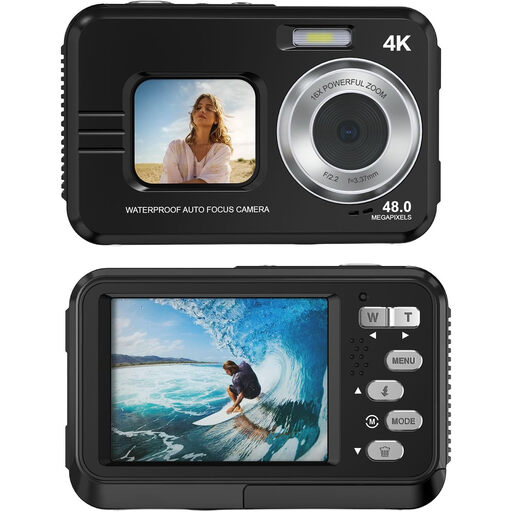
KINSI digital camera with 2.8-inch screen and 16x digital zoom

KINSI digital camera, 2.8-inch screen

The stated 16x digital zoom isn’t an optical telephoto range, so you can’t compare it with optical zooms based on the zoom figure alone.

The product listing specifies a 2.8-inch screen and waterproofing to 3.5 m.

View at Joybuy

Komery W6 digital camera with 12x optical zoom

Komery W6 digital camera

For distant subjects, the product listing specifies 12x optical zoom. Also check the stated field of view at the telephoto end.

The listing also specifies 64 MP and Wi-Fi.

View at Joybuy

Songdian digital camera with 8x optical zoom

Songdian digital camera with 8x optical zoom

The title specifies 8x optical zoom, but the zoom figure alone doesn’t tell you what field of view the lens offers for distant rock details.

The title also specifies 5K, 64 MP and a dual-lens system.

View at Joybuy
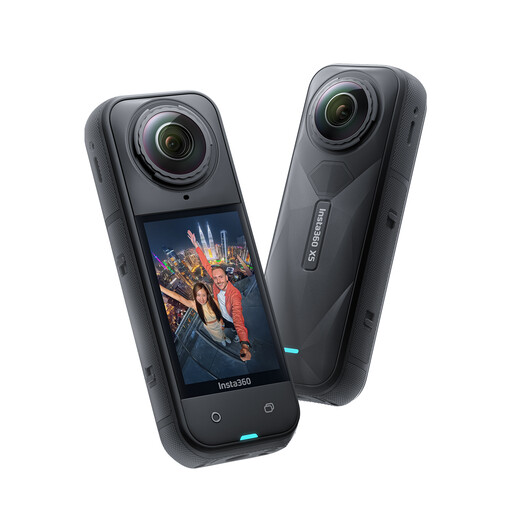
Insta360 X5 8K 360° action camera

Insta360 X5 8K 360° action camera

This model is designed for 360° video, so it isn’t a direct alternative to a telephoto camera for taking individual shots of distant rock details.

The product listing specifies two sensors and 360° video recording up to 8K30fps.

View at Joybuy

Frequently asked questions

Is a standard zoom enough for small details on distant rocks?

Not necessarily. Compare the field of view at the telephoto end with the subject you want to photograph. Nikon’s Z50II twin-zoom kit includes a 50–250 mm telephoto zoom as well as the 16–50 mm lens; a kit with only a standard zoom doesn’t include it.

How can I shoot handheld with a long telephoto lens?

Check the stabilisation in the lens or body you’ll actually be using, and adjust your shutter speed accordingly. Canon Academy distinguishes between shooting with and without a tripod. Nikon’s claim of up to five stops of stabilisation applies to the specific Z DX 50–250 mm VR lens and the conditions specified by Nikon.

What should I check in the box contents of an interchangeable-lens kit?

Compare the full model names and listed contents, as a body or standard-zoom kit isn’t the same as a twin-zoom kit. Nikon lists both lenses in the Z50II twin-zoom kit reviewed here and notes that it doesn’t include a charger; Canon names the lens included in the R10 kit reviewed here.

What are the rules for photography locations in Saxon Switzerland National Park?

If your location is inside the national park, the park authority says you must stay on the paths. In core zones, you may only use marked paths. Before your visit, check the official path service for current closures too. This guidance doesn’t apply universally to every location across the entire Elbe Sandstone Mountains.

Who should I contact if a product I bought from a retailer is faulty?

Your statutory consumer rights are against the seller, not automatically the camera manufacturer. The European Union’s consumer information states that goods bought from a trader are covered by a minimum two-year legal guarantee from the date you receive them. A voluntary manufacturer’s warranty doesn’t replace this right.