
Lieferung heute & morgen

Qualitätsgarantie

Willkommens-Angebote freischalten: KOSTENLOSE Lieferung | Bis zu 80 % RABATT | Kostenlose 30-Tage-JoyPlus-Testphase
App herunterladen
An electric air pump for car and bicycle can save valuable space in everyday life and make inflating tyres much easier. At the same time, cordless air pumps vary considerably in pressure performance, air flow, battery life and accessories. If you focus only on specifications such as “150 PSI” or “fast inflation”, you may end up buying a device that is not suitable for your needs.
As a Joybuy Product Recommendation Officer, I filter through the most important product specifications and show what drivers, cyclists and e-bike riders, motorcyclists and outdoor enthusiasts should look out for.
A 150 PSI air compressor sounds powerful at first. However, maximum pressure only describes the upper limit; it does not automatically indicate inflation speed. For car tyres, air flow, motor power and actual operating time are also important. A device with high maximum pressure but a low delivery rate may take considerably longer to inflate an almost flat car tyre than a small bicycle tyre.
You should therefore also check:
A cordless air pump is practical when no mains socket or 12-volt connection is available. However, battery capacity alone is not enough for comparison. What matters is how many tyres can be inflated on a single charge and whether the manufacturer distinguishes between topping up and fully inflating a tyre.
If you keep a cordless air pump in your vehicle for emergencies, you should charge it regularly. Lithium-ion batteries can discharge more quickly in cold or hot conditions, or when stored for a long time with an empty battery. A corded 12-volt tyre compressor is therefore an alternative for drivers when maximum independence from the battery charge level is less important.
A portable tyre compressor fits in a rucksack, glove compartment or bicycle bag. However, its compact size often also means a smaller motor and limited heat dissipation. When inflating several tyres consecutively, you should follow the manufacturer’s guidance on operating time. Automatic shut-off protects against exceeding a preset pressure, but it does not replace taking breaks if the device becomes very hot.
A tyre pump with pressure gauge should display the current pressure as clearly as possible. Several units, such as PSI, Bar, kPa and kg/cm², are useful because vehicle and bicycle manufacturers may use different measurements. For drivers in Germany, the recommended pressure shown on the vehicle is the deciding factor. This is usually found on the door pillar, fuel flap or in the owner’s manual.
The compressor’s pressure display will not necessarily match the reading from a garage or petrol station. For safety-critical applications, check the tyre pressure when the tyres are cold using a suitable gauge.
A pump with preset pressure reduces the need to constantly monitor the inflation process. Automatic shut-off ends the process as soon as the selected target value is reached. Before use, however, you should still check that the correct unit and target value have been selected.
Bicycle tyres may be fitted with a Presta or Schrader valve. An inflation needle is usually required for balls. For an electric tyre inflator for cars and bicycles, the included accessories should be clearly listed in the product details.
Important: Not every model is suitable for every vehicle. According to its product description, the Fanttik X9 Ace is intended exclusively for bicycles. Conversely, small outdoor pumps with a high air volume are more suitable for air mattresses or inflatable equipment and are not necessarily designed for car tyres.
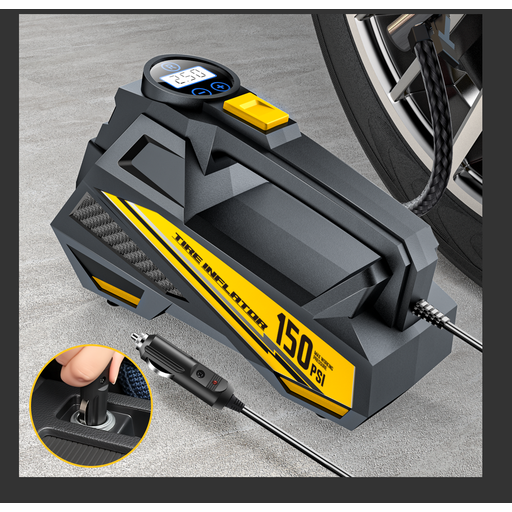
Why this product suits this profile: For drivers looking for a straightforward solution for car, motorcycle and bicycle tyres, powered via a 12-volt socket.
The 12 V power supply means that operation does not depend solely on the charge level of an integrated battery. According to the product information, the device should be allowed to cool down after extended use.
12-volt connection, digital LCD display, up to 150 PSI, plus automatic shut-off and LED light according to the product description.
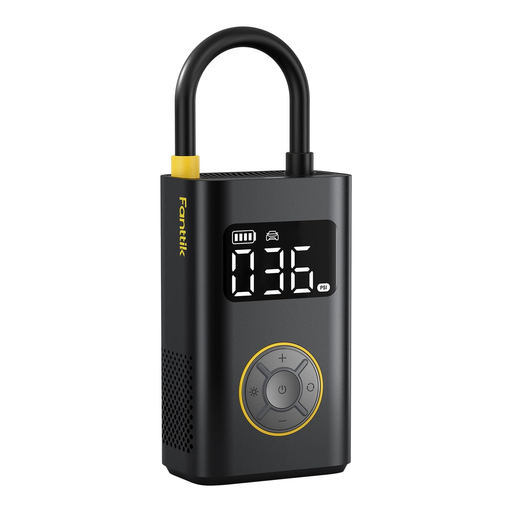
Why this product suits this profile: Suitable for users who want to combine a digital pressure gauge, preset modes and cordless operation for compact cars, motorcycles and bicycles.
The product description lists automatic shut-off, several modes and a runtime of up to 23 minutes. Actual performance depends on tyre size and starting pressure.
Up to 150 PSI, integrated hose, accessory compartment and four preset modes plus manual adjustment according to the manufacturer’s specifications.
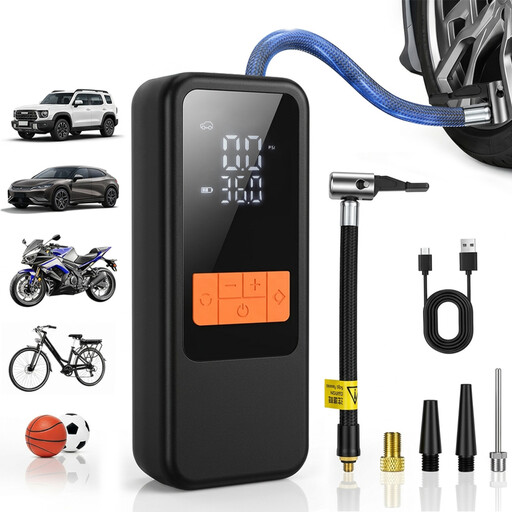
Why this product suits this profile: For regular users with several vehicle or leisure needs who require modes for cars, motorcycles, bicycles and balls.
The specifications state specific runtimes, charging time, air flow and a measurement accuracy of ±0,01 kg/cm². Even so, the recommended breaks must be observed when inflating flat car tyres.
19-mm cylinder, 26 l/min air flow, 4,000-mAh battery, 150 PSI maximum pressure and LED light according to the product data.
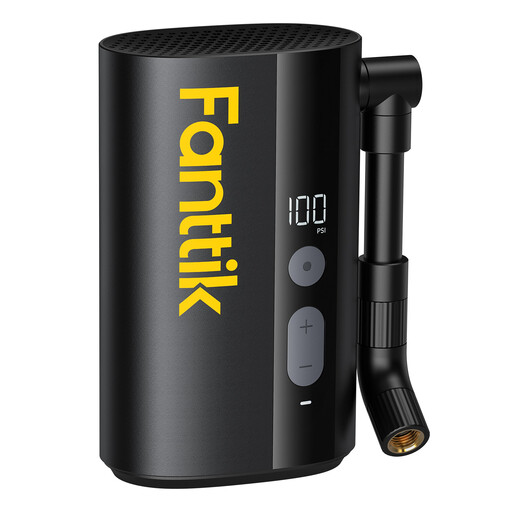
Why this product suits this profile: A purpose-built electric bicycle pump for road bikes, mountain bikes and e-bikes, focusing on low weight and compatible valves.
The product description explicitly states that it is intended exclusively for bicycles. This helps prevent choosing the wrong model for car or motorcycle tyres.
5,000-mAh battery, Presta and Schrader valves, 150 PSI maximum pressure and automatic shut-off according to the product description.
We have put together a complete, regularly updated list of products that fully meet these strict selection criteria and the safety regulations applicable in the EU.
Before starting, check the vehicle manufacturer’s recommended tyre pressure. Inflate cold tyres wherever possible, as heat can affect the measured pressure. Connect the hose straight to the valve and check that no air is audibly escaping.
With corded devices, the vehicle’s engine should be running in accordance with the product instructions so that the vehicle battery is not unnecessarily drained. With battery-powered devices, the charge level and temperature are important. The pump should not be used in water and should be allowed to cool down after extended operation.
The required pressure depends on the vehicle, load and tyre size. The information shown on the vehicle or in the owner’s manual is decisive, not the pump’s maximum pressure. A device rated at 150 PSI does not need to be operated at this value.
Runtime varies depending on battery capacity, tyre size, starting pressure and target value. Manufacturer claims such as “eight tyres” often refer to defined top-up procedures. For a realistic assessment, check whether the claim refers to fully inflating tyres or merely increasing the pressure.
A hand pump is often sufficient for occasional adjustments and does not need charging. An electric model is practical when the pressure needs to be adjusted regularly, several bicycles need to be serviced or automatic shut-off is preferred. For car and motorcycle tyres, you need a model whose intended area of use explicitly includes them.