
Lieferung heute & morgen

Qualitätsgarantie

Willkommens-Angebote freischalten: KOSTENLOSE Lieferung | Bis zu 80 % RABATT | Kostenlose 30-Tage-JoyPlus-Testphase
App herunterladen
An electric air pump can make inflating tyres, balls, air mattresses and SUP boards much easier. However, pumps vary considerably in terms of pressure, airflow, power supply and accessories. If you only look at a high wattage or a high PSI rating, you may end up buying a pump that is unsuitable for your needs.
A high pressure rating is particularly important for bicycle and car tyres or SUP boards. For air mattresses and inflatable boats, however, a high airflow rate in litres per minute is usually more important. A compact cordless air pump with a high PSI rating may therefore work more slowly with large volumes than a mains-powered air mattress pump with a high airflow rate.
Battery capacity should be considered together with motor power, charging time and actual operating time. A cordless electric air pump is portable, but needs to be charged regularly. For longer camping trips or several SUP boards, a 12-volt vehicle pump or a larger SUP air pump may be the more practical choice.
A device may appear technically suitable and still not fit the valve. Before buying, check the following:
For tyres, an adjustable pressure range with a suitable unit such as PSI, BAR or kPa is useful. A digital pressure display makes checking easier, but does not replace the vehicle or tyre manufacturer’s specifications. For cars, take the recommended tyre pressure into account and, where possible, set it when the tyre is cold.
An automatic shut-off stops the process as soon as the set target value is reached. This reduces the risk of accidentally continuing to inflate. A range of up to 20 PSI is common for SUP boards, while some mini air pumps for tyres specify considerably higher maximum values. However, a high maximum pressure does not indicate that the device is suitable for lorry or trailer tyres.
Airflow is usually specified in L/min. Large inflatable products benefit from a high volume of air, while tyres require controlled pressure build-up. Two-stage systems are useful for SUP pumps: the first stage fills the board with plenty of air, while the second stage works at higher pressure.
Also pay attention to information about maximum continuous operating time and cooling breaks. Overheating protection or an active cooling system may be important when inflating several items. The instruction manual remains the definitive source for permitted operating times.
A portable battery-powered air pump is suitable for roadside assistance, bike rides and short outdoor trips. For regular use at home, a 220-volt air pump provides a consistent power supply. For keeping in the boot, compact devices with USB-C charging, a 12-volt connection or a power-bank function are worth considering.
Pay attention to:
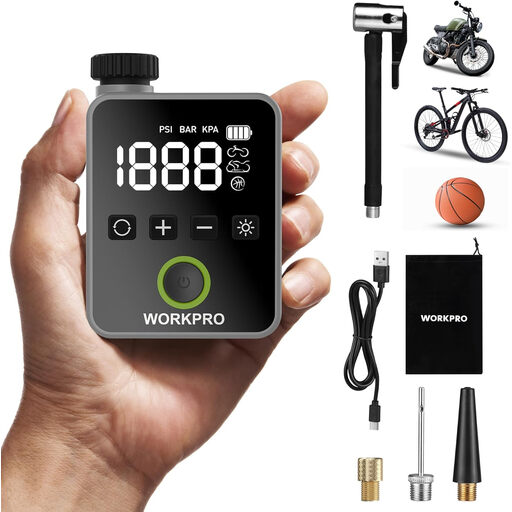
Why this product suits this profile: According to the product description, the compact cordless inflator weighs 270 g and, measuring 10.5 × 7.3 × 3.5 cm, fits into a bag or glove compartment.
Four operating modes, four nozzles and automatic shut-off help avoid accessory and operation problems. According to the product description, the device is not intended for lorry or trailer tyres.
Pressure setting from 3 to 140 PSI, digital display, LED light with SOS mode and power-bank function.
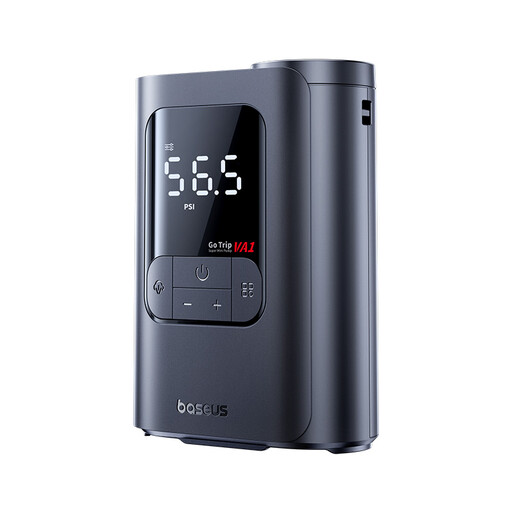
Why this product suits this profile: The cordless model combines a compact housing with a 7.4-volt battery and is designed for car, motorbike and bicycle tyres, as well as balls and other inflatable products.
The product description lists five inflation modes, three nozzles and automatic shut-off. This allows you to set the target value according to the application, rather than buying based solely on the maximum pressure.
Maximum motor power of 82 W, 2,500-mAh battery, USB-C input and a stated pressure accuracy of ±0.05 BAR.
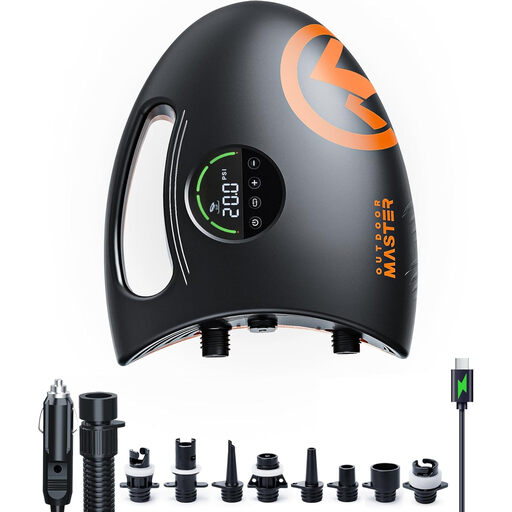
Why this product suits this profile: This SUP air pump is designed for inflatable stand-up paddle boards and boats, and offers battery, USB-C, 12-volt and 15.8-volt inputs.
The stated pressure range of 0.5 to 20 PSI, eight nozzles and deflation function cover typical SUP requirements. Nevertheless, the device must not be operated unattended or near water.
88.8-Wh battery, digital pressure setting with automatic shut-off and, according to the product description, enough capacity for up to six SUP boards per charge.
We have put together a complete, regularly updated list of products that fully meet these strict selection criteria and the safety regulations applicable in the EU.
For car tyres, the vehicle should be parked as safely as possible, and the target pressure should be taken from the vehicle documents or tyre information. With a battery-powered air pump, attach the hose firmly to the valve before starting the device. After inflating, check the pressure again.
With SUP boards, choosing the right nozzle is crucial. Start with the high-volume setting and, if available, switch to the high-pressure setting. Keep the pump dry, clean the filters according to the manufacturer’s instructions and allow the device to cool down after longer cycles.
A 220-volt pump such as the Intex QuickFill, with three connection nozzles and thermal overload protection, is primarily intended for indoor use and larger inflatable products. For mobile use, models such as a mini battery-powered air pump or an electric car tyre pump are more practical.
Its service life depends on operating time, charging cycles, storage and workload. Avoid continuous operation beyond the manufacturer’s specifications, do not block any air vents, and store battery-powered devices in a dry place protected from extreme heat. A battery is a wear part and may lose capacity over time.
Consumption depends on motor power, operating time and the power source. A small battery-powered air pump requires comparatively little energy while charging, whereas a powerful 220-volt pump can be operated for longer and with higher power consumption. For running costs, the actual usage time is the key factor.
For car tyres, an appropriate pressure range, a secure valve connection, an easy-to-read pressure display and automatic shut-off are important. Also check the information on vehicle size and maximum operating time. Compact battery-powered devices are generally suitable for topping up tyres and emergencies; for frequent use, airflow and cooling times should be compared more closely.