
Lieferung heute & morgen

Qualitätsgarantie

Willkommens-Angebote freischalten: KOSTENLOSE Lieferung | Bis zu 80 % RABATT | Kostenlose 30-Tage-JoyPlus-Testphase
App herunterladen
An electric air pump can save time and effort when you are out and about – provided it is suitable for the intended use. A compact rechargeable air pump for bicycle tyres works differently from a 12-volt compressor for car tyres or an SUP air pump with a high air volume. If you only look at the “150 PSI” specification, you may overlook important details.
A 150 PSI tyre inflator may state a high theoretical maximum pressure. However, this does not automatically mean that it will inflate a car tyre quickly. In practice, air flow rate, motor power, hose length and permitted operating time are also important.
A maximum pressure rating is useful for high-pressure bicycle tyres. For car tyres, however, what matters is how quickly the pump reaches a particular pressure range. An electric bicycle pump is therefore not automatically suitable for vehicles.
Car tyres generally use Schrader valves, while many road bikes are fitted with Presta valves. Air mattresses, balls, inflatable boats and SUP boards require different attachments. Before buying, check whether nozzles, adapters and hoses are included.
A high-pressure tyre pump is not automatically suitable as an air pump for inflatable boats. For large inflatables, a high air flow rate is more important than an especially high pressure.
A portable rechargeable air pump is flexible, but it needs to be charged regularly. Actual usage time depends on tyre size, starting pressure, target pressure and ambient temperature. For longer jobs, a 12-volt vehicle connection can be a practical addition.
The power supply also deserves attention: some models charge via USB-C, while others require batteries or a 12-volt socket. For battery-powered devices, buyers should check whether the batteries are included.
Maximum pressure is usually stated in PSI, bar or kPa. 150 PSI is approximately 10.3 bar. This figure describes the upper pressure limit, not the usual operating speed. A compact high-pressure compressor is often sufficient for bicycles and balls. SUP boards and air mattresses, on the other hand, require larger volumes of air.
SUP pumps often work in two stages: one stage delivers plenty of air for rapid initial inflation, while the second increases the pressure in a controlled manner. The OutdoorMaster Shark2, for example, is specified with an air flow rate of 350 l/min in the first stage and 70 l/min in the second. According to the product description, the pressure range extends from 0.5 to 20 PSI.
When choosing a rechargeable tyre pump, consider capacity, charging time and available power sources together. An integrated battery is convenient for bicycles, motorbikes or brief top-ups. For inflating several car tyres in succession, an additional 12-volt cable can be useful.
You should also look for:
A digital air pump with a pressure display makes checking easier. However, the display should not be used as a substitute for the pressure specified by the vehicle or tyre manufacturer.
A suitable valve connection is required for tyres. Balls, air mattresses, inflatable boats and SUP boards require additional nozzles. A pump with several adapters is more versatile, provided that the air flow is suitable for the product.
For electrical devices, you should also follow the operating instructions, check the CE marking and observe the information on the intended power supply. A 220-volt pump must not be connected directly to a 12-volt socket. Conversely, a 12-volt model requires a suitable converter if you want to use it with a household socket.
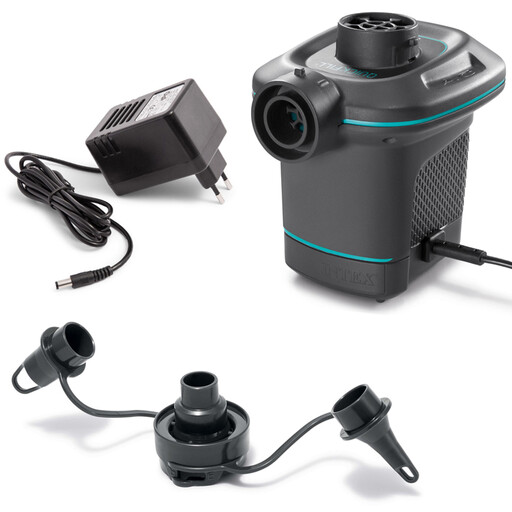
Why this product suits this profile: The compact INTEX pump is designed for air mattresses and other inflatables, both indoors and outdoors. Its stated air flow rate of at least 420 l/min supports quick inflation when camping or in the garden.
Three connection nozzles are specified. Important: according to the product description, the six required C batteries are not included.
Battery operation, a weight of 0.6 kg, three adapters, plus inflation and deflation functions.
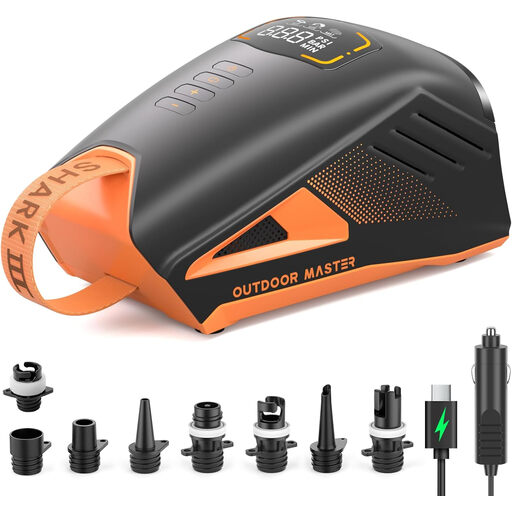
Why this product suits this profile: For SUP and boating enthusiasts, this model offers digital pressure monitoring, automatic shut-off and an integrated 74-Wh battery. According to the product description, it supports pressures of up to 20 PSI and comes with several connection options.
Its intended use is clearly focused on SUP boards and boats. The pressure setting reduces the risk of inflating purely by feel.
74-Wh battery, Type-C and 12-volt connections, eight nozzles, plus specified inflation and deflation times.
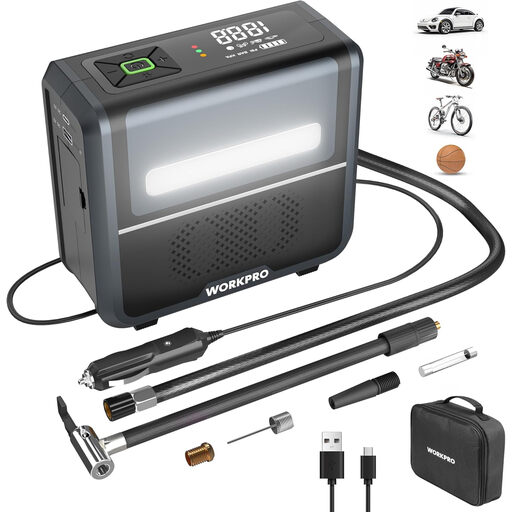
Why this product suits this profile: This model combines battery operation with a 380-cm 12-volt cable. According to the description, it is suitable for car, motorbike and bicycle tyres as well as balls, and also offers power bank and light functions.
The two power options reduce reliance on a single energy source. Automatic shut-off limits continued pumping once the target pressure has been reached.
Four preset modes, manual mode, pressure display in several units, LED emergency light and power bank function.
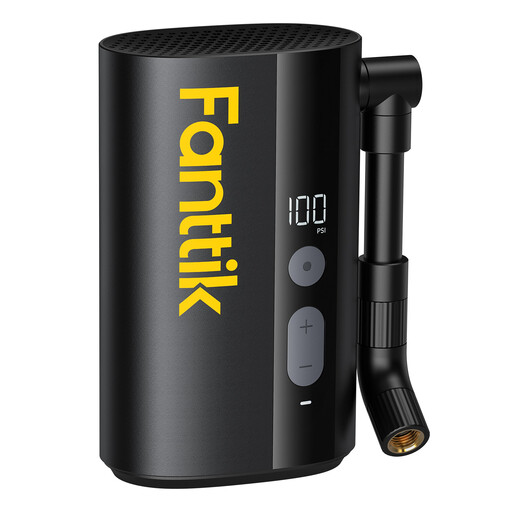
Why this product suits this profile: According to the product description, this compact rechargeable pump is designed exclusively for bicycles and supports both Presta and Schrader valves. It fits easily in a rucksack, bike bag or tool kit.
Its explicitly stated bicycle-only use sets clear limits. This helps prevent you from relying on a small bicycle pump to inflate car tyres.
5000-mAh battery, maximum 150 PSI, integrated Presta and Schrader connections, automatic shut-off and a stated runtime of up to 25 minutes.
We have put together a complete, regularly updated list of products that fully meet these strict selection criteria and the safety regulations applicable in the EU.
When inflating a car tyre, first check the current pressure while the tyre is cold. Set the target pressure according to the vehicle information or handbook. Do not cover the pump while it is operating. During longer jobs, taking breaks allows the motor and housing to cool down.
For SUP boards and inflatable boats: use the correct adapter and do not exceed the pressure specified by the inflatable product’s manufacturer. Automatic shut-off helps you set the pressure, but it does not replace checking the connections and valves.
This depends on battery capacity, tyre size, starting pressure and target pressure. Manufacturer claims about inflating several tyres per charge always relate to specific tyre sizes and pressure ranges. For regular, longer jobs, a model with a 12-volt backup connection or replaceable power supply is recommended.
The electricity used for charging is generally low compared with the cost of using a vehicle or workshop. However, battery-powered pumps also involve the cost of replacement batteries. Rechargeable models may be more practical for frequent use, provided that the charger and connection are compatible.
For occasional top-ups of bicycle, motorbike or car tyres, a suitable electric air compressor may be sufficient. Before a longer journey, however, check the battery, cable, pressure range and operating time. Depending on the model, a compact device may not be designed for large vehicles, trailers or several completely flat tyres.