
Lieferung heute & morgen

Qualitätsgarantie

Willkommens-Angebote freischalten: KOSTENLOSE Lieferung | Bis zu 80 % RABATT | Kostenlose 30-Tage-JoyPlus-Testphase
App herunterladen
An electric air pump can save you time when you’re out and about – as long as it’s suited to the job. Drivers need different specifications from campers, cyclists or people using air beds. Many disappointing purchases aren’t down to the price, but to misleading product claims: a high PSI rating doesn’t automatically mean faster inflation, and a compact battery-powered compressor isn’t necessarily suitable for inflating large volumes of air.
Figures such as 150 PSI air pump or 160 PSI may look impressive. For a car tyre, however, the amount of air delivered per minute and how long the pump can run under load are often more important. Maximum pressure simply describes the upper pressure limit under certain conditions. For air beds and inflatable boats, a high air flow rate matters more than an especially high pressure.
When choosing a cordless air pump, don’t look at battery capacity alone. Charging time, operating temperature, the number of tyres it can inflate and automatic shut-off are also important. Manufacturer figures are often based on specific test conditions. When inflating several car tyres in a row, the casing may heat up, which can affect the available performance.
An electric tyre pump for a car will usually need a Schrader valve connection. Many bikes also require a Presta adapter. A ball pump needs a needle, while air beds use wide or tapered nozzles. Before buying, check which connectors are included.
For cars, motorbikes and bikes, a pump with an adjustable target pressure is a sensible choice. A digital display can show the selected pressure and switch the pump off automatically when it reaches the target. When choosing a pump, check the pressure unit: PSI, BAR and kPa are different units. The maximum pressure shown on a tyre’s sidewall is not automatically the recommended operating pressure. Always follow the vehicle or tyre manufacturer’s guidance.
Air flow rate is often given in L/min. A high figure helps inflate air beds quickly, while a portable compressor that delivers higher pressure is suitable for tyres. A mini air pump may be enough for topping up the pressure, but it will take longer to inflate completely flat car tyres.
A battery-powered air pump is useful for emergencies, bike rides and campsites without a nearby power socket. Check the battery capacity, charging connection and whether it can also function as a power bank. Mains-powered models that plug into a vehicle’s 12-volt socket avoid the need to recharge a battery, but you’ll need an accessible socket and a cable that’s long enough.
Depending on how you plan to use the pump, the package should include an air hose, valve adapters, ball needle and USB charging cable. A built-in LED light can be useful at night. Other important features include an easy-to-read display, a secure connection to the valve and overheating protection. Only use the pump within its operating limits and never block the air intake.
The recommendations below group the available models by specific everyday situations. Technical details are based on the manufacturer information provided.
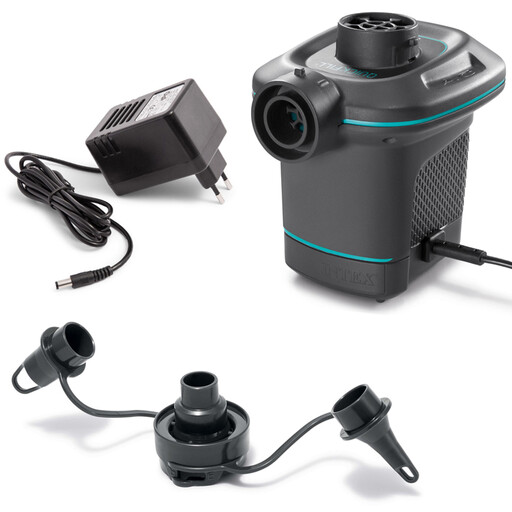
Why this product suits this type of user: This battery-powered air pump is designed for air beds and other inflatables, indoors and out. Three nozzles fit a range of valves.
The six C batteries required aren’t included, so remember to factor them into the cost before buying. The air flow rate of at least 420 L/min is designed for high-volume applications, not car tyres.
Battery-powered, with 3 adapters and a compact design for camping, the garden and leisure activities.
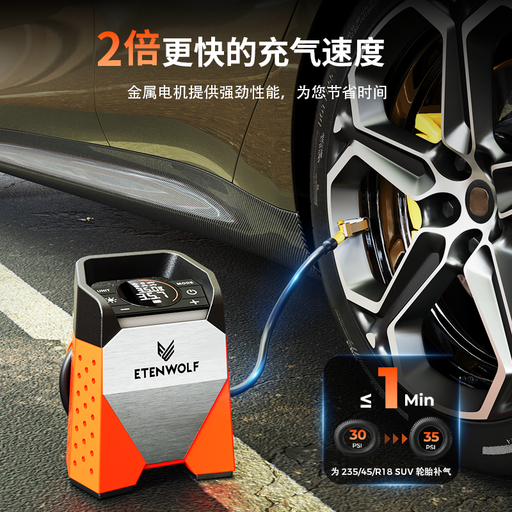
Why this product suits this type of user: This portable compressor is designed for cars, SUVs, bikes and balls. It combines battery power with a stated pressure of up to 160 PSI.
Its intended uses and accessories are clearly specified. The included pressure gauge, hose, Presta adapters and ball needle make it suitable for a range of everyday situations.
Battery-powered, with a maximum output of 132 W, an air flow rate of 1.25 CFM and a stated maximum operating pressure of 160 PSI.
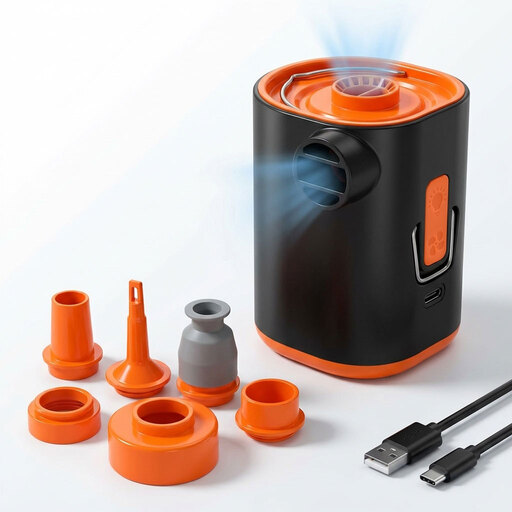
Why this product suits this type of user: This model can both inflate and deflate items, and comes with an LED light for outdoor use.
It’s clearly intended for outdoor inflatables. With a pressure of 4,800 Pa, it isn’t suitable as an electric tyre pump for high tyre pressures.
30 W motor, stated air flow rate of 300 L/min, 3,600 mAh battery configuration and built-in light.
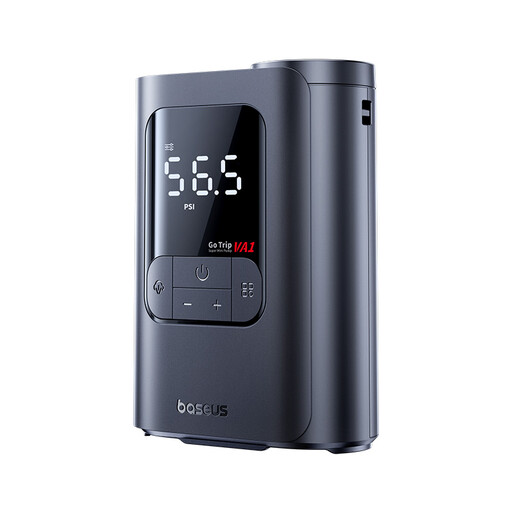
Why this product suits this type of user: This cordless air pump is designed for car tyres, SUVs, light commercial vehicles, motorbikes, bikes, balls and air beds.
The manufacturer gives a recommended vehicle pressure range of 2.0 to 3.5 BAR and specifies that this model isn’t suitable for heavy lorry tyres. This helps you choose the right pump for the job.
2,500 mAh battery, USB-C charging input, five inflation modes, three nozzles and a stated pressure accuracy of ±0.05 BAR.
We’ve put together a complete, regularly updated list of products that meet these strict selection criteria and the safety regulations in force in the EU.
For many cars, a pump with an operating range that covers the vehicle’s recommended tyre pressure will be sufficient. A maximum rating of 150 PSI or more isn’t, by itself, proof of quality. Air flow rate, hose connection, measurement accuracy and automatic shut-off are also important.
It depends on the motor power, battery capacity, tyre size and operating temperature. Smaller models are often designed for pressure top-ups and compact tyres. Inflating completely flat or larger tyres can take considerably longer. Check the manufacturer’s guidance on how many tyres the pump can inflate and its maximum operating time.
There’s no single answer, as lifespan varies from one pump to another. Using it carefully within the recommended pressure and temperature limits, charging the battery regularly and storing it in a dry place can help extend its life. Stop using the pump if you notice unusual noises, damaged cables, a swollen battery or a pressure reading that fluctuates significantly.