
Lieferung heute & morgen

Qualitätsgarantie

Willkommens-Angebote freischalten: KOSTENLOSE Lieferung | Bis zu 80 % RABATT | Kostenlose 30-Tage-JoyPlus-Testphase
App herunterladen
An electric air pump can save valuable space in your car boot, rucksack or camping gear. Depending on its design, it can top up car, motorbike and bicycle tyres, as well as inflate balls and air beds. But choosing one isn’t just about the maximum PSI rating. The power supply, intended use, measurement accuracy and permitted operating time are all important considerations.
Figures such as 150 PSI or higher indicate the maximum pressure the pump can reach, not its actual output when inflating a car tyre. In practice, you should also consider airflow in litres per minute, motor power, hose diameter and battery capacity. A model with a high maximum pressure may be suitable for bicycle tyres, but could still take several minutes to inflate a completely flat car tyre.
A cordless air pump works without a mains socket or 12-volt connection. However, its runtime is limited. After inflating several tyres, you may need to stop and recharge it. Check the charging time, stated runtime and whether it has a USB-C port or a 12-volt cable.
Heat build-up is also worth bearing in mind when using a pump for longer periods. Many portable compressors need a break between inflation sessions. The manufacturer’s guidance on operating time should therefore matter more than marketing claims about speed alone.
Automatic shut-off stops the pump when it reaches the target pressure you’ve set. This reduces the risk of overinflating a tyre, but it doesn’t replace checking that the pressure is correct. Always follow the guidance from your vehicle, tyre or bicycle manufacturer. Check car tyre pressure when the tyres are cold, if possible.
A compact pump with the right valve adapter is often enough for bicycle tyres, e-bikes and balls. If you regularly want to inflate car tyres, look for a combination of sufficient maximum pressure and a useful airflow rate. An air compressor rated at 150 PSI can be a versatile choice for many portable applications, but the PSI rating alone tells you little about how long it will take to reach the target pressure.
A 2,000 to 4,000 mAh battery can inflate a different number of tyres depending on the motor power and tyre pressure. Look out for:
A corded electric tyre inflator can be handy for inflating several car tyres, but you’ll need access to a 12-volt socket. A cordless model offers more flexibility, but you’ll need to charge it before setting off.
A digital pressure display should show PSI, BAR or kPa clearly. Preset modes for cars, motorbikes, bicycles and balls make the pump easier to use. It’s also important to be able to adjust the target pressure manually.
Check that the pump comes with the connections you need. Presta valves on road bikes are different from the Schrader valves found on many mountain bikes, e-bikes and vehicles. Air beds and balls often require additional nozzles.
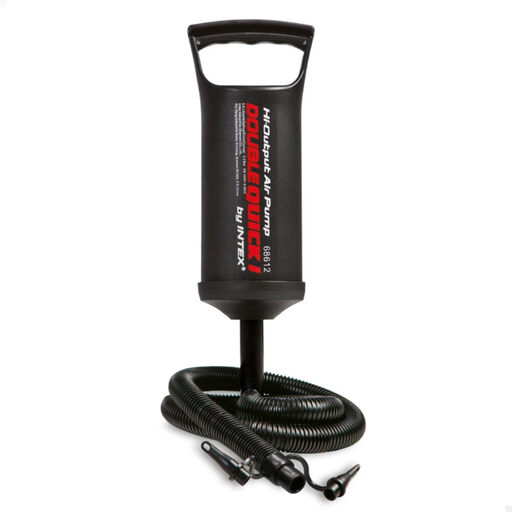
Why this product suits your needs: A manual pump is often all you need for air beds, boats and other leisure items, with no battery or charger required.
The pump doesn’t depend on battery charge or charging times. It comes with a flexible hose and three valve adapters.
29 cm tall, with an air volume of 0.9 litres per stroke and air delivery on both the push and pull strokes.
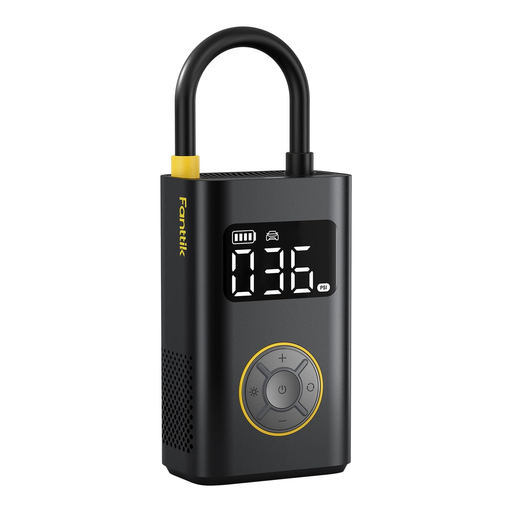
Why this product suits your needs: A good option if you’re looking for a cordless air pump with a display, multiple modes and automatic shut-off for different vehicles.
Set target pressures digitally and check the pressure on the display. According to the product information, the pump stops automatically when it reaches the preset pressure.
Maximum pressure of 150 PSI, four smart modes plus a manual mode, and built-in storage for accessories.
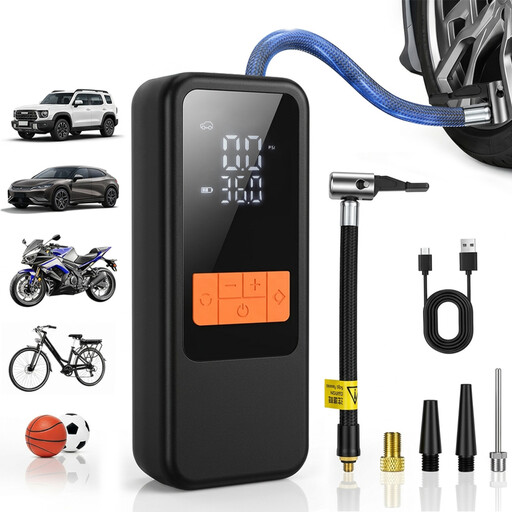
Why this product suits your needs: A compact option for drivers, motorcyclists and cyclists who want to keep a pump with several preset modes in their vehicle.
The product information lists a 25-minute runtime, five modes and an LED light with continuous and SOS modes. This makes it easier to understand the pump’s functions and operating limits.
4,000 mAh battery, maximum pressure of 150 PSI, airflow of 26 l/min and a USB-C port with power bank output, according to the product description.
We’ve put together a complete, regularly updated list of products that meet these strict selection criteria and fully comply with the safety regulations in force in the EU.
Before use, check the hose, valve adapters and power connection for any visible damage. With a 12-volt model, fully unwind the cable and plug it firmly into the vehicle’s socket. For longer inflation sessions, run the engine as advised by the manufacturer to avoid putting unnecessary strain on the vehicle battery.
Place the pump on a dry, stable surface and keep the air inlet and outlet clear. It’s a good idea to let the pump cool down after several inflation sessions. An electric air pump is no substitute for a spare tyre, a repair kit or regular tyre pressure checks.
It depends on the battery capacity, tyre pressure, temperature and motor power. Depending on the model, the runtime may be enough for a few top-ups or several tyres. Check the manufacturer’s stated runtime and fully charge the pump before longer journeys.
Yes, provided the model is specifically designed for car tyres and covers the required pressure range. Electric bicycle pumps aren’t automatically suitable for vehicle tyres. Check that the pump has a suitable airflow rate and valve connection, and that its stated operating time meets your needs.
With a battery-powered model, charging costs are low. The bigger practical considerations are how often you’ll need to charge it and how long the battery will last. A corded portable compressor doesn’t need a charging break, but it does rely on a 12-volt socket or another suitable power source.