
Lieferung heute & morgen

Qualitätsgarantie

Willkommens-Angebote freischalten: KOSTENLOSE Lieferung | Bis zu 80 % RABATT | Kostenlose 30-Tage-JoyPlus-Testphase
App herunterladen
An electric all-round slicer can cut bread, sausage, cheese, fruit, vegetables and, depending on the model, meat more evenly than a conventional kitchen knife. However, not every appliance automatically delivers comfortable results. The design, blade, safety features and actual intended use are decisive factors.
A high wattage sounds convincing at first. On its own, however, it says little about how cleanly a device cuts through hard crusts, firm cheese or meat. Just as important are blade geometry, gearing, running behaviour and the ability to guide the food in a controlled manner.
With an electric knife, the food is usually held freely. A classic bread slicer or deli slicer, on the other hand, works with a carriage guide and adjustable slice thickness. Both types fulfil different tasks.
An electric kitchen knife with a special frozen-food blade is not automatically suitable for every deep-frozen block. Very hard or large pieces can put considerable strain on the blade, motor and safety mechanism. Manufacturer instructions regarding food size and thawing should therefore be observed.
A manual meat slicer or an electric meat slicer designed for commercial requirements is also not comparable to a compact household appliance. For regular quantities and long operating times, factors such as work surface, cooling, cleaning effort and continuous operation also come into play.
Non-removable blades, hard-to-reach gaps and a motor block that must not get wet can make everyday use difficult. Look for removable blades, a clear blade release mechanism and dry, safe storage. This is particularly important when in contact with raw meat or frozen foods.
For bread and soft foods, a serrated edge is often practical. For smooth cuts on meat or cheese, a smooth blade can be useful. Some appliances offer multiple blades or blade sets. Check the following:
The Ritter Sono¹, according to the product description, offers a slice thickness from wafer-thin up to approximately 20 mm and a removable carriage with an 18 cm cutting path. The Ritter serano⁷ is specified with up to 23 mm, a 24 cm carriage as well as one smooth and one serrated blade.
Stainless steel slicers are not automatically made entirely from stainless steel. Check which parts are actually made of metal and which are made of plastic or glass. A stable carriage, a non-slip base and a torsion-resistant construction make precise work easier.
With an electric food slicer, the footprint is also important. A device with a larger carriage requires more space but often provides better guidance for loaves of bread or roasts.
A safety switch, a secure blade release and a stable hold are among the essential features. Before purchasing, you should read the specifications regarding voltage, power, cable, operating mode and cleaning. The CE marking can be an additional formal indication, but it does not replace checking the specific operating and safety instructions.
With electric knives, the blade should audibly click into place when inserted. The motor block must generally not be immersed in water. For private households, a device for short cutting intervals is usually sufficient; smaller catering or hospitality businesses should pay particular attention to the intended operating duration.
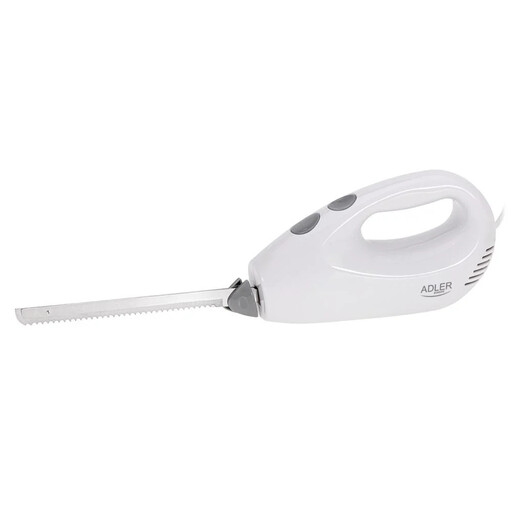
Why this product fits the profile: This electric kitchen knife is designed for occasional cutting of bread, roasts and suitable frozen foods, and its compact design makes it easy to store.
Two blade sets separate the intended use for general foods and frozen goods. The safety switch and described blade release support controlled changes.
180 W rated power, up to 200 W maximum power, 27.5 cm universal blade and corrosion-resistant stainless steel blades.
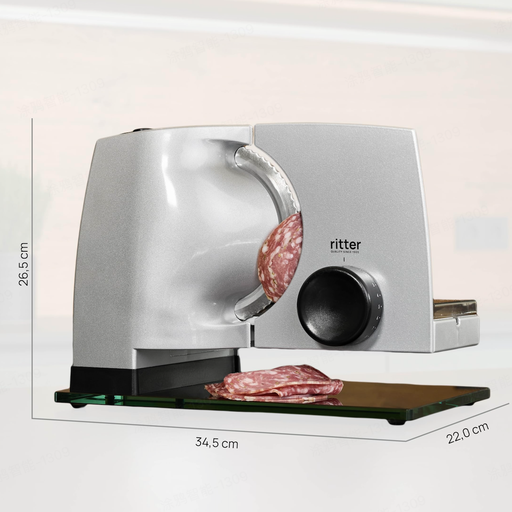
Why this product fits the profile: The design with a cantilevered metal body, glass base and removable carriage is aimed at kitchens where bread, fruit and vegetables are regularly sliced.
The adjustable slice thickness and guided carriage reduce reliance on freehand guidance. The removable carriage makes cleaning easier to access.
Cutting range up to approximately 20 mm, 18 cm cutting path, safety glass base as well as momentary and continuous switches.
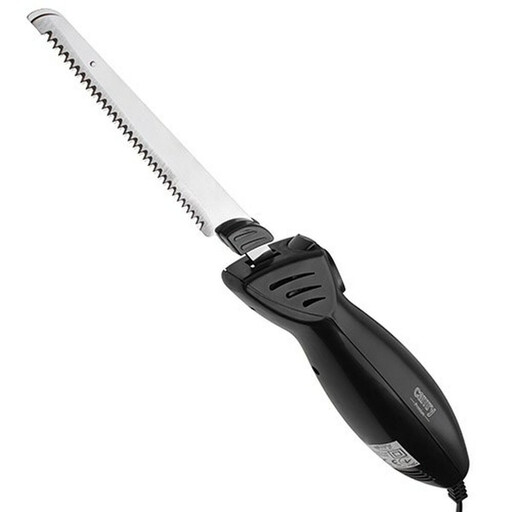
Why this product fits the profile: This electric knife offers various accessories for households that switch between bread, meat, frozen goods and other cutting tasks.
Blade changes are carried out via a designated release button. Two blade sets and a safety switch address different applications and safe operation.
Ergonomic handle, two blade sets, frozen-food blade, universal blade, fork and storage box.
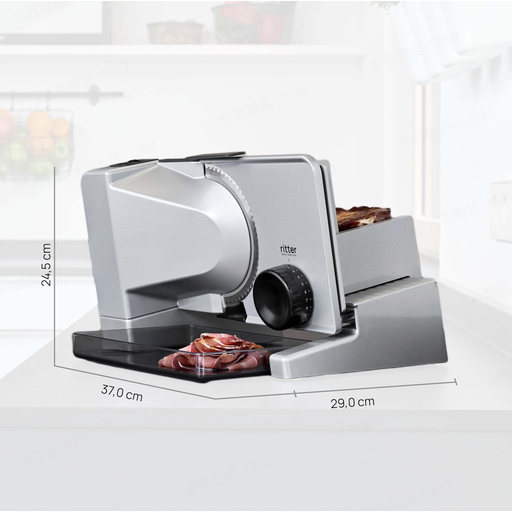
Why this product fits the profile: For frequent, precise cuts on bread, sausage, cheese and vegetables, this guided deli slicer with variable speed is particularly relevant.
The construction takes into account cutting guidance, blade selection and cleaning: the carriage, drip tray and two different blades are designed for planned workflows.
Full metal construction, electronically adjustable speed, slice thickness up to 23 mm, 24 cm cutting path and safety switch.
We have compiled a complete, regularly updated list of products that fully meet these strict selection criteria and the safety regulations in force in the EU.
The choice depends on the food to be cut and the desired level of control:
For an all-round slicer for bread and meat, you should therefore not only pay attention to the product name, but also check the blade type, slice thickness, carriage length and permitted foods.
Consumption depends on the motor power and the actual running time. A device with 180 W would theoretically consume 0.18 kWh during one hour of continuous operation. In a household, an electric food slicer usually runs for only a few minutes per use. For ongoing costs, the duration of use is therefore more decisive than the maximum wattage.
Only if the manufacturer expressly provides for this and a suitable blade is available. Some electric knives have a separate frozen-food blade. Very hard, large or bone-in pieces should not be processed unless this is explicitly permitted.
A general lifespan cannot be reliably stated. It is influenced by frequency of use, type of food, cleaning, blade care and operating duration. Regularly removing residues, storing it dry and using the intended blades can reduce wear. For frequent use, it is also worth checking the availability of spare parts and repair options.