
Lieferung heute & morgen

Qualitätsgarantie

Willkommens-Angebote freischalten: KOSTENLOSE Lieferung | Bis zu 80 % RABATT | Kostenlose 30-Tage-JoyPlus-Testphase
App herunterladen
For many expectant parents, an electric baby swing is high on the must-have list. It promises welcome relief in daily life and a safe place for a newborn to settle and rest. However, the market is overwhelming, filled with products whose marketing claims often suggest more than the technology can deliver. As your Joybuy Product Recommendation Officer, I'm here to help you cut through the noise and make an informed decision.
Many parents invest in a model that ends up sitting unused in a corner after just a few weeks. This is often due to three common pitfalls:
To avoid these mistakes, you should focus on the product features that are truly important and objective.
Instead of being swayed by marketing buzzwords, you should examine three core areas. These define the quality and practical utility of an electric baby swing.
Your child's safety is non-negotiable. A swing suitable from birth must have a 5-point harness system. This secures the baby at the shoulders, hips, and between the legs, preventing them from slipping out or tipping over—a risk that can occur with a simpler 3-point harness (hip and crotch only), especially with more active babies.
Also, look for a sturdy frame and non-slip feet. A wide base made of solid materials like aluminium ensures that the swing remains stable and won't tip, even at maximum speed.
The type of motion is crucial for a soothing baby swing. Most newborns respond positively to a gentle, side-to-side gliding motion, as it mimics being rocked in a parent's arms. Models that perform this movement quietly and smoothly are often more effective than those with jerky back-and-forth motions. Adjustable speed levels are useful for tailoring the intensity to your baby's preferences. The motor should operate whisper-quietly so as not to disturb sleep.
Modern features can make daily life significantly easier. An automatic baby cradle with a timer function (e.g., 8, 15, or 30 minutes) switches off on its own once your baby has fallen asleep. An electric baby bouncer with music or nature sounds can provide additional calming effects, though adjustable volume is important. A baby swing with a remote control is particularly convenient. It allows you to change settings without having to get up and potentially disturb your child. Bluetooth connectivity for playing your own songs can also be a useful feature.
Based on these objective criteria, we have identified several models that are well-suited for different types of parents.
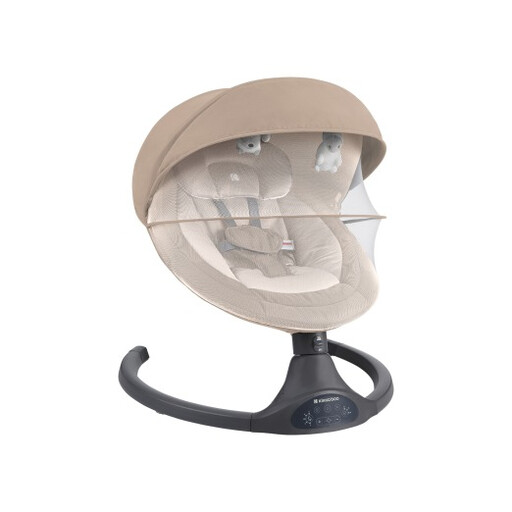
Why This Fits Their Persona: This model is aimed at parents who value modern control options. With Bluetooth, a remote, and a touchscreen display, it offers maximum flexibility to operate the swing from a distance and even play your own music.
It bypasses the Feature Trap by offering many features that are all practical and useful for daily life (timer, remote control). The core function, a quiet side-to-side motion, remains the focus.
Comprehensive control via remote and Bluetooth. The lightweight aluminium frame ensures stability while maintaining good portability.
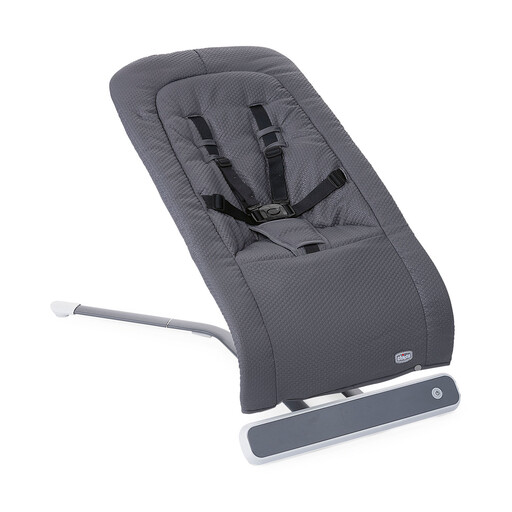
Why This Fits Their Persona: Ideal for parents seeking a clean, modern design and a compact solution for smaller living spaces. This model focuses on the essential, soothing side-to-side gliding motion without superfluous extras.
It avoids the Motion Trap by specialising in the one, proven side-to-side motion. Its compact, flat-folding design solves the problem of bulky, unused equipment.
Very compact and lightweight (3 kg), making it easy to transport and store. The dual power supply via batteries or USB cable offers high flexibility.
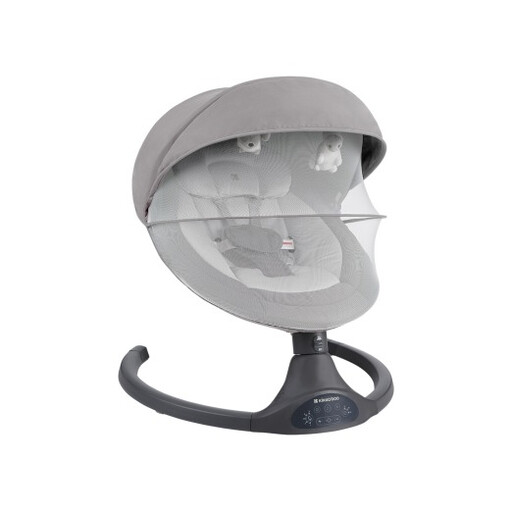
Why This Fits Their Persona: For parents looking for a safe, reliable, and straightforward solution. This model combines all essential safety and comfort features in a lightweight, easy-to-use package.
It directly addresses the Stability Trap with a lightweight yet robust aluminium frame and non-slip feet. The 5-point harness offers a higher level of safety than many basic models.
The detachable canopy with a mosquito net and sunshade is a practical detail for use in bright rooms or during the summer. Operation via the display is intuitive.
We have compiled a complete, up-to-date list of products that fully meet these strict selection criteria and German safety regulations.
Most electric baby swings are designed for use from birth (0 months) up to a maximum weight of 9 kg. This typically corresponds to an age of about 6 to 9 months. It is crucial to stop using the swing as soon as your child begins to sit up independently, as the risk of tipping increases. Always follow the specific weight and age recommendations provided by the manufacturer.
An electric baby bouncer is intended for short, supervised rest periods during the day and is not a substitute for a cot or crib. It is generally recommended not to leave a baby in the swing for more than 30 to 60 minutes at a time and not for extended periods of sleep. This is for both safety and to promote healthy spinal development on a firm, flat surface.
Not necessarily. Many models offer flexible power options. Some are powered exclusively by a mains adapter, which is ideal for stationary use at home. Other models also offer the option of battery operation. This increases mobility, allowing you to use the cradle in rooms without a power outlet or on the patio. Before purchasing, check which options the specific model offers and whether batteries or a mains adapter are included.