
Lieferung heute & morgen

Qualitätsgarantie

Willkommens-Angebote freischalten: KOSTENLOSE Lieferung | Bis zu 80 % RABATT | Kostenlose 30-Tage-JoyPlus-Testphase
App herunterladen
With rising energy costs and a growing desire for more coziness at home, many people are looking for efficient heat sources. An electric blanket or a specialised heated blanket can be a smart addition to provide targeted comfort without having to turn up the central heating. At the same time, innovative cooling blankets are available for the warmer months to ensure a restful night's sleep.
This article provides an overview of the different types and presents important criteria to consider when choosing an electric blanket, a heated underblanket, or a cooling blanket. The goal is to provide you with an objective basis for your decision.
The selection of models is vast. To find the right product, several functional and safety-related features should be taken into account.
A key criterion for any electric blanket is safety. Models featuring an electric blanket with an auto shut-off switch themselves off after a predefined time. This not only prevents unnecessary power consumption but also serves as an important safety measure in case you forget to turn the blanket off or fall asleep with it on. Integrated overheat protection is also a standard feature that cuts off the power supply in the event of a malfunction, thus minimising the risk of a defect. Look for recognised safety certificates such as the GS mark (Tested Safety) or the CE marking.
Individual heating needs vary. Therefore, blankets with multiple adjustable temperature settings are advantageous. Basic models often offer three levels, while more advanced versions provide up to ten heat settings. A blanket with a timer allows you to set the operating time precisely, for example, for one or several hours. This is particularly practical for pre-warming the bed before sleep or to avoid continuous heating throughout the night.
For hygienic use, a washable electric blanket is essential. On most modern models, the control element and cable can be detached, allowing the textile part of the blanket to be cleaned in the washing machine. Always follow the manufacturer's care instructions, which usually recommend a gentle cycle at 30 or 40°C. Materials range from soft fleece and flannel for a classic heated blanket to special functional fabrics for a cooling blanket, which wick away moisture and offer a smooth, cool surface.
Here is a selection of products that cater to different needs—from the classic electric blanket and the targeted heated underblanket to the cooling blanket for summer.
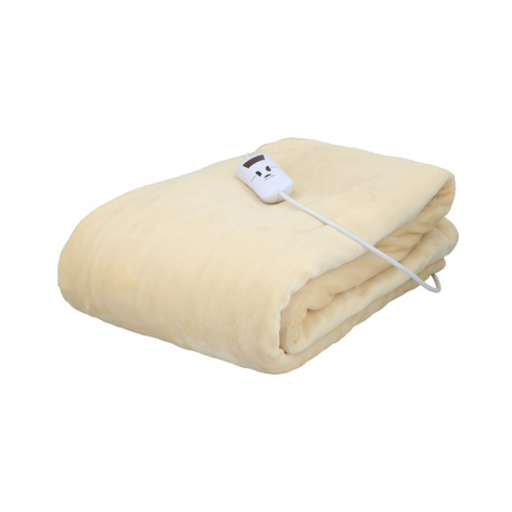
Why it stands out: This blanket from Alpina combines a generous size with versatile settings. With ten heat levels and an adjustable timer from one to nine hours, it offers a high degree of flexibility for various scenarios.
Pros:
Who is it for? For users looking for a classic, large, and flexibly adjustable electric blanket for cosy hours on the sofa or in bed.
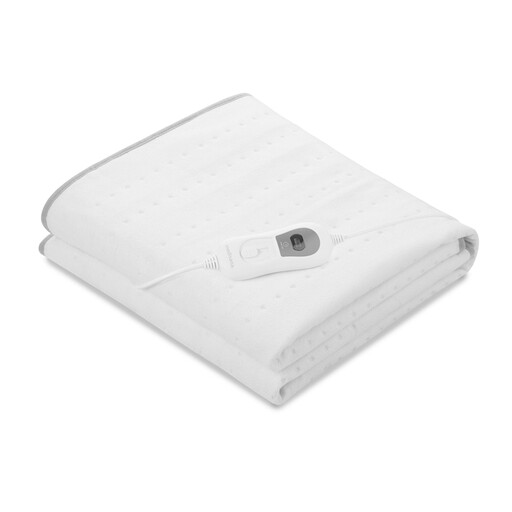
Why it stands out: The medisana HU 666 is not a throw but a heated underblanket that is placed directly on the mattress. It warms the bed from below, ensuring even and efficient heat distribution.
Pros:
Who is it for? Ideal for people who want to get into a pre-warmed bed in the evening and prefer efficient warmth coming from underneath.
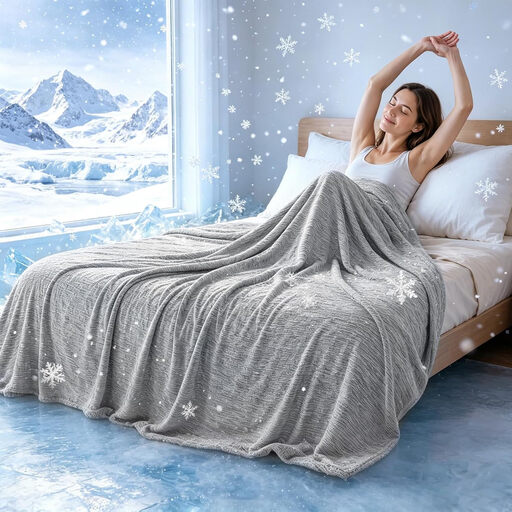
Why it stands out: This blanket is the opposite of a heated blanket and is designed for warm nights. It uses special fabric technology to dissipate body heat and create a cooler sleeping sensation.
Pros:
Who is it for? For people who tend to overheat or experience night sweats in the summer or in general, and are looking for a solution for a cooler, drier sleep.
If an electric blanket isn't right for you and you prefer a classic, cosy alternative without a power cord, you can find more models that provide comforting warmth in our category for lined white throw blanket.
1. How much electricity does an electric blanket use? The power consumption of an electric blanket is low compared to a room heater. Most models have a power rating between 60 and 180 watts. With a power of 100 watts (0.1 kWh) and an electricity price of 30 cents per kWh, one hour of operation would cost 3 cents. Calculated over the whole night, the consumption remains manageable and is significantly cheaper than heating an entire room.
2. Can you sleep with an electric blanket all night? Models with a reliable auto shut-off and overheat protection are designed for overnight use. Many users set the timer so that the blanket turns off after a few hours. However, it is important to always read and follow the manufacturer's safety instructions. The blanket should always be laid out flat and not creased or folded during use.
3. How do you wash an electric blanket correctly? To make an electric blanket washable, the control unit with the power cable must first be completely removed. The textile part can then be washed according to the manufacturer's instructions—usually on a gentle cycle at 30 or 40°C. Use a mild detergent and avoid the spin cycle or the dryer to prevent damage to the internal heating wires. The blanket must be completely air-dried before its next use.