
Lieferung heute & morgen

Qualitätsgarantie

Willkommens-Angebote freischalten: KOSTENLOSE Lieferung | Bis zu 80 % RABATT | Kostenlose 30-Tage-JoyPlus-Testphase
App herunterladen
An electric blanket can warm your bed or sofa precisely and limit energy use to your personal needs. However, when buying one, it’s not just about a soft surface or a high number of temperature settings. What really matters are clear details about auto shut-off, safety features, cleaning, size and controls.
A large number of settings sounds useful at first. But if there’s no easy-to-read display or the heat is awkward to adjust, the feature becomes impractical in daily use. For couples, it’s also important whether each side can be set independently. A single control unit can mean compromise when you have different warmth preferences.
“Automatic shut-off” doesn’t mean the same thing on every model. Some electric underblankets switch off after a fixed time, while others offer several timer levels. When choosing, you should know whether, for example, 90 minutes, 120 minutes or longer periods are available. The auto shut-off doesn’t replace the instruction manual and isn’t a reason to use an electric blanket unattended or while sleeping against the manufacturer’s guidelines.
Calling an electric blanket machine washable is only practical if the control unit and connection are completely detachable. The electrical unit must be removed before washing. The blanket or cover must dry fully after cleaning before it’s reconnected. Creases, folds and trapped cables can also affect use.
An electric blanket with temperature settings should have clear, intuitive controls. Three levels may be enough for simple pre-warming; five or ten levels allow finer adjustment. An LED display makes it easier to check your chosen setting, especially in low light.
For a double bed or two people, separate controls are a good idea. This way, each side can be adjusted independently. A pre-heat function is useful if you want to warm the bed or sofa first and then reduce the power afterwards.
The dimensions need to suit your purpose:
With a warming underblanket, you should also check whether it’s meant to be used under or over your body. The manufacturer’s instructions on positioning, folding and permitted use are essential.
Look for details such as overheat protection, overcurrent protection and automatic shut-off. Certification marks like CE, CB, UKCA, RoHS or a VDE plug should be considered as concrete product information; they aren’t a substitute for safe handling.
Power consumption is given in watts. A 60-watt device running for two hours uses 0.12 kWh in theory. The actual cost depends on your individual electricity tariff and how long you use it. Low wattage alone doesn’t automatically mean the right heating performance.
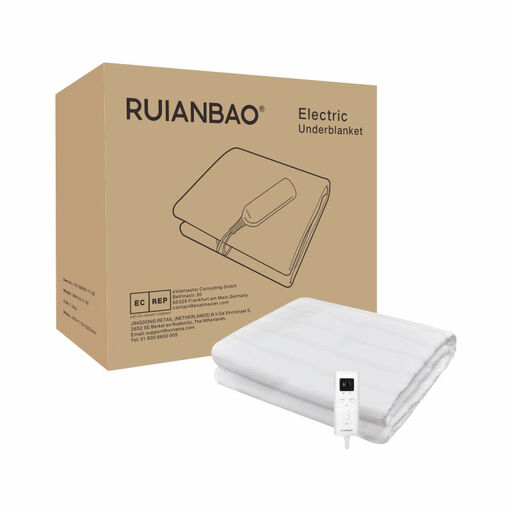
Why this product fits the profile: This compact electric underblanket offers a manageable size and a power consumption of 60 W, making it a great starting point for individually adjustable warmth.
The nine selectable shut-off levels make the running time clearer than a vaguely explained timer function. You should still follow the instructions on folding and use.
10 temperature levels, LED display, pre-heat function and detachable connection; machine-washable design according to the product description.
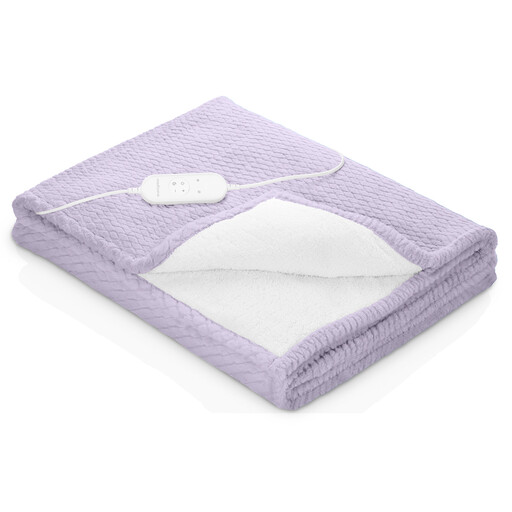
Why this product fits the profile: The larger surface area and textile faux-fur material are designed for use on a sofa or bed. Nine temperature levels allow detailed adjustment.
The product description specifies a wash temperature of 30 °C, a detachable controller and a fixed shut-off after 120 minutes. This makes care and running time much clearer.
120 W, 2.4 m cable, overheat protection and Öko-Tex Standard 100 according to product details; controller detachable and machine washable at 30 °C.
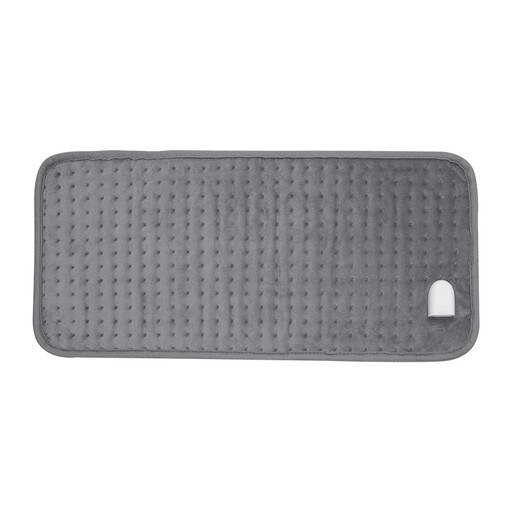
Why this product fits the profile: This compact heating pad is intended for a limited area such as a seat, legs, back or shoulders, and can be used more precisely than a heated blanket.
The 90-minute shut-off limits the intended usage time. The detachable connection supports cleaning; the pad must not be folded, used wet or while sleeping.
Five temperature levels, automatic temperature control and machine-washable textile unit with detachable connection.

Why this product fits the profile: Two controls allow each side to be set independently. The 160 x 140 cm size is designed for use as a warming underblanket.
The separate controls avoid the typical compromise when two people share a blanket. The detachable connection supports machine washing; overcurrent and overheat protection are specified.
Three temperature levels, timer with 2, 4 or 12 hours, LED display, pre-heat button and VDE plug according to the product description.
We’ve put together a full, regularly updated list of products that fully meet these strict selection criteria and the safety regulations in force in the EU.
Before using an electric blanket for the first time, lay it out completely flat and check for visible damage. Also bear in mind:
The consumption depends on the power rating and how long you use it. A 60 W electric blanket running for two hours uses 0.12 kWh in theory. To work out the cost, multiply this figure by your own electricity price per kilowatt-hour. The temperature setting and automatic shut-off affect the actual running time.
First, unplug the blanket and remove the controller and connection. Then follow the care instructions for your specific model. For the products mentioned, 30 °C and a gentle wash cycle are specified. The textile must be left to air dry completely; the cable and controls must not come into contact with water.
It’s not possible to give a reliable lifespan for every model. It depends on how often you use it, how you store it and how you care for it. Avoid creases, moisture and pulling on the cable. Check the electric blanket before each use and replace it if the wires are damaged, there are burnt patches or the shut-off no longer works reliably.