For muddy tile grout and recessed wall niches, a compact handheld brush with a genuinely suitable narrow attachment is usually the better choice. A wider brush head may be more practical for open areas. Bosch DIY lists tiles, grout and tight spaces as suitable uses for the UniversalBrush, while Ryobi specifies a 15 cm brush head for the R18CPS-0. Also check the bristle material, what’s included, the battery system and which parts of the appliance are protected from water according to the instructions.
Which brush is right for you?
For cleaning niches and grout
If you mainly want to shift mud from recessed corners and short sections of tile grout, the brush head needs to be able to reach them properly. Bosch DIY lists grout and tight spaces as suitable uses for the UniversalBrush; HOTO describes attachments designed for tight corners.
For gentle cleaning
If you’re cleaning delicate tiles as well as grout, choose an attachment whose material and stiffness are suitable for the surface. Einhell describes a nylon brush for scratch-sensitive materials such as tiles and marble.
For wet areas and larger surfaces
If you regularly clean larger or damp tiled areas, check the head size, handle, battery system and water protection for the specific part of the appliance. Bosch DIY, Einhell and Ryobi specify different protection ratings for their respective models.
What should you look for when buying?
| Buying criterion |
What to look for |
Who is it important to? |
| Niche brush head |
Check the shape and size of the detail or grout attachment actually included against the dimensions of your niche. |
If I want to shift mud from a narrow, recessed corner, I need a brush head that can reach it properly. Around 31% of consumers have this specific need for precision as their main priority. |
| Bristle material |
Check the bristle material and which surfaces it’s approved for. If you have delicate tiles, test it on an inconspicuous area first. |
If I’m cleaning delicate tiles as well as grout, I want to choose the stiffness and material carefully. Around 25% of consumers prioritise protecting the surface. |
| Use in wet conditions |
Check the IP rating, which part of the appliance is protected and the instructions for the exact model variant. Don’t assume the protection rating applies to the charger too. |
When cleaning damp walls, I want to know which parts of the appliance are approved for this use. Around 25% of consumers prioritise documented suitability for wet use. |
| Accessories and surfaces |
Check the head size, included attachments, battery and charger, as well as replacement heads compatible with the model. |
If I regularly clean larger areas, reach and a complete set of accessories matter. Around 19% of consumers prioritise regular surface cleaning and predictable ongoing costs. |
How to avoid common buying mistakes
-
Assuming a “grout cleaner” is suitable for wall grout
Einhell describes the GE-CC 18/110 Li E-Solo as being for paving joints on driveways and patios. Its brushes are designed for specific models, and the name alone doesn’t mean they’re suitable for a tiled wall niche.
Check the intended use and brush-head compatibility rather than choosing by product category alone.
-
Choosing a wide brush head for a narrow niche
The 15 cm head on the Ryobi R18CPS-0 is specified for surfaces and may not reach recessed corners.
Compare the width of the niche opening with the dimensions of the brush head.
-
Assuming an IP rating applies to the whole appliance
For the R18CPS-0, Ryobi expressly states that the IPX7 rating applies to the battery compartment. This doesn’t mean every part of the appliance has the same protection rating.
Check the instructions to see which parts are approved for the wet cleaning you have in mind.
-
Not checking what’s included against what you need
According to the manufacturer, the Einhell PICOBELLA 18/90 is supplied without a battery or charger. The attachments included can also vary between other brushes.
Compare variants only if the package includes the brush heads you need and, where applicable, a battery and charger.
Brands to consider
Bosch DIY
The UniversalBrush is described as a handheld brush for smaller cleaning jobs on tiles, grout and in tight spaces.
- Bosch DIY lists interchangeable accessories and IPX5 splash protection for the UniversalBrush.
- The model charges via Micro-USB. Check that the specific attachment fits your niche and what uses are permitted by the instructions.
HOTO
The Wand Cordless Spin Scrubber is available as a detail brush with several magnetic heads.
- HOTO lists 12 heads, including attachments for tight corners, and an IPX7 rating for the Wand.
- Check which heads are included in the specific package and whether the narrow attachment will fit your niche.
Ryobi
The R18CPS-0 is a larger handheld brush in the 18V ONE+ system.
- Ryobi specifies a 15 cm diameter brush head for this model.
- The head may be too large for recessed niches. Also check what’s included with the variant you choose.
Einhell
Einhell describes the PICOBELLA 18/90 as suitable for indoor and outdoor surfaces, while the GE-CC 18/110 Li E-Solo is designed for garden and paving joints.
- Einhell lists two speed settings and IPX4 protection for the PICOBELLA 18/90. One nylon brush in the Einhell grout brush set is described as suitable for scratch-sensitive materials such as tiles.
- The PICOBELLA 18/90 is supplied without a battery or charger. The separately described pair of grout brushes for the GE-CC won’t necessarily fit the PICOBELLA.
Joybuy product selection
The following Joybuy products are electric cleaning brushes with interchangeable heads for household surfaces; several product descriptions mention grout, corners or tiles. Check the shape of the head for each model before choosing it for a narrow niche.
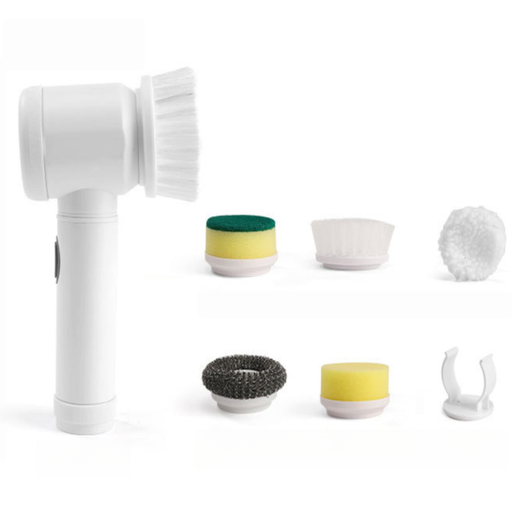 No image available
Electric handheld cleaning brush with 10 interchangeable heads
The product description lists hard-to-reach corners as a suitable use. Check that the attachment you need fits your niche.
10 interchangeable brush heads.
View at Joybuy
 No image available
Rotating cleaning brush with 7 interchangeable heads
The product description lists tiles and grout as suitable uses. Check whether one of the included heads will fit your niche.
7 interchangeable heads; rechargeable; LED charging indicator.
View at Joybuy
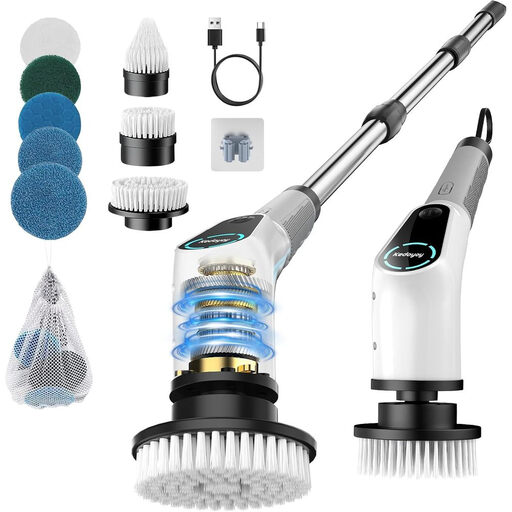 No image available
Electric spin scrubber with 8 interchangeable heads
Described as suitable for tiled bathroom areas. Compare the shape of the attachments with the corners and tiled surfaces you want to clean.
Adjustable handle: 30–137 cm; 2 speeds; USB-C charging port.
View at Joybuy
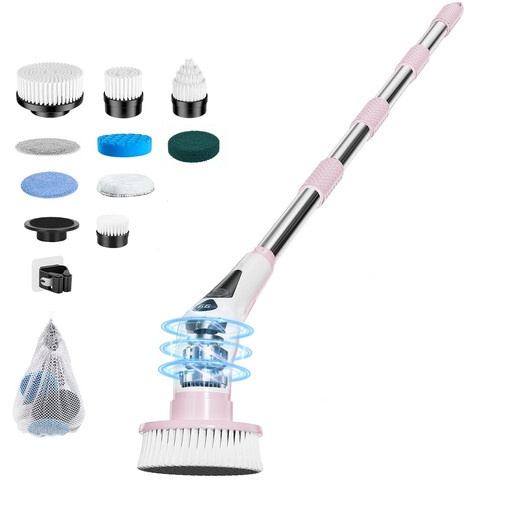 No image available
Cleaning brush set with 9 interchangeable heads
The product description lists a corner brush head for grout and edges, and a flat head for tiles and walls.
Extension handle: 30–130 cm; LED battery indicator.
View at Joybuy
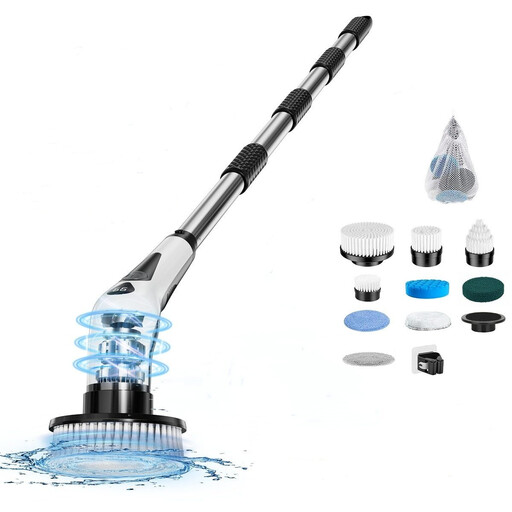 No image available
Electric cleaning brush with 9 interchangeable heads
The product description lists a corner brush head for grout and edges, and a flat head for tiled walls.
Extension handle: 30–130 cm; LED battery indicator.
View at Joybuy
Frequently asked questions
How do I remove mud from a tiled wall niche?
First, choose a brush head that can reach into the corner and a cleaner that’s suitable for the tiles and grout. The German Environment Agency considers ordinary cleaning products sufficient for surfaces that can usually be wiped or scrubbed, and generally advises against disinfectant cleaners and highly corrosive products. Also follow the care instructions for your specific surface.
Can I fully submerge a brush with an IP rating?
No. An IP rating alone doesn’t prove that the whole appliance can be submerged. Bosch DIY specifies IPX5 for the UniversalBrush; Ryobi expressly states that the IPX7 rating for the R18CPS-0 applies to the battery compartment. Check the instructions for the exact model to see which parts are approved for the wet use you have in mind.
Which extra parts do I need to buy for a battery-powered appliance?
It depends on the model and package. Einhell expressly states that the PICOBELLA 18/90 doesn’t include a battery or charger. Check the full package contents against what you need, and make sure any battery you already own is compatible with the appliance.
What are my rights in Germany if a product is faulty, and how should I dispose of it?
If a purchase is faulty, contact the seller about your statutory rights. The German consumer advice centre says these rights generally apply for two years. The German Environment Agency states that old electrical appliances must not be put in household waste. Find a suitable collection point for disposal.


