
Lieferung heute & morgen

Qualitätsgarantie

Willkommens-Angebote freischalten: KOSTENLOSE Lieferung | Bis zu 80 % RABATT | Kostenlose 30-Tage-JoyPlus-Testphase
App herunterladen
An electric car for children can make an appealing gift, provided the child’s age, riding environment and the vehicle’s technical features are a good match. However, there are significant differences between electric ride-on cars, children’s electric quad bikes, electric karts for children and two-seater electric vehicles. A low price or a long list of features alone says little about whether a vehicle is suitable for everyday family use.
A 12 V electric car for children is not automatically suitable for every age. Voltage mainly describes the electrical specification of the battery and motor. Other important factors include maximum speed, number of motors, load capacity, wheel size and the vehicle’s own weight. A 6-volt model may be enough for younger children, while older children may have different requirements in terms of seating position and handling.
Use the manufacturer’s age recommendation as a guide, and check it against your child’s height, weight and motor skills. A vehicle listed for ages 3 to 8 will not necessarily suit every child in that age group. Seat distance, pedal position and handlebar height are particularly important for an electric kart for children or an electric buggy for children.
A children’s vehicle with remote control gives parents an extra way to control it. Before buying, check whether the remote only controls forward and reverse, or also has speed settings and a stop function. For a battery-powered children’s vehicle, also consider charging time, battery type, spare-parts availability and correct storage. Run-time estimates depend on the surface, load, temperature and driving style.
First, check the stated age range and maximum load capacity. For a two-seater, you need to take the combined weight of both children into account. A model with two seats is not automatically suitable for two children if the permitted load or cabin space is limited.
An electric ride-on car or a small electric quad bike for children may be easier for younger children to get into. Depending on the manufacturer’s guidance, older children may be better suited to an electric kart or a larger outdoor electric vehicle. Children should only use electric vehicles under supervision and on suitable private ground.
For younger children, a low, controllable speed is generally more practical. For example, the Kids Bumper Car in our selection is listed with 6 V and a stated speed of 2.5 km/h. Larger vehicles may benefit from several speed settings. According to the product information, the two-seater model has three speed settings ranging from 3 to 8 km/h.
Two motors can help with power delivery in some vehicles. However, this does not automatically mean the vehicle is suitable for particular types of terrain. Check the tyre tread, ground clearance, suspension and the surfaces the manufacturer explicitly recommends.
Before ordering, compare the following:
CE marking is not an independent quality mark. It indicates that the manufacturer declares the product is intended to comply with the relevant EU requirements. Keep the instructions and charger, and use only suitable spare parts.
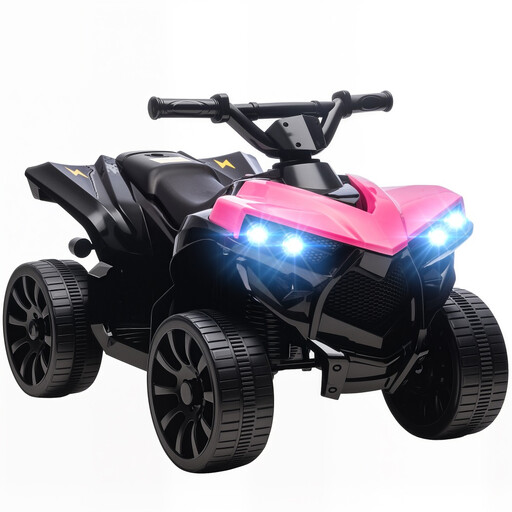
Why this product suits this profile: According to the product information, this compact 6-volt electric quad for children is intended for ages 18 to 56 months. It could suit families looking for a simpler vehicle for a child’s first rides on suitable outdoor surfaces.
The clearly stated 6-volt specification and compact size help you avoid choosing a vehicle that is too large for a younger child. You should still check the age recommendation against your child’s measurements.
6 V, stated dimensions of 70 x 42 x 45 cm, plus music and LED headlights according to the product name.
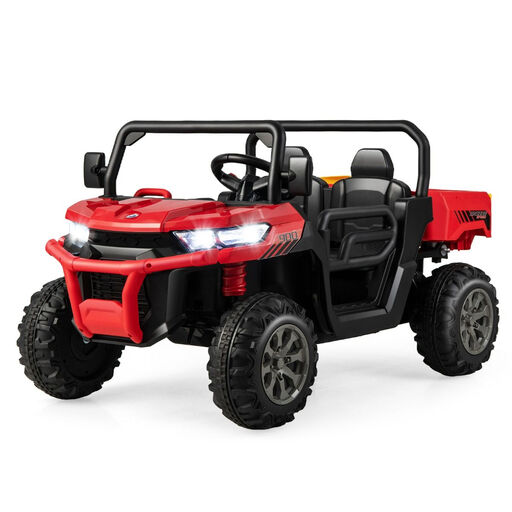
Why this product suits this profile: According to the product information, this two-seater is intended for children aged 3 to 8 and offers parents several control and comfort features for shared use.
The product information specifies two seats, a load capacity of up to 50 kg, a seat belt, soft start and a 2.4 GHz remote control. This makes it easy to check important buying criteria before you order.
12 V battery, two motors, three speed settings from 3 to 8 km/h, suspension and two seats according to the product description.
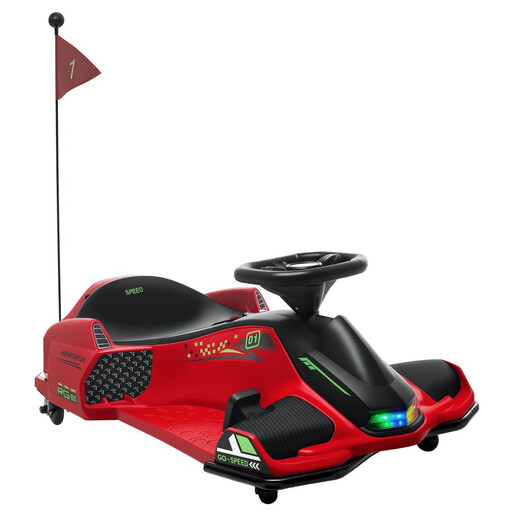
Why this product suits this profile: According to the product name, this electric kart for children is intended for ages 8 to 12. It is aimed at families with a suitable, flat outdoor area and an interest in kart-style driving.
The stated age range distinguishes this model from vehicles designed for toddlers. Before use, check the speed, space required and personal protective equipment.
12 V and drift mode according to the product name; check the current product details for the specific speed and load capacity before buying.
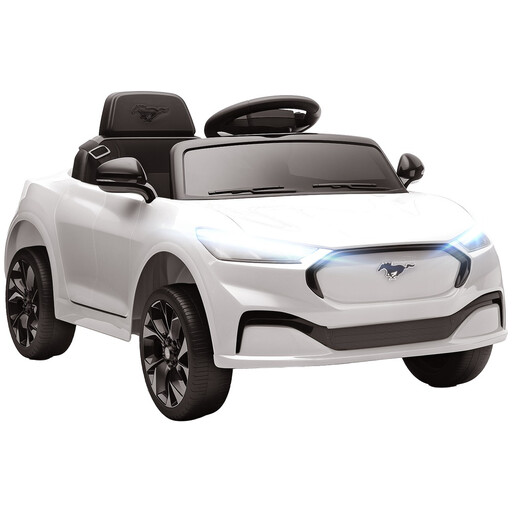
Why this product suits this profile: According to the product name, this white electric car for children combines a 12 V drive with two motors and a 2.4 GHz remote control for supervised outdoor use.
The remote control reduces how much the vehicle depends on the child’s driving ability. Before use, check the range, stop function, charging time and age recommendation in the full product information.
12 V, two motors and 2.4 GHz remote control according to the product name; the white version makes a suitable birthday or Christmas gift.
We’ve put together a complete, regularly updated list of products that meet these strict selection criteria and fully comply with the safety regulations in force in the EU.
Only charge the battery with the supplied charger, and place the vehicle on a dry, well-ventilated surface while it is charging. After use, don’t leave a battery-powered children’s vehicle out in the rain or frost for long periods. Regularly check the screws, wheels, cables, seat fixings and bodywork for visible damage.
An outdoor electric vehicle should not be used on public roads, pavements or cycle paths unless it is specifically approved for that purpose. Suitable areas include private, open spaces away from traffic, stairs and deep obstacles. A helmet and sturdy footwear may be sensible, depending on the speed and surface.
Run time depends on battery capacity, load, speed, surface and outdoor temperature, so a general estimate is not reliable. After buying, follow the manufacturer’s charging and storage instructions, and don’t store the battery fully discharged.
It depends on the model. For example, our selection includes a 6 V bumper car listed at 2.5 km/h and a two-seater 12 V vehicle listed at 3 to 8 km/h. A lower speed makes supervision easier, but does not replace adult supervision.
It can be useful if your child is not yet able to steer or brake confidently. Before buying, check the range, speed settings, emergency stop function and batteries required. The remote control offers an extra way to manage the vehicle, but it is no substitute for a suitable riding environment.