
Lieferung heute & morgen

Qualitätsgarantie

Willkommens-Angebote freischalten: KOSTENLOSE Lieferung | Bis zu 80 % RABATT | Kostenlose 30-Tage-JoyPlus-Testphase
App herunterladen
An electric car for children can provide plenty of outdoor fun in the garden, on private paths or in the courtyard. There’s a wide choice, from electric ride-on cars and children’s vehicles with remote controls to electric quads and go-karts for children. But differences in recommended age, speed, battery and seating can determine whether a vehicle is really right for everyday use.
Many buying mistakes aren’t down to the price, but to unclear product information. Before buying, parents, grandparents and other family members should look out for these three common pitfalls:
The manufacturer’s recommended age is an important starting point, but it shouldn’t be the only factor in your decision. Also check:
A two-seater isn’t automatically suitable for two larger children. For example, the 12 V vehicles with two seats described here are stated to have a weight capacity of up to 50 kg and to be suitable for children aged around 3 to 8 years. Before buying, check these figures against your child’s actual height and the combined weight of both children.
A 12 V children’s vehicle often offers more features and motor power than a 6 V model, but there are still significant differences between products. Check:
Actual running time depends on factors including the surface, load, temperature and driving style. So a stated charging time of 8 to 12 hours doesn’t automatically tell you how far the vehicle will go.
A children’s electric vehicle should only be used on suitable private surfaces and under supervision. Toy vehicles are generally not intended for public roads, cycle paths or pavements. Before ordering, it’s worth checking:
A CE marking isn’t an independent quality seal. It indicates that the supplier must take the relevant requirements into account. So claims such as ‘off-road’ or ‘high performance’ should be assessed against specific details such as speed, wheel size, suspension and weight capacity.
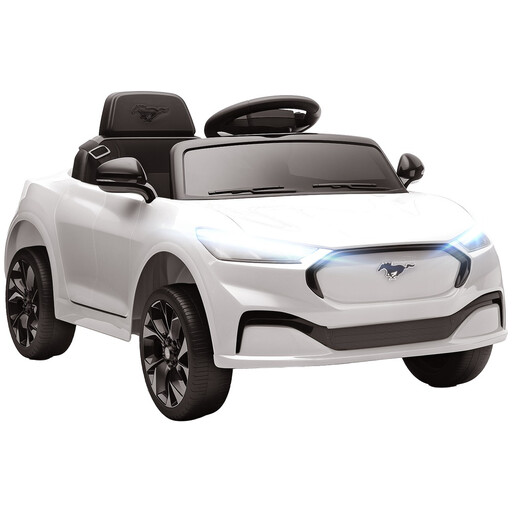
Why this product suits this profile: This 12 V model combines two motors with a 2.4 GHz remote control, making it a good option for families looking for an electric car for children that adults can control when needed.
The remote control lets an adult take charge. Check the product information for the exact speed, charging time and weight capacity before buying.
12 V system, two motors and 2.4 GHz remote control, according to the product name.
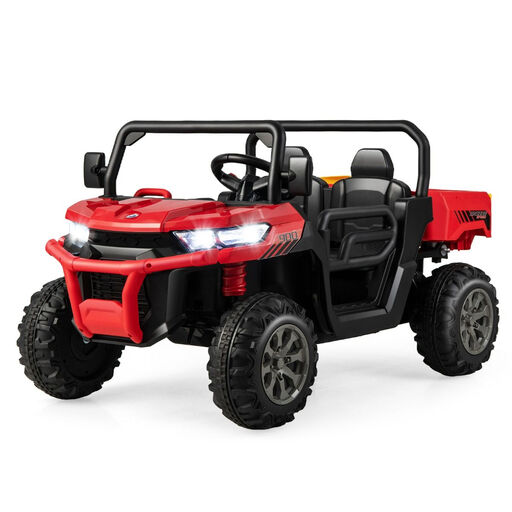
Why this product suits this profile: This children’s vehicle with 2 seats is aimed at families looking for seat belts, soft start, remote control and a clearly stated weight capacity.
The product information gives a speed of 3 to 8 km/h, soft start, a seat belt, an emergency stop on the remote control and a weight capacity of up to 50 kg.
Two seats, two motors, suspension, a 12 V battery and music, USB and Aux connections, according to the product description.
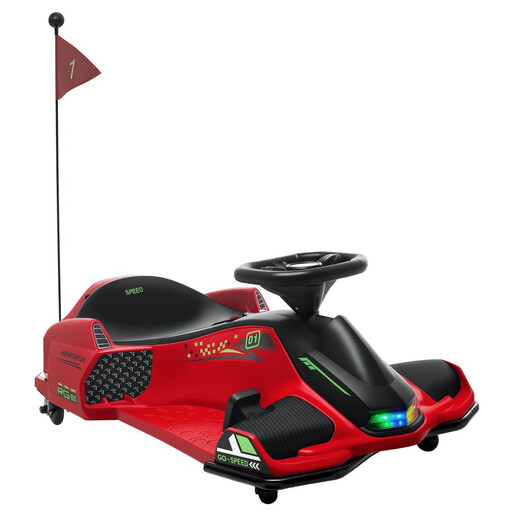
Why this product suits this profile: According to its product name, this electric go-kart for children is intended for children aged around 8 to 12 and is aimed at families with a suitable private space to drive it.
The recommended age helps clarify who the vehicle is for. Before use, check the surface, space required, speed and whether the drift mode is suitable.
12 V drive, adjustable speed and drift mode, according to the product name.
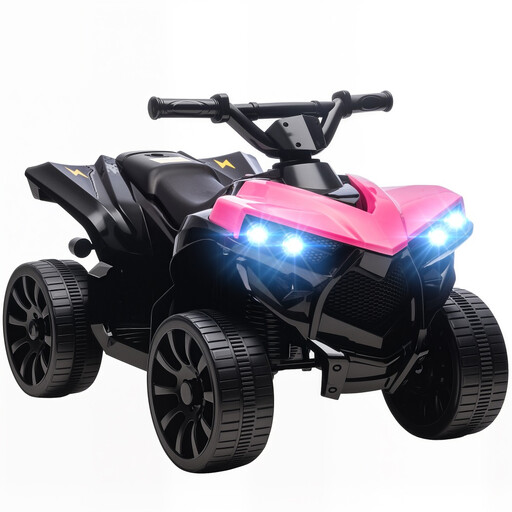
Why this product suits this profile: According to the product information, this electric quad for children is intended for ages 18 to 56 months and offers a compact option for younger children.
The stated age range helps prevent a larger vehicle being bought too soon for a toddler. Children should still be supervised when using it.
6 V system, compact dimensions of 70 × 42 × 45 cm, plus music and LED headlights, according to the product information.
We’ve put together a complete, regularly updated list of products that meet these strict selection criteria and fully comply with the safety regulations in force in the EU.
Running time depends on the battery, load, surface, temperature and speed setting. You can’t work out the exact duration from the voltage alone. Charge the battery as instructed by the manufacturer and store it somewhere dry, away from extreme temperatures.
An electric car for children is generally intended as a toy or leisure vehicle for suitable private areas. It shouldn’t be used on public roads, pavements or cycle paths. Follow the operating instructions and local rules.
The electricity needed to charge the battery usually costs very little. The exact amount depends on the battery capacity, electricity tariff and how often you charge it. You may also need to pay for replacement batteries, chargers or wear-and-tear parts. Before buying, check whether spare parts and accessories are available.