
Lieferung heute & morgen

Qualitätsgarantie

Willkommens-Angebote freischalten: KOSTENLOSE Lieferung | Bis zu 80 % RABATT | Kostenlose 30-Tage-JoyPlus-Testphase
App herunterladen
An electric car tyre inflator can save you time on the road when you need to adjust your tyre pressure. But not every compact device is right for every vehicle or purpose. Requirements for power supply, run time and airflow vary considerably, particularly for electric cars, SUVs, motorbikes and bicycles.
Figures such as 150 PSI can look impressive at first glance. However, the maximum pressure doesn’t tell you how quickly the pump will inflate a completely flat car tyre. In practice, you should also consider airflow, motor power, hose connection and duty cycle.
A 12 V tyre compressor with a cable can draw power continuously from the vehicle’s socket during longer jobs. A cordless air pump, on the other hand, relies on its battery capacity. This can make a significant difference when you need to inflate several tyres or restore very low pressure.
A battery-powered air pump needs to be sufficiently charged before you set off. Charging times of several hours are common for portable devices. If you keep the pump in your car, you should also consider its storage and operating temperatures. An integrated battery may perform differently in extreme cold or heat than it does in normal conditions.
For occasional adjustments, a compact electric tyre inflator is often enough. If you have several vehicles or use it regularly, a corded 12-volt model may be more practical.
A tyre inflator with automatic shut-off stops when it reaches the pre-set target pressure. This reduces the risk of overinflating, but only if you’ve entered the correct setting. In Germany, the recommended tyre pressure is usually shown on a sticker on the B-pillar or inside the fuel flap, or in the vehicle’s handbook.
Don’t confuse the vehicle’s recommended pressure with the pump’s maximum pressure. After inflating, it’s a good idea to check the pressure with a separate, suitable tyre pressure gauge.
A 12-volt tyre pump is usually powered through the 12-volt socket or cigarette lighter socket. Before using it, start the engine to avoid putting unnecessary strain on the vehicle battery. Make sure the plug is fully inserted into the socket.
Cordless models, on the other hand, need to be charged, often via USB-C. Check the following:
A tyre pump with a digital display should show bar, the standard unit in Germany, and ideally PSI or kPa as well. It’s important that you can set the target pressure easily and read it clearly. Some models offer pre-set modes for cars, motorbikes, bicycles and balls.
A precise display is only useful if the connector fits snugly onto the tyre valve. A poorly secured hose can cause pressure loss and inaccurate readings.
A mini compressor for car tyres is designed for portable top-ups, not continuous use like a workshop compressor. So be sure to check the stated duty cycle. According to the product information, the CARSUN 12-volt model should be allowed to cool for around 5 to 10 minutes after every 10 to 15 minutes of continuous use.
A smaller pump is often sufficient for bicycle tyres, balls or motorbikes. For several car tyres, airflow and heat resistance are more important. Accessories such as Schrader and Presta valve adapters and ball needles make a pump more versatile for bicycles and motorbikes.
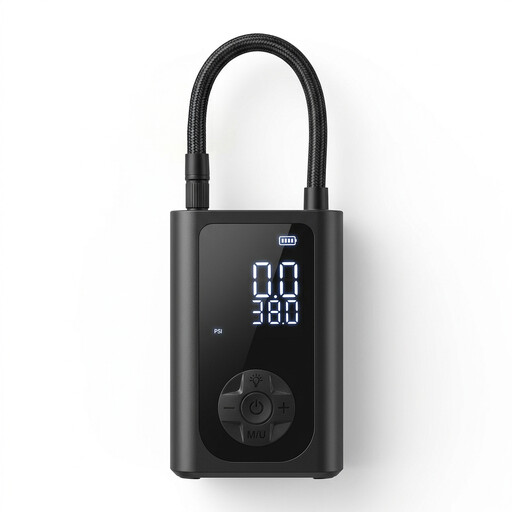
Why it suits this profile: This compact battery-powered model offers 4000 mAh, five pre-set modes and a stated maximum pressure setting of 150 PSI for cars, motorbikes, bicycles and balls.
The product details specify charging time, run time, airflow and operating modes, so you can assess the battery’s limitations before buying.
4000 mAh battery, 26 l/min airflow, LED light and power bank output.
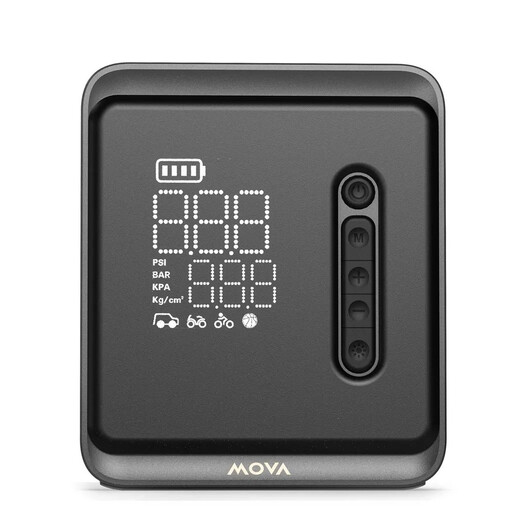
Why it suits this profile: Its integrated battery and stated output of 120 W make it suitable for cordless use with your vehicle or while travelling.
The technical details list the battery type, weight and dimensions. This makes it easier to compare its portability objectively with your vehicle’s requirements.
Three battery cells, each rated at 2600 mAh, cordless operation and a weight of around 0.95 kg.
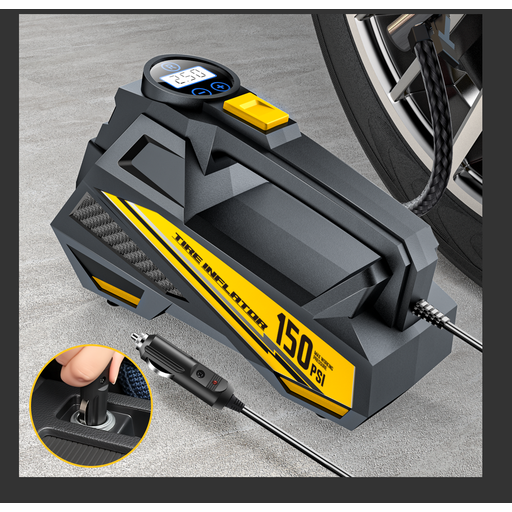
Why it suits this profile: Its 12 V power supply is a good fit for drivers who don’t want to plan around battery charging and need to inflate tyres, motorbike tyres, bicycle tyres or balls.
The product description specifically recommends running the engine and allowing cooling breaks. This helps prevent the pump from overheating during continuous use.
12 V DC connection, backlit LCD display, automatic shut-off and several nozzle attachments.

Why it suits this profile: This cordless model is designed for mobile use, with a 2500 mAh battery, USB-C charging port and five inflation modes.
The stated pressure range of 3 to 150 PSI and automatic shut-off make it easier to set the pump correctly.
Device weight of 459 g, stated pressure accuracy of ±0.05 bar and three air nozzles included.
We’ve put together a complete, regularly updated list of products that meet these strict selection criteria and fully comply with the safety regulations in force in the EU.
For occasional pressure adjustments, a portable car air pump with a digital display and automatic shut-off is usually sufficient. If you want to inflate several tyres one after another, check the airflow, cable reach and cooling time. An air pump with a battery or 12-volt connection can generally be used with an electric car, provided the vehicle has a suitable connection.
Run time depends on battery capacity, tyre pressure, outside temperature and motor load. Figures such as ‘25 minutes of run time’ should be treated as manufacturer estimates under specific conditions. For longer jobs, allow for charging breaks and the recommended cooling time.
A 12-volt pump draws only a limited amount of power from the vehicle while in use. A battery-powered air pump is charged via USB or a mains adaptor. Running costs are generally low; battery charge, run time and whether a power source is available while you’re out and about are more important factors when choosing a pump.