
Lieferung heute & morgen

Qualitätsgarantie

Willkommens-Angebote freischalten: KOSTENLOSE Lieferung | Bis zu 80 % RABATT | Kostenlose 30-Tage-JoyPlus-Testphase
App herunterladen
An electric chopper can make meal preparation much easier. Onions, herbs, vegetables, nuts and meat can be processed in next to no time. For families, keen home cooks, meal-prep enthusiasts and small kitchens, a compact food chopper is often more practical than a large food processor.
However, models vary considerably in terms of power, capacity, operation and cleaning. A high wattage rating alone says little about how practical a device will be in everyday use. It is therefore worth checking for some common marketing pitfalls before you buy.
A motor rated at 800 watts sounds powerful at first. However, it is also important to consider how long the appliance can be operated continuously, which ingredients are permitted and how large the working capacity is. Some appliances require a longer cooling period after short operating intervals.
The maximum operating time is particularly important for an electric meat grinder or a multi-chopper designed for larger portions. An appliance may be suitable for occasional small quantities but reach its limits during regular meal prep.
The size of the container does not always correspond to the recommended filling quantity. If a chopper is filled too full, the ingredients will not move as effectively. This can lead to an uneven result and place additional strain on the motor.
A 0.5-litre glass container, for example, is suitable for smaller portions, sauces or herbs. For family-sized portions or larger quantities of vegetables, a 2 to 3-litre container is more practical. Always check the maximum filling quantity in the relevant product instructions.
With a dishwasher-safe chopper, this information normally applies to removable parts such as the bowl, lid or blades. The motor unit must not be immersed in water. The lid is also not approved for dishwasher use on every model.
It is therefore worth checking the specific cleaning instructions before buying. Removable blades, smooth surfaces and fewer individual parts reduce the effort required in everyday use.
A stainless-steel blade is intended for many typical tasks, such as chopping onions, herbs, vegetables, nuts and meat. The number of blades can affect processing, but does not replace checking which ingredients are permitted. Hard foods such as ice, bones, coffee beans and very hard spices are expressly excluded for many appliances.
Look for:
A 2-speed chopper or an appliance with a pulse function usually gives you better control over the consistency. A lower setting may be sufficient for soft ingredients such as garlic or onions. According to the product information, a higher setting is often suitable for firmer ingredients.
Models with just one speed are not automatically unsuitable. They can be useful for simple chopping tasks when you want straightforward operation. However, variable control offers greater flexibility for both coarse chopping and finer puréeing.
A transparent plastic container is lightweight and gives you a clear view of the contents. A glass container is generally less prone to retaining odours or becoming discoloured, but it can be heavier and should be protected from sudden changes in temperature. Stainless-steel containers are robust and opaque, so it is less easy to see the processing progress directly.
For small kitchens, compact dimensions and space-saving storage are important. If you regularly prepare larger quantities, however, you should consider not only the external dimensions but also the usable working capacity.
The following models have been matched to different usage situations based on their stated power ratings, container sizes, materials and functions.
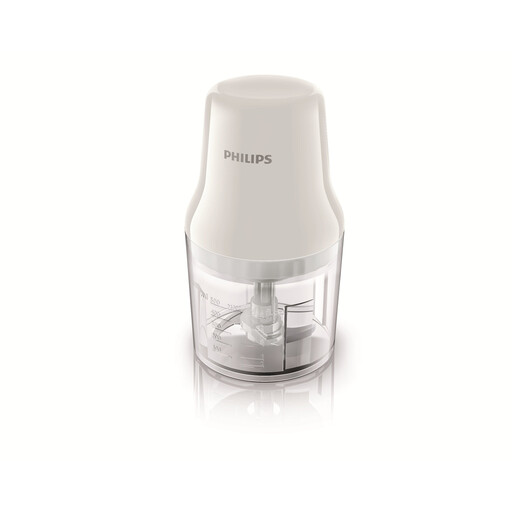
Why this product suits the profile: This model is designed for simple everyday chopping tasks and combines 450 watts with a 0.7-litre container and one-button operation.
The product information specifies the container size and identifies the removable parts as dishwasher-safe. The motor unit is excluded from cleaning in the dishwasher.
450 watts, 0.7-litre bowl, stainless-steel blade and one-button operation.
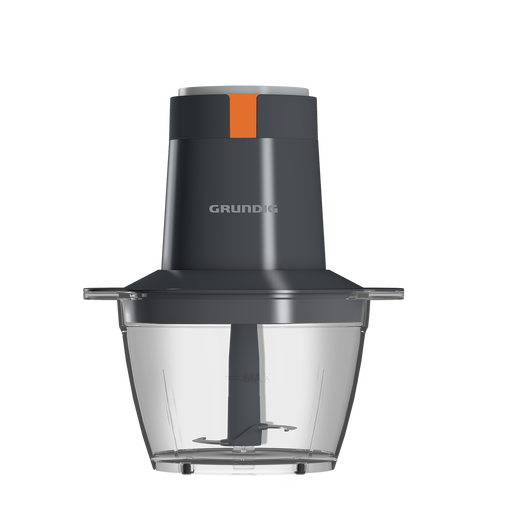
Why this product suits the profile: This electric multi-chopper combines a 500-watt motor with a 0.5-litre glass container, two speed settings and a safety lock.
The product description expressly excludes very hard ingredients such as ice and coffee beans. This makes it easier to plan how the appliance can be used realistically.
Glass container, two speeds, removable stainless-steel double blade and non-slip base.
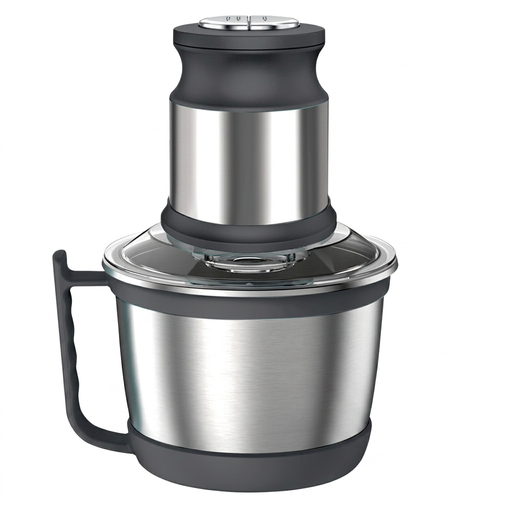
Why this product suits the profile: With a stated capacity of 3 litres, this model is designed for larger quantities of vegetables or meat and may be a good choice for families and meal preparation.
The larger capacity means you need to refill the container less often. Before buying, however, you should check the available worktop space, portion sizes and the specific operating limits.
800 watts, 3-litre capacity and designed for 220–240 volts with an EU plug, according to the product information.
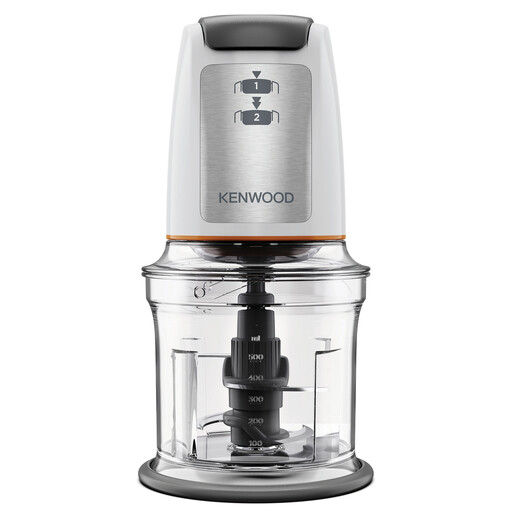
Why this product suits the profile: With 500 watts, a 0.5-litre working container and two speed settings, this appliance is designed for smaller portions and different chopping levels.
The two speed settings prevent you from being limited to just one type of processing. At the same time, the small capacity makes it clear that this model is not intended for large batches.
500 watts, 0.5-litre bowl and two speed settings.
We have put together a complete, regularly updated list of products that fully meet these strict selection criteria and the safety regulations applicable in the EU.
Depending on the model, lower power ratings are often sufficient for onions, herbs and soft vegetables. If you regularly process nuts, firm vegetables or meat, you should also consider the blade design, container size and permitted operating time. Wattage alone is not a reliable basis for comparison.
The service life depends on how often it is used, the ingredients, cleaning and compliance with the operating intervals. Overfilling, unsuitable hard foods and a motor unit that remains permanently wet can increase wear. Regularly checking the blade, lid lock and mains cable is advisable.
The actual electricity costs depend on the rated power and operating time. As a chopper usually runs for only a few seconds or minutes per use, the operating time is the key factor in determining the cost. An appliance with a higher wattage will use correspondingly more electrical energy over the same operating period.