
Lieferung heute & morgen

Qualitätsgarantie

Willkommens-Angebote freischalten: KOSTENLOSE Lieferung | Bis zu 80 % RABATT | Kostenlose 30-Tage-JoyPlus-Testphase
App herunterladen
An electric chopper can make daily food preparation in the kitchen much simpler. Onions, herbs, nuts, vegetables or meat can be portioned more quickly than with a knife. However, the devices differ considerably in motor power, working capacity, blade design and cleaning. Anyone who only focuses on a high wattage or particularly large bowls may end up buying a device that doesn't suit their own kitchen in everyday use.
Manufacturer specifications sometimes state a maximum power that does not correspond to the continuous rated power. With mincer models, for example, 1,500 or 2,000 watts maximum power may be quoted, while the rated power is lower. For comparison purposes, it is therefore important to know which power rating is officially given as the rated power and which foods may be processed.
A 450-watt chopper can be sufficient for onions, herbs and soft vegetables. For larger quantities of meat or firmer ingredients, however, a suitable blade design, short working intervals and an appropriate capacity are decisive.
A bowl with a 3-litre capacity is not automatically better for every application. A large bowl requires more storage space and can lead to less even processing with small quantities. Conversely, a 0.7-litre chopper may not be sufficient for a family or for preparing several portions.
What matters is whether the manufacturer specifies a total volume or a recommended working volume. Overfilling can hinder the movement of the ingredients and put greater strain on the motor.
A cheap kitchen chopper can look attractive at first glance if it promises many accessories or a particularly sharp blade. For everyday use, however, the following are equally important:
A dishwasher-safe chopper reduces the cleaning effort, but the blades, lid and bowl should still be treated according to the manufacturer's instructions. The motor unit must never be immersed in water.
A chopper with a stainless steel blade is suitable for many typical kitchen tasks. Stainless steel blades are used for vegetables, herbs, nuts and meat, but differ in number, shape and arrangement. Multiple blades on different levels can capture the ingredients in the bowl in different ways. A single blade, on the other hand, can be sufficient for smaller, simple tasks.
With glass bowls, you can easily observe the chopping process. Plastic bowls are usually lighter and sometimes more shatter-resistant. Also check whether the bowl and lid are suitable for hot ingredients. With some models, processing boiling-hot food is expressly excluded.
The wattage should always be considered together with the intended use. A 450-watt chopper like the Philips HR1393/00 features simple press-button operation. For short pulses with onions, herbs, salsa or baby food, this type of operation can be practical.
Multiple speed settings or a pulse function allow better control of the consistency. This is particularly relevant for nuts, meat or ingredients with varying firmness. For devices with a limited running time, the information on working and cooling breaks should be strictly observed.
For single-person households or small preparations, around 0.5 to 0.7 litres is often sufficient. Families and users who batch-cook larger quantities might consider a multi-chopper with a larger bowl. In addition to capacity, also pay attention to height, footprint and weight. A device that has to be permanently stored in a kitchen cupboard may be used less often in everyday life.
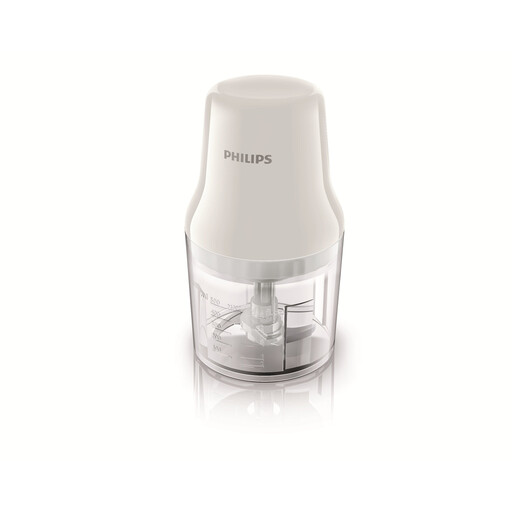
Why this product suits the profile: This compact electric all-purpose chopper combines 450 watts with a 0.7-litre bowl and simple press-button operation. It is suitable for smaller daily preparations such as herbs, vegetables, nuts or salsas.
The technical specifications clearly state the power, bowl size, stainless steel blade and dishwasher-safe removable parts. This allows you to compare the device with your own needs before buying.
450 watts, 0.7-litre capacity, stainless steel blade and one-button operation.
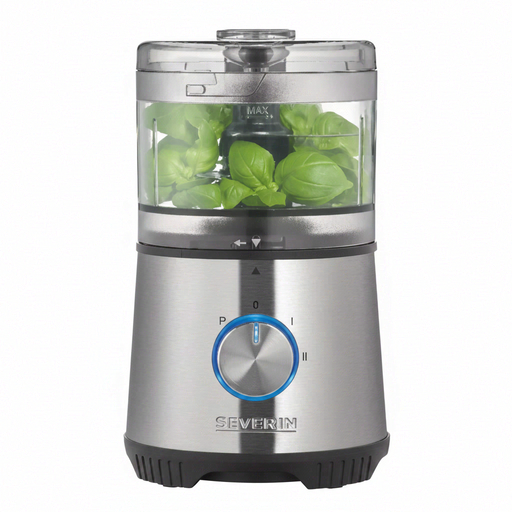
Why this product suits the profile: This 4-in-1 multi-chopper offers 400 watts, two speed settings, a pulse function and a four-piece stainless steel blade. An emulsifying disc extends its use for sauces and dips.
The pulse function supports more controlled processing, while the safety lock prevents the device from operating without the lid being correctly locked.
Two speeds plus pulse function, stainless steel blade and dishwasher-safe removable parts.
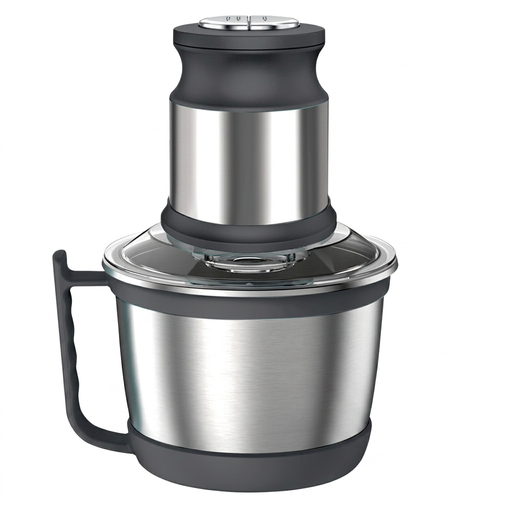
Why this product suits the profile: This 800-watt multi-chopper with a 3-litre capacity is aimed at households that want to prepare larger quantities of vegetables or meat, for example for meal prep, mince or salsas.
The large capacity is designed for larger working quantities. Nevertheless, the maximum fill level, suitable foods and the instruction manual should be observed.
3-litre bowl, 800-watt motor and design for both vegetable and meat processing.
We have compiled a complete, regularly updated list of products that fully meet these strict selection criteria and the safety regulations applicable in the EU.
For herbs, onions and soft vegetables, compact devices from around 300 to 450 watts can be sufficient. For larger quantities or frequent meat processing, the power, blade shape, bowl size and permitted operating time should all be assessed together. A higher wattage alone does not guarantee even processing.
Some kitchen choppers are designed for small quantities of meat, while other models are constructed as mincers with a feed chute and various cutting discs. Before buying, you should check whether raw meat is expressly listed as a suitable ingredient and whether there are specifications regarding size, temperature and working intervals.
The service life depends on the materials, care, load and correct operation. Regular overfilling, excessively long running times and unsuitable hard ingredients can strain the motor and blade. A removable blade, easy-to-clean parts and adherence to the manufacturer's instructions support proper use.