
Lieferung heute & morgen

Qualitätsgarantie

Willkommens-Angebote freischalten: KOSTENLOSE Lieferung | Bis zu 80 % RABATT | Kostenlose 30-Tage-JoyPlus-Testphase
App herunterladen
The thought of a glass of freshly squeezed orange juice in the morning is tempting. But choosing the right electric citrus juicer can be more complicated than it seems. Many devices make big promises but turn out to be impractical, noisy, or difficult to clean in daily use. As your Joybuy Product Recommendation Officer, I'll help you recognise the common pitfalls and find a model that truly fits your needs.
Before you make a decision, you should be aware of the three most common problems that occur with low-quality devices and can sour your juicing experience.
To avoid a bad purchase, you should focus on a few crucial technical parameters. These will determine how efficient, durable, and user-friendly your new juicer will be.
The wattage alone isn't the only deciding factor, but it provides a good guideline.
A citrus juicer with a lever offers a significant advantage: the lever arm amplifies the pressure, so you don't have to hold and press the fruit half with your hand. This is more comfortable and efficient, especially when you're preparing larger quantities for fresh orange juice.
The choice of material affects both longevity and hygiene.
Two features can significantly enhance convenience:
Instead of presenting an overwhelming list, we have selected models that meet specific requirements – from a design object to a pure workhorse.
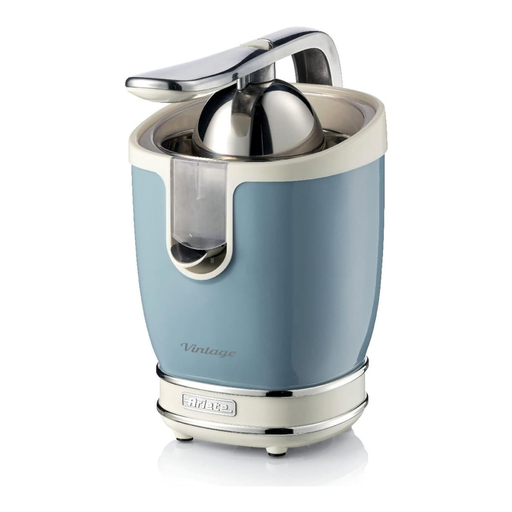
Why This Fits Their Persona: Ideal for anyone who sees a kitchen appliance not just as a tool, but also as a decorative element. The eye-catching retro design makes the juicer a statement piece on any countertop.
The lever mechanism ensures powerful pressing without the need for an overly loud motor. The metal components are durable and resistant to discolouration.
Effortless operation thanks to the lever arm; quiet 85-watt motor; drip-stop spout for clean handling.
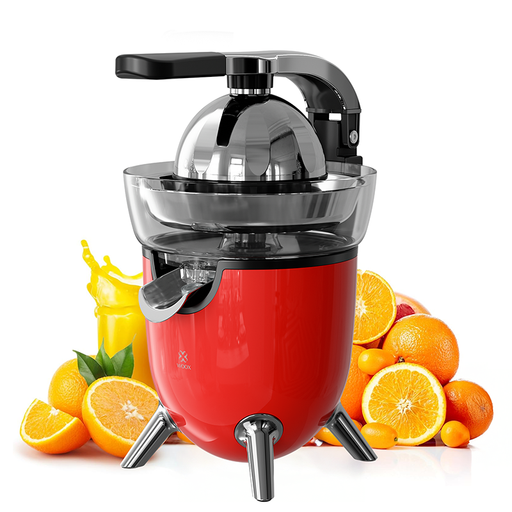
Why This Fits Their Persona: Perfect for families or health-conscious individuals who want to quickly and effortlessly press large quantities of juice daily. Performance and functionality are the main focus here.
The powerful 100-watt motor handles even hard citrus fruits with ease. The removable parts are designed for easy cleaning and are genuinely dishwasher-safe, bypassing the "cleaning trap."
High juice yield due to the strong motor; adjustable pulp control; combination of durable ABS and stainless steel.
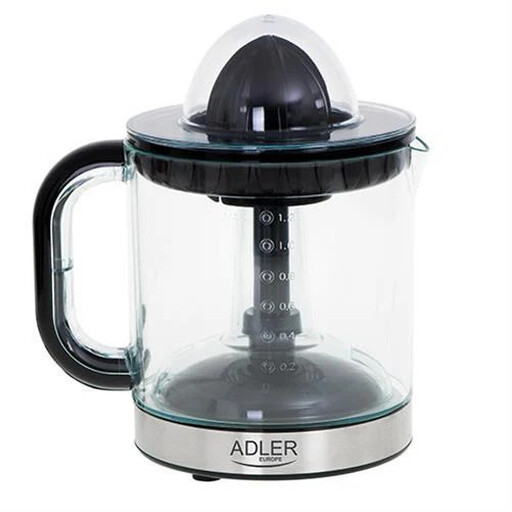
Why This Fits Their Persona: A solid choice for occasional juicing without breaking the bank. The device focuses on the core function and offers practical added value for families with its large glass jug.
The device forgoes complex mechanisms in favour of a simple but effective automatic start-stop function. The components are straightforward and easy to clean by hand or in the dishwasher.
Large 1.2-litre glass juice jug; two pressing cones for different fruit sizes; automatic start-on-pressure.
We have compiled a complete, up-to-date list of products that fully meet these strict selection criteria and German safety regulations.
The most effective cleaning method is to rinse the removable parts (cone, sieve, juice container) under running warm water immediately after use. This prevents pulp and sugar residues from drying on. Even if parts are considered dishwasher-safe, a quick rinse prevents stubborn build-up. The motor housing should never be submerged in water but only wiped with a damp cloth.
For home use, a power rating between 40 and 100 watts is generally ideal. Models with 40 watts are sufficient for softer fruits like oranges and lemons. If you regularly juice firmer fruits like grapefruits or want a particularly high juice yield, a model with 80 watts or more, ideally combined with a lever, is a good choice.
An electric citrus juicer, as the name suggests, is specifically designed for citrus fruits like oranges, lemons, limes, and grapefruits. Its mechanism is built for pressing halved, juicy fruits. For hard fruits like apples or vegetables like carrots, a different type of electric juicer is required, such as a centrifugal juicer or a slow juicer. Attempting to press unsuitable fruit can damage the appliance.