
Lieferung heute & morgen

Qualitätsgarantie

Willkommens-Angebote freischalten: KOSTENLOSE Lieferung | Bis zu 80 % RABATT | Kostenlose 30-Tage-JoyPlus-Testphase
App herunterladen
An electric citrus juicer can make preparing juice every day much easier. However, eye-catching power ratings, large containers and promises about juice yield do not automatically mean a machine is right for you. The key is whether its design, cleaning requirements and intended use suit your household.
A high wattage rating initially only describes the motor’s electrical power consumption. For oranges, lemons and grapefruits, the design of the pressing cone, power transmission and stability of the appliance are also important. A compact electric lemon press with 30 to 40 watts may be sufficient for occasional servings, while a lever citrus juicer provides greater assistance when pressing by hand.
A large juice container is useful for families, but takes up more space and can make cleaning more time-consuming. Check whether the container is removable, whether it has a measurement scale and how many glasses you actually need to prepare. For one or two people, a compact electric orange juicer with a smaller collection container is often sufficient.
Terms such as quiet citrus juicer or “easy cleaning” are only useful when they are backed up by specific details. Look for a stated noise level, removable parts and clear information about whether the components are dishwasher-safe. The motor housing must not be immersed in water on the appliances featured here. A drip-stop prevents juice from dripping while serving, but it does not replace rinsing the strainer and pressing cone.
A traditional electric juicer is designed for halved citrus fruits. Two pressing cones can be useful if you want to process both small lemons and larger oranges. An automatic start-stop function responds to pressure and can make the appliance easier to use.
A slow juicer, on the other hand, works with a pressing auger and, depending on the manufacturer’s instructions, can also be used for many types of fruit and vegetables. Peels, pips, hard stones and frozen ingredients are not automatically suitable. If you only want to juice citrus fruits, you generally do not need the larger design of a fruit and vegetable juicer.
For everyday use, three specifications are particularly important:
An appliance with a 1.8-litre chamber capacity may be suitable for larger quantities, but requires more storage space than a dedicated citrus juicer.
Removable pressing cones, strainers and containers should be cleaned with warm water after every use. If the manufacturer explicitly states that the parts are dishwasher-safe, this can reduce the effort involved. For appliances without this approval, hand washing is preferable.
Look for an instruction manual in clear language that includes information about 220–240 volts, earthing, overheating protection and the permitted operating time. Moving parts must not be touched while the appliance is running. With a slow juicer, you should also observe the maximum uninterrupted operating time.
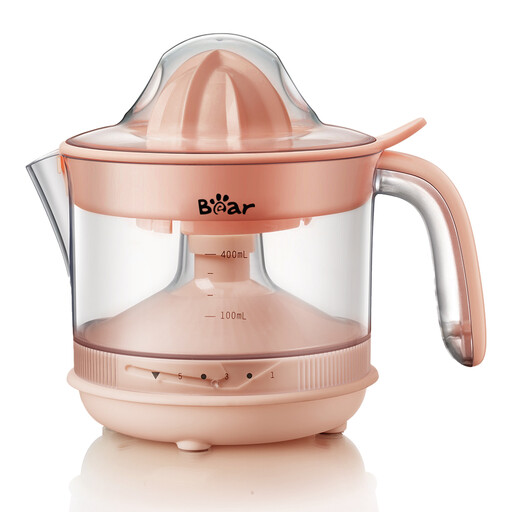
Why this product suits this profile: This compact citrus juicer operates at 30 watts and features a 400 ml container and five adjustable settings. It is well suited to individuals or small households with limited worktop space.
The manageable capacity means that an unnecessarily large container does not take up space permanently. The removable design makes cleaning easier.
400 ml capacity, five settings, 220–240 volts and non-slip base according to the product specifications.
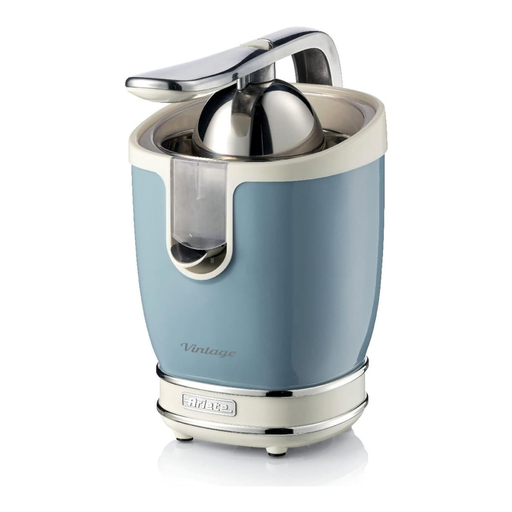
Why this product suits this profile: This lever-operated electric citrus juicer has an 85-watt motor, two pressing cones and a drip-stop. With regular use, the lever system can reduce strain on your hands.
The two cones accommodate small and large citrus fruits. The drip-stop helps deal with juice residue at the spout, although the removable parts still need to be cleaned.
85 watts, lever operation, two pressing cones and compact dimensions of approximately 24 × 24 × 34 cm according to the product data.
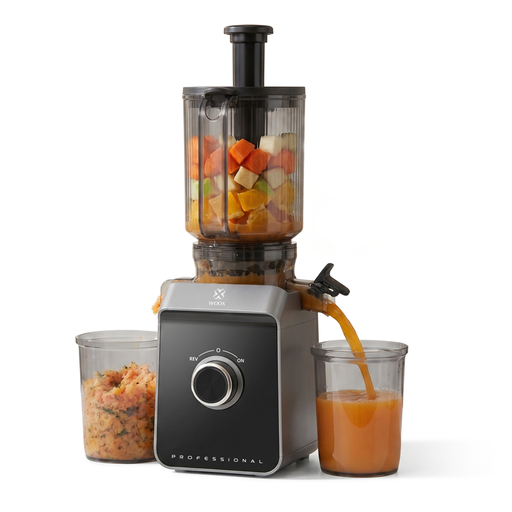
Why this product suits this profile: This slow juicer is designed for users who want to process fruit and vegetables as well as citrus fruits. It features a 130 mm filling opening, a 600 ml juice cup and an 836 ml pulp container.
The clear separation between the juice and pulp containers makes its intended use easy to understand. The stated operating limit of ten minutes and the cooling break should be observed.
150 watts, 1.8-litre chamber, overheating protection and a stated noise level below 72 dB according to the product description.
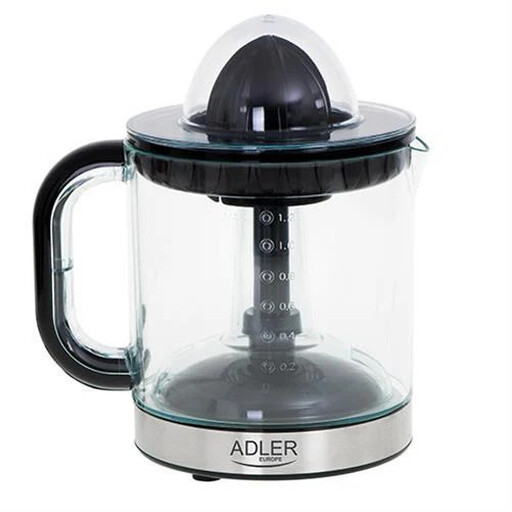
Why this product suits this profile: The 1.2-litre glass container is designed for several servings. Two cones, an automatic start-stop function and clockwise and anticlockwise rotation make preparation easier for family life.
The capacity is clearly specified rather than simply described as “family-friendly”. Dishwasher-safe removable parts can help limit cleaning time.
1.2 litres, 40-watt rated power, two cones and automatic start-stop function according to the product specifications.
We have put together a complete, regularly updated list of products that fully meet these strict selection criteria and the safety regulations applicable in the EU.
For dedicated citrus juicers, stated power ratings are often between 30 and 85 watts. More important than wattage alone are a suitable pressing cone, a stable base and controls that match the way you intend to use the appliance. A slow juicer has different requirements, as it also processes fibrous fruit and vegetables.
Its lifespan depends on how it is used, cleaned and operated. Avoid hard objects, ice cubes and ingredients that have not been approved for use. Allow the motor to cool down during longer operating periods, and clean the pressing cone and strainer after every use. You can find the specific warranty terms in the relevant product documentation.
Running costs depend on the power rating, operating time and your tariff. A 40-watt juicer uses less energy in ten minutes than a 220-watt appliance running for the same length of time. To calculate the actual cost, multiply the power in kilowatts by the operating time and your electricity price. For short pressing sessions, consumption is generally modest; however, the exact calculation depends on your individual tariff.