
Lieferung heute & morgen

Qualitätsgarantie

Willkommens-Angebote freischalten: KOSTENLOSE Lieferung | Bis zu 80 % RABATT | Kostenlose 30-Tage-JoyPlus-Testphase
App herunterladen
An electric citrus juicer can make juicing oranges, lemons and grapefruits much easier. However, models vary considerably in terms of power, capacity, operation and cleaning. If you focus only on wattage or retro styling, you can easily overlook important details for everyday use.
Motor power affects how strongly and evenly a machine operates. An 85-watt citrus juicer can be practical for frequent use, but juice yield also depends on the cone, fruit size, pressing mechanism and rotational movement. A 30-watt model may be perfectly adequate for occasional portions.
The key is the combination of:
Many appliances have removable parts that can be cleaned under running water. However, the motor housing often must not be immersed. Some models also cannot be cleaned in the dishwasher.
Before buying, check:
Finding an easy-to-clean citrus juicer therefore means more than simply relying on an advertising claim. Make sure you read the specific care instructions.
A retro citrus juicer looks great in classic or colour-coordinated kitchens. Even so, its dimensions should suit your worktop and the cupboards around it. Models with a lever also need sufficient clearance above them so that the lever can be moved fully.
Wattage is a technical indication of motor power, but it is not the only measure of quality. For occasional juicing, a 30-watt electric orange juicer may be sufficient. If you regularly process several fruits, you may benefit from a more powerful motor and a sturdy pressing mechanism.
A citrus juicer with a lever reduces the amount of hand pressure required. Depending on the design, electric lever juicers start the motor when the lever is lowered or when pressure is applied to the fruit. Look for straightforward controls and a stable base.
The capacity of the collection container should suit your household. A 200-millilitre container is better suited to individual lemons or small portions. Models with capacities from 400 millilitres to 1 litre are more practical for families or several glasses in succession.
A citrus juicer with a collection container should also have a well-positioned spout. A drip stop can help prevent juice from running onto the worktop after juicing. Also check whether you can place a glass directly beneath the spout.
A small and a large pressing cone provide better coverage for different citrus fruits. Small cones are suitable for lemons, while larger versions are designed for oranges or grapefruits. If you want to process different types of fruit, interchangeable cones are more practical than a single universal attachment.
Some appliances allow you to adjust the amount of pulp. This is useful if people in the same household have different preferences. However, it does not replace thorough cleaning of the strainer after use.
Only use the appliance with the specified mains voltage and connect it to a properly earthed socket. Rotating pressing cones can cause injury. Keep fingers, hair and objects away from the cone while the appliance is operating.
Unplug the appliance before cleaning, dismantling or moving it. If you notice unusual noises, vibrations or a blockage, switch the appliance off and wait until it has come to a complete stop. These instructions also apply to an electric lemon squeezer and other appliances in the orange and lemon juicer category.
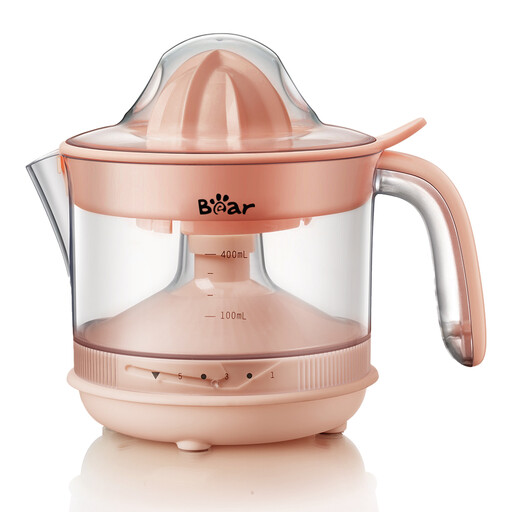
Why this product suits this profile: This model operates at 30 watts, offers a capacity of 400 ml and is designed for smaller households and individual servings of juice.
The removable design makes cleaning easier. A non-slip base helps keep the appliance stable while juicing.
400-ml capacity, five adjustable settings and a pressing cone without cutting blades, according to the product details.
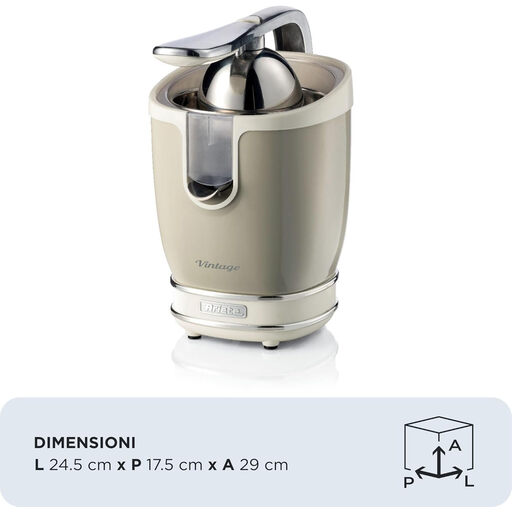
Why this product suits this profile: The combination of stainless steel construction, lever operation and retro styling appeals to users who consider both performance and kitchen aesthetics.
The product details list a drip stop and two pressing cones. This makes it easier to switch between smaller and larger citrus fruits.
85 watts, 1-litre capacity, 44 dB according to the product details, and a lever for juicing.
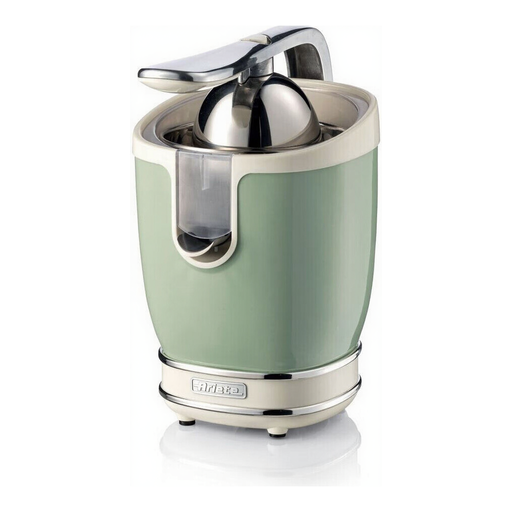
Why this product suits this profile: The electric lever operation and 0,6-litre container are ideal for users who regularly prepare fresh juice but prefer a more compact appliance.
According to the product description, the two pressing cones accommodate different fruit sizes. The drip stop can help reduce juice residue on the worktop.
85-watt motor, 0,6-litre capacity, electric lever operation and two pressing cones.
We have put together a complete, regularly updated list of products that fully meet these strict selection criteria and the safety regulations applicable in the EU.
Cut the fruit in half across the middle wherever possible and choose the appropriate pressing cone. Very large fruits may be more difficult to handle if the feed area is small. Press the lever smoothly and without excessive force. This helps prevent unnecessary strain on the motor and mechanism.
The pressing cones, strainer and collection container should be cleaned promptly after juicing. Dried-on pulp is more difficult to remove. The motor housing of the appliances mentioned must not be immersed in water. Always follow the relevant instruction manual.
That depends on how you plan to use it. A 30-watt model may be sufficient for occasional individual portions. For frequent juicing of several fruits, appliances with 85 watts offer greater motor reserve. However, wattage alone says nothing about juice yield, noise levels or service life.
A motor naturally produces operating noise. The actual noise level depends on the motor, construction and pressing load. If you juice early in the morning or in an open-plan kitchen, look for a specific decibel rating where the manufacturer provides one.
It is not possible to give a reliable general service-life estimate. Factors including frequency of use, cleaning, fruit size and how the appliance is handled all play a part. Storing it in a dry place, observing the maximum load and switching it off immediately if it becomes blocked can help support regular use.