Small amounts for dressing
If you mainly squeeze lemons or limes for dressing, check that the cone and collection container or spout work with your fruit and vessel. Haus & Garten Test lists dressings as one possible use for citrus juice.


For a single lemon or lime, the main decision is whether you want to collect the juice in a container first so you can measure it out, or squeeze it straight into a suitable vessel. A lever model may be a better option if you regularly juice several fruits or fruits of different sizes and have room for it. Before buying, also check the information on the appliance’s compliance and whether the parts that come into contact with food are suitable for use with the specific model.
If you mainly squeeze lemons or limes for dressing, check that the cone and collection container or spout work with your fruit and vessel. Haus & Garten Test lists dressings as one possible use for citrus juice.
If you want to keep cleaning to a minimum after a quick break, look for removable parts and check the care instructions for the specific model. WMF and CASO list dishwasher-safe, removable parts for certain models.
If the texture of your dressing matters, look for an explicitly stated pulp setting. Braun lists one for the CJ3000WH, while Severin describes adjustable sieves for the CP 3544.
For a small portion of dressing, the main consideration is whether you want to collect and measure out the juice or squeeze it straight into a suitable vessel. A lever arm is another way to operate the juicer if you regularly press several fruits.
A good choice if: you want to collect and measure out the juice before mixing. Braun says you can adjust the amount of pulp in the CJ3000WH.
Bear in mind: The container is an extra part to clean.
A good choice if: you want the juice to flow straight into a suitable vessel. WMF lists two juicing cones and a fold-up drip guard for the Stelio.
Bear in mind: Check that your vessel fits under the spout; the cone and sieve still need cleaning.
A good choice if: you regularly juice several fruits or prefer using a lever to pressing directly on the fruit. CASO lists the CP 200 and Severin the CP 3544 as lever models.
Bear in mind: The CASO CP 200 is listed as measuring 180 × 290 × 250 mm; check that it will fit in the space you have in mind.
| What you need | What to check when buying | Who is this important to? |
|---|---|---|
| Collecting the juice | Check that the juicing cone and collection container or spout suit the exact model. | If I only need a little lemon or lime juice for one dressing, I want to collect and measure out the right amount. That’s why around 36% of consumers put a small, easy-to-measure amount of juice first. |
| Cleaning after a break | Check which parts are removable and listed as dishwasher-safe in the instructions. | After a quick break, I want to avoid having to wash lots of parts by hand. That’s why around 29% of consumers prioritise removable parts and clear cleaning instructions for the specific model. |
| Adjusting the pulp | Look for an explicitly stated pulp setting; a standard sieve is not the same thing. | If I want to vary the texture of my dressing, I need an adjustable amount of pulp, not just a sieve. Around 21% of consumers put this adjustability first. |
| Lever and fruit sizes | Check whether a lever arm and a cone suitable for the fruits you use are listed. | If I often juice different citrus fruits and want to press directly on the fruit as little as possible, I check for a lever and suitable cones. Around 14% of consumers prioritise this combination. |
The cone on the Braun CJ3000WH starts when you press the fruit down; the CASO CP 200 has a lever-operated pressing arm. Both appliances are electric, but they work differently.
If you find it difficult to press down on the fruit, check how the specific model is operated rather than focusing only on its electric motor.
WMF lists a sieve for the Stelio, while Braun explicitly describes a pulp setting for the CJ3000WH.
If you want to control the texture of your dressing, look specifically for an explicitly stated pulp setting.
Models from the same brand can differ in design and features. The brand name alone therefore doesn’t tell you whether it’s the electric juicer you’re looking for.
Check the full model number, design and listed features on the product details page.
The points below relate to the specific models listed, not to the entire range from each brand.
The CitrusQuick 1 CJ3000WH is a model with a collection container, designed for smaller amounts of juice. Braun also offers models with a direct-pour spout.
The electric Stelio is an option if you’re looking for a direct-pour spout and cones for citrus fruits of different sizes.
The CP 200 is an electric lever juicer with a universal juicing cone.
The CP 3544 is an electric juicer with a lever arm.
The following Joybuy product options are electric citrus juicers for making portions of dressing. Depending on the model, the main consideration may be collecting the juice, cleaning or choosing the amount of pulp. Before buying, check the required information on appliance compliance and whether the parts that come into contact with food are suitable for use with the specific appliance. The product features listed do not, on their own, confirm these points.
 No image available
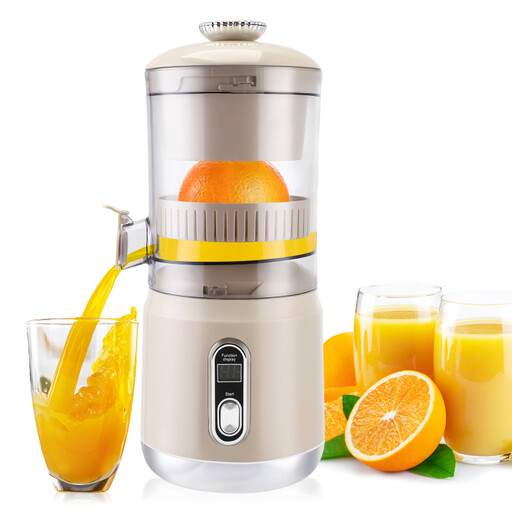
For lemon or lime juice when you’re looking for an anti-drip spout; the product name also specifies rechargeable operation.
 No image available
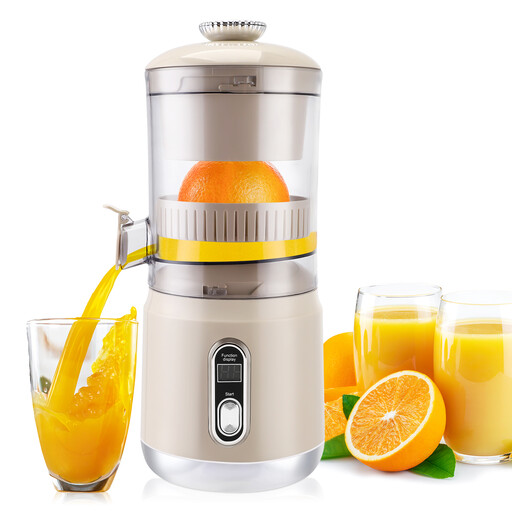
For lemons and other citrus fruits when you want to collect the juice and separate the pulp; the product name specifies a juice collector.
 No image available
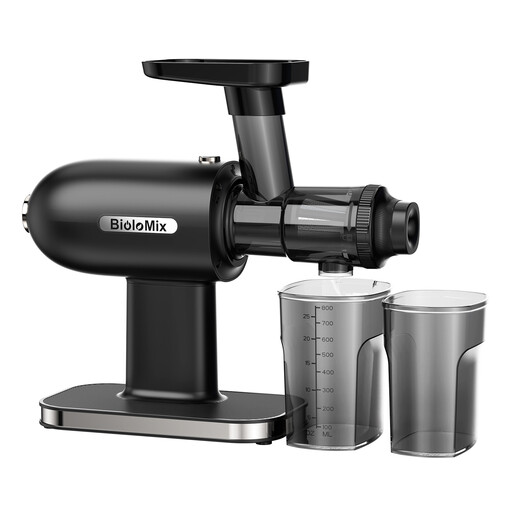
For lemons and limes; the product name specifies an 800 ml capacity and a speed of 43 rpm.
 No image available
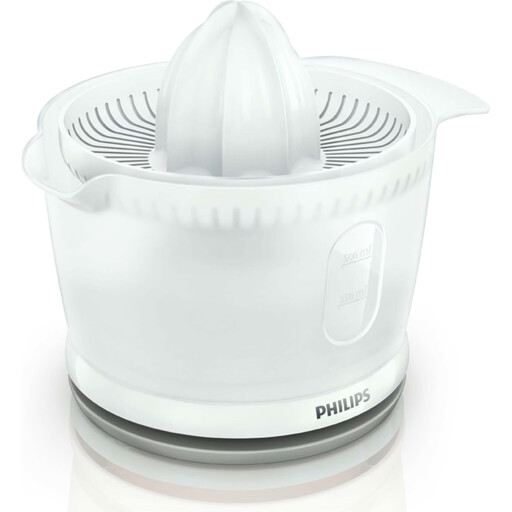
For lemon juice if you’re looking for a compact electric juicer; the model name specifies 25 W. Check that its capacity suits your recipe.
 No image available
For lemons or oranges when you want to adjust the amount of pulp; the product name specifies five settings and a 110 mm feed opening.
A collection container keeps the juice ready for you before you mix it in. Braun says you can also adjust the amount of pulp in the CJ3000WH; check that the cone and container on the model you’re considering suit your needs.
No, a part being dishwasher-safe doesn’t automatically mean the whole appliance is. WMF lists the Stelio’s removable sieve as dishwasher-safe; CASO says the CP 200 has removable, dishwasher-safe individual parts. Follow the instructions for each part of your model.
The Federal Network Agency lists the required CE marking, traceability, manufacturer details and German-language instructions among the relevant points to check. Parts that come into contact with food are also subject to requirements; EUR-Lex describes the common rules. A product listing alone doesn’t confirm that a specific model meets these requirements.
If there’s a fault, contact the seller about your statutory consumer rights. The Verbraucherzentrale explains that these rights can be exercised within two years of receiving new goods. A manufacturer’s warranty is a separate, voluntary offer with its own terms and conditions.
Electrical waste must not go in your household rubbish. The Federal Ministry for the Environment lists local collection points as one option for disposal; retailers accept take-backs subject to certain conditions.