Hosts juicing lots of fruit
If you’re juicing fruit for several guests, think about how the juice will flow into a suitable container. Check that the cone and controls work well with the fruit you’ll be using.


When you’re juicing several fruit halves to make a jug of lemonade, first decide whether you want the juice to flow straight into your own jug or collect in the juicer’s container. Then check that the cone, spout height and removable parts suit the way you plan to use and clean it. A lever arm changes how you operate the juicer and may take up more worktop space, depending on the model. A manufacturer’s claims about power or juice yield don’t, by themselves, prove that one juicer extracts more juice than another.
If you’re juicing fruit for several guests, think about how the juice will flow into a suitable container. Check that the cone and controls work well with the fruit you’ll be using.
If you want to keep washing up to a minimum after serving, check which parts can be removed and which ones the instructions specifically say are dishwasher-safe.
If you’d like to collect the lemon juice before mixing or adjust how much pulp gets through, a model with its own jug could be a good fit. Just remember to allow time to pour the juice into another container afterwards.
| What matters when buying | What to check | Who is it important to? |
|---|---|---|
| Juicing several fruits | Check that the juicer comes with suitable cones for the fruit you’ll be using, and that its controls and permitted operating time suit juicing several fruits in a row. | When I’m juicing for several guests, I want to process the fruit one after another without interrupting the flow unnecessarily. Around 33% of consumers put juicing several fruits first. |
| Cleaning afterwards | Look for removable cones and filters, and check which parts the instructions say can go in the dishwasher. | After serving, I want to be able to remove juice residue from the detachable parts without a fuss. Around 27% of consumers prioritise cleaning after juicing. |
| Collecting and measuring the juice | Choose between a built-in jug and a direct spout. If you opt for a spout, make sure your container is the right height and fits underneath. | If I want to collect or measure the juice before mixing, the way it’s collected matters to me. Around 20% of consumers put this first. |
| Space and effort | Compare the manufacturer’s dimensions with your worktop and cupboard space, and consider whether extra steps for collecting or cleaning the juice will fit into your routine. | When I only entertain occasionally, I want to be able to put the juicer away easily after use and avoid handling more equipment than necessary. Around 20% of consumers prioritise space and ease of use. |
A power rating tells you how much electrical power a particular appliance uses. It isn’t a comparative test of how much juice different models extract from the same fruit.
First, choose a model with suitable cones, controls and a container. Treat wattage as a technical specification, not as a measure of juice yield.
Dishwasher-safe approval applies only to the parts specified in the instructions. The motor housing must not be put in water.
Check the care instructions for every part in the manual for the specific model, and keep the motor housing dry.
A spout directs juice into a container underneath, provided it’s tall enough and positioned correctly. You may therefore need to collect the juice in a separate container before pouring it into a jug.
Before buying, compare the spout height with your glass or jug, and allow for decanting if needed.
The CitrusQuick 1 CJ3000WH is worth considering if you want to collect juice in the appliance’s jug and adjust the amount of pulp.
The Stelio is designed to dispense juice directly and comes with two cones for citrus fruit of different sizes.
The CP 300 is a lever press with a universal juicing cone and a direct spout.
The ZP 60/E dispenses juice directly and comes with two juicing cones and a stainless steel filter.
The Classics 22760-56 is available with two interchangeable cones for smaller and larger fruit.
These models are designed for juicing citrus fruit to make fresh lemonade. Think about whether you want to collect the juice, pour it straight out or make cleaning as easy as possible.
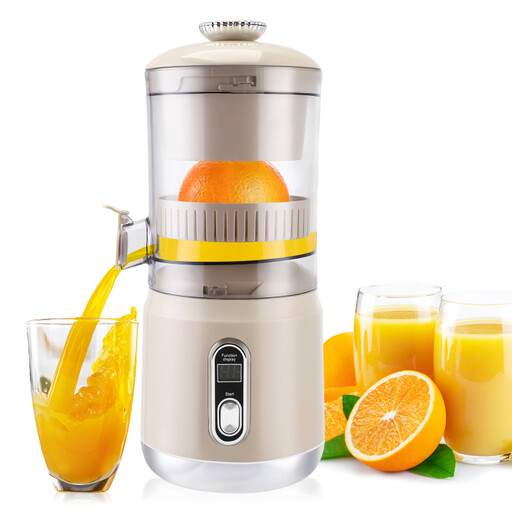 No image available
For lemons, limes or oranges if you want an anti-drip spout and removable parts for easy cleaning.
The description lists cordless operation and removable, dishwasher-safe parts.
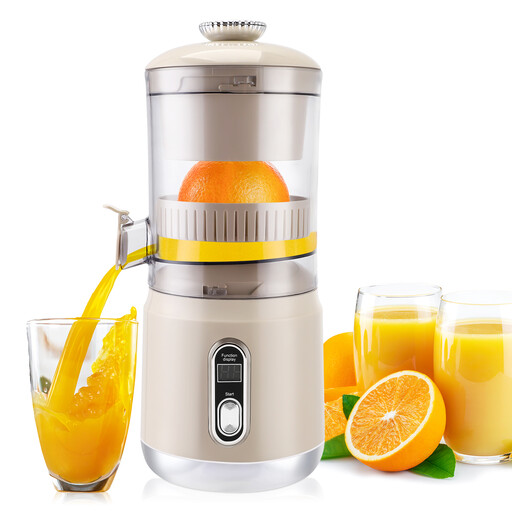 No image available
For fresh citrus juice if you want to separate the pulp and remove parts for cleaning.
The description lists lemons and limes, as well as removable parts.
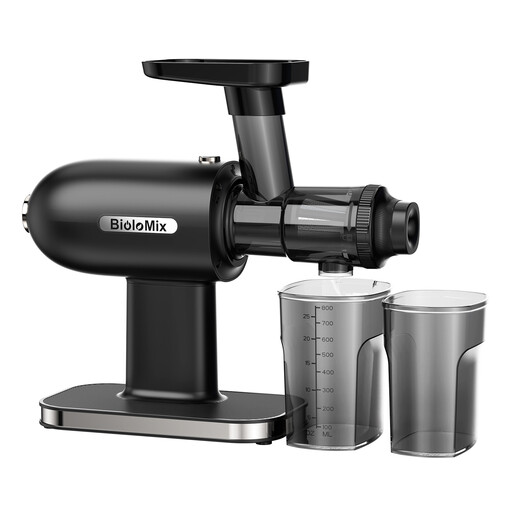 No image available
This model could suit you if you want to prepare juice for several glasses and its stated capacity of 800 ml is right for the amount you need.
The description lists lemons, limes, oranges and grapefruits, as well as parts that can be taken apart for cleaning.
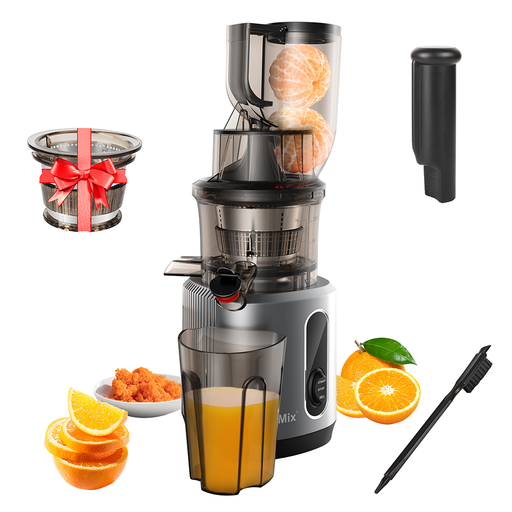 No image available
If you’re preparing juice for several glasses, the stated capacity of 700 ml could help you decide whether this model is right for you.
The description lists lemons, limes, oranges and grapefruits, as well as two-button operation.
 No image available
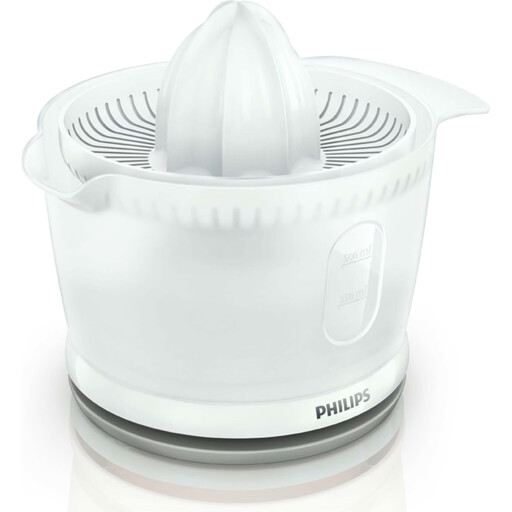
If you want to collect the juice before mixing, this model has an integrated collection jug, according to the description.
The description lists an anti-drip spout and removable, dishwasher-safe parts.
A model with a collection jug gathers the juice inside the appliance; with a direct spout, you’ll need a suitable container underneath. Check the container height and make sure the capacity of the specific model suits the amount you plan to make.
No. Follow the care instructions for each individual part in the relevant manual. The instructions for the Russell Hobbs 22760-56 say that the motor housing must not be immersed in water.
No. Wattage is a measure of electrical power, not a direct comparison of juice yield. When choosing a juicer, also consider the cones, controls and how you plan to use it.
The Verbraucherzentrale recommends washing citrus fruit in lukewarm water and drying it before juicing, as substances used to treat the peel can get into the juice.
Electrical appliances covered by the EU Low Voltage Directive must meet its requirements. The CE marking is a declaration for which the manufacturer is responsible; it isn’t an independent quality mark. Parts intended to come into contact with juice are subject to EU requirements for food contact materials. Check the product and accompanying information for the specific offer.