Choose a juicer whose manufacturer specifically says it is suitable for grapefruits, or whose large cone is known to fit your fruit. Then check the appliance’s dimensions against your available worktop space and room to use it. A direct spout means you won’t need to store a separate juice jug, while a collection container can hold several portions. A lever makes pressing easier, but needs extra clearance above the appliance. Before buying, also check that the specific product complies with the applicable CE marking and food-contact requirements.
Who are the different types of juicer suited to?
Grapefruit fans with limited worktop space
You need a cone designed for grapefruits, and should also check that the appliance, glass and movements needed to use it will fit on your worktop. WMF specifically mentions grapefruits, while Severin publishes the dimensions of the CP 3535 and CP 3544.
Those who juice one glass at a time
If you usually make one portion, you may prefer a direct spout so you don’t have to store an extra juice container. Make sure your glass will fit underneath it.
Those who make several portions at once
If you want to collect juice for several portions, consider a model with a collection container. It takes up extra space and needs to be included in your cleaning routine.
What should you look for when buying?
| What matters when buying |
What to check |
Who should pay particular attention? |
| Fit of the juicing cone |
Check that it’s specifically suitable for grapefruits and see which cones are included. If your fruit is particularly large, pay attention to the cone size. |
If I juice grapefruits of different sizes, I want to know whether they’ll sit securely on the cone. Around 33% of consumers put grapefruit fit first. |
| Space required |
Compare the appliance’s dimensions, not the packaging, and allow room for a glass, the spout and, where relevant, the lever. |
If you have limited worktop and storage space, remember to allow for the room needed to use the juicer too. Around 27% of consumers say space is their main concern. |
| Cleaning |
Check the cleaning instructions for every removable part of the exact model. Removable doesn’t automatically mean dishwasher-safe. |
If I want to minimise hand-washing after juicing, the care requirements for every part matter. Around 27% of consumers say cleaning is their most important buying consideration. |
| Portion size |
Check the container capacity or whether a glass will fit under the direct spout. Stated capacity doesn’t tell you how much juice the appliance will produce. |
If you want to collect several portions, you’ll need a suitable container; for a single glass, a direct spout may be more practical. Around 13% of consumers prioritise collecting several portions. |
Which buying mistakes should I avoid?
-
Confusing packaging dimensions with appliance dimensions
Packaging dimensions don’t tell you how much worktop space the juicer itself needs. If it has a lever, you’ll also need to allow room for it to move.
Compare the appliance’s actual dimensions with the space available, and allow room for a glass and for using the juicer.
-
Assuming removable parts are automatically dishwasher-safe
According to the manufacturer, the removable parts of the Severin CP 3535 are not dishwasher-safe. You’ll need to allow time to wash them by hand.
Check the care instructions for every part of the exact model before putting it in the dishwasher.
The CP 3535 needs extra hand-washing after use.
-
Confusing a manual juicer with an electric model
Similar-sounding model names or product images don’t prove that a juicer is electrically powered.
Before buying, check the full model number, how it’s powered and the product page.
Which branded models are worth considering?
WMF
The electric WMF Stelio sends juice straight into a glass. The manufacturer says it’s suitable for grapefruits and includes two juicing cones.
- WMF lists a removable, dishwasher-safe stainless-steel sieve and a drip-stop feature.
- Check the appliance’s dimensions and make sure a glass will fit under the spout.
Severin
The CP 3535 collects juice in a container, while the CP 3544 is a lever press that Severin specifically says is suitable for grapefruits.
- According to Severin, the CP 3535 has two juicing cones and a 1 l container. The CP 3544 has dishwasher-safe parts.
- Severin doesn’t specifically state that the CP 3535 is suitable for grapefruits, and says its parts aren’t dishwasher-safe. With the CP 3544, you’ll need to allow for the operating height and space for the lever.
Princess
The 201860 Master Juicer Pro is an electric lever press with a direct spout and an adjustable pulp filter.
- The manufacturer lists a 300-W motor, a stainless-steel cone and dishwasher-safe accessories.
- A lever needs room to move, so check that there’s enough space to use it in your kitchen.
Braun
The CitrusQuick 1 CJ3000WH is an electric juicer with a collection container and an adjustable pulp setting.
- Braun lists press-to-start/stop operation, alternating rotation and cord storage.
- Check separately whether it will fit your grapefruits, as the model information doesn’t specifically mention this fruit.
Joybuy products on this topic
The products below include electric citrus juicers and juicers. When choosing one for grapefruits, pay particular attention to whether the product is specifically described as suitable for this fruit, and check its dimensions and cleaning instructions against your kitchen.
 No product image available
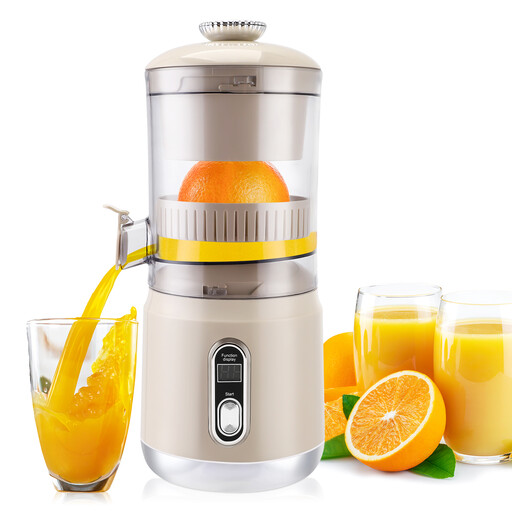
Electric citrus juicer with collection container
For those who want to collect their juice first. The product description mentions oranges, lemons and limes, but doesn’t specifically say it’s suitable for grapefruits.
The juicing cone and juice collector are removable. Before choosing it for grapefruits, check that the cone will fit your fruit.
View at Joybuy
 No product image available
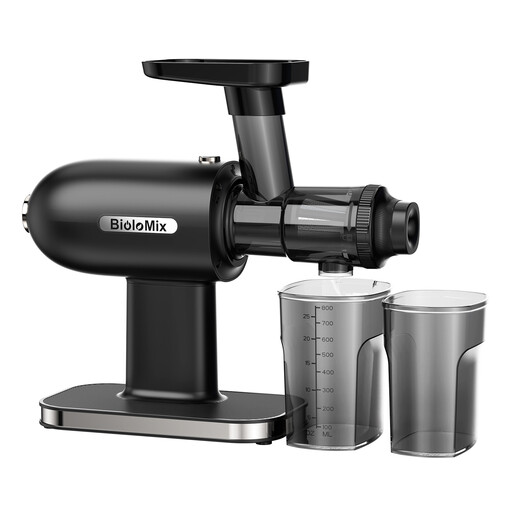
BioloMix SJ012 citrus juicer, 800 ml
The product description specifically mentions grapefruits and says the juicer can be dismantled for cleaning.
Capacity: 800 ml. Stated speed: 43 rpm. Noise level: 60 dB.
View at Joybuy
 No product image available
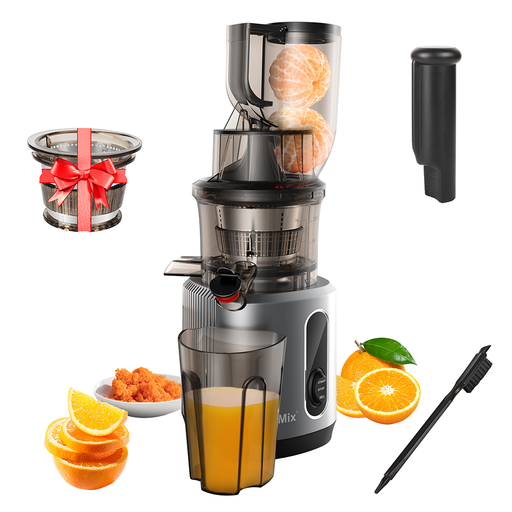
BioloMix 916 citrus juicer, 200 W, 700 ml
The product description specifically mentions grapefruits and a wide filling opening.
Power: 200 W. Capacity: 700 ml. Stated speed: 55 rpm. The description says the components are dishwasher-safe.
View at Joybuy
 No product image available
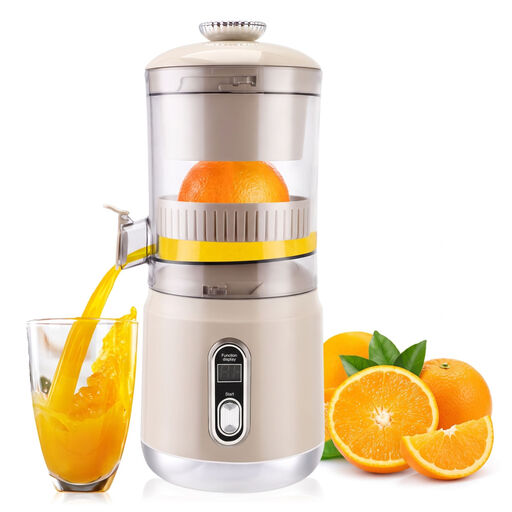
Cordless electric orange juicer
This portable model is described as an orange juicer. Before choosing it for grapefruits, check that the opening and juicing cone will fit your fruit.
The product information lists USB charging, cordless operation, three speed settings and a 110-mm filling opening.
View at Joybuy
 No product image available
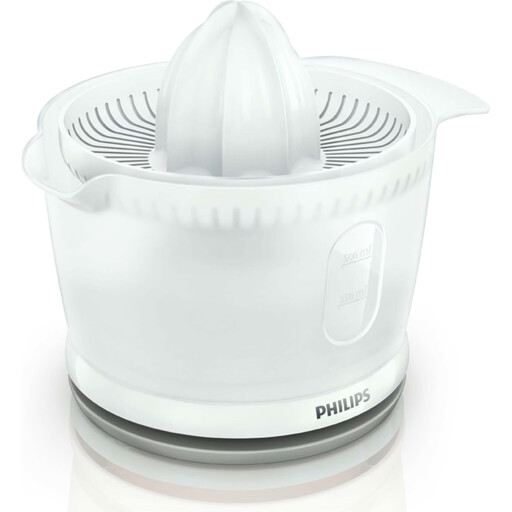
Philips HR2738/00 citrus juicer, 25 W
The product description specifically mentions grapefruits and gives the appliance’s dimensions, making it easier to check whether it will fit on a small worktop.
Power: 25 W. Container: 500 ml. Appliance dimensions: 14,5 × 19,7 × 16,4 cm. The description mentions cord storage and removable, dishwasher-safe parts.
View at Joybuy
Frequently asked questions
Does a higher wattage mean a better grapefruit juicer?
No. Wattage indicates power; it isn’t a comparable measure of juice yield or how well the juicer fits your fruit. First check whether the manufacturer mentions grapefruits and whether the cone will fit yours.
How do I clean an electric citrus juicer safely?
Unplug the juicer before cleaning and follow the instructions for the specific model. Severin says the removable parts of the CP 3535 aren’t dishwasher-safe; you can’t assume the same care instructions apply to other models.
Which product regulations matter when buying in Germany?
Electrical appliances covered by harmonised EU rules that require CE marking must carry that marking. EU requirements also apply to parts that come into contact with food. The European Union points out that CE is not an independent quality mark, so check the information for the specific product.
Who should I contact if there’s a fault?
Your statutory rights are against the seller. A manufacturer’s guarantee is separate and is subject to its own terms. The Verbraucherzentrale lists certain appliance categories covered by the right to repair that came into effect in July 2026; this does not establish an additional right to have a citrus juicer repaired.
Can I put an old electric juicer in the general waste?
No. The German Environment Agency says that discarded electrical and electronic equipment in Germany must be disposed of separately from household waste. Use an appropriate take-back or recycling scheme.


