Families who like to collect their juice
If you prepare several portions and pour them later, a jug with a measuring scale can help you keep track of the quantity. Braun lists a 1-litre jug with a measuring scale for the MPZ 9.


If you want to collect juice for several people before serving, look for a generous jug capacity and a measuring scale. If you’re filling glasses one after another, a direct-pour spout is more practical. For juicing several oranges, it’s also worth considering how easy the individual parts are to clean, how the juicer is operated and how much space it takes up.
If you prepare several portions and pour them later, a jug with a measuring scale can help you keep track of the quantity. Braun lists a 1-litre jug with a measuring scale for the MPZ 9.
If you use your juicer regularly, check which removable parts of the specific model are dishwasher-safe. WMF says the Stelio has dishwasher-safe parts, as does CASO for the CP 300.
If you’re juicing several oranges one after another, you can choose between pressing down directly on the cone and using a lever arm. CASO describes the CP 300 as having a lever-operated press arm, while Braun says you operate the CJ3000WH by pressing the fruit down.
| Feature | What to look for | Who it matters most to |
|---|---|---|
| Juice quantity and dispensing | Consider jug capacity and a measuring scale, or a direct-pour spout. For direct pouring, check that your glasses will fit underneath. | If I’m preparing several portions, I want to collect the juice and check the quantity before pouring; around 36% of consumers prioritise collection capacity and dispensing. |
| Cleaning | Check which parts are removable and specifically stated to be dishwasher-safe; this does not automatically apply to the motor housing. | If I use the juicer regularly in the morning, I want to hand-wash as few parts as possible after breakfast; around 29% of consumers prioritise easy cleaning. |
| Ease of pressing | Compare a lever arm with pressing down on the cone, as well as the stability, dimensions and weight of the specific model. | If I’m juicing several oranges in a row, I want to know how easy it is to press the fruit halves; around 21% of consumers prioritise ease of pressing. |
| Pulp and footprint | Look for a clearly stated pulp setting and check that the jug or appliance dimensions suit your space. | If we have different preferences about pulp or limited worktop space, I’m looking for a suitable setting and size; around 14% of consumers put this factor first. |
The 160 W power rating listed for the CASO CP 300 is a rated power figure, not a comparison of juice yield.
Compare the cone, controls and cleaning requirements separately from the wattage.
CASO describes the CP 330 Pro as having a spout that pours directly into a glass. A direct-pour spout alone doesn’t tell you whether the appliance has an integrated collection jug.
Check whether the specific model pours into a jug or directly into a glass before deciding how much juice you can prepare.
Dishwasher-cleaning instructions apply to specific removable parts, not generally to the motor housing.
Check the guidance for the cone, sieve and jug for the specific model.
The citrus juicers mentioned include jug models and versions with a direct-pour spout.
The Stelio is an option if you want to juice directly into a glass and switch between two cones.
The CP 300 is an electric citrus juicer with a lever arm and a direct-pour spout.
The Daily Collection HR2738/00 is a jug model, while Philips says the Avance Collection HR2752/90 has a direct-pour spout.
The Joybuy models below are electric citrus juicers designed for different orange-juicing needs, including how the juice is collected, how the appliance is operated and how easy it is to clean.
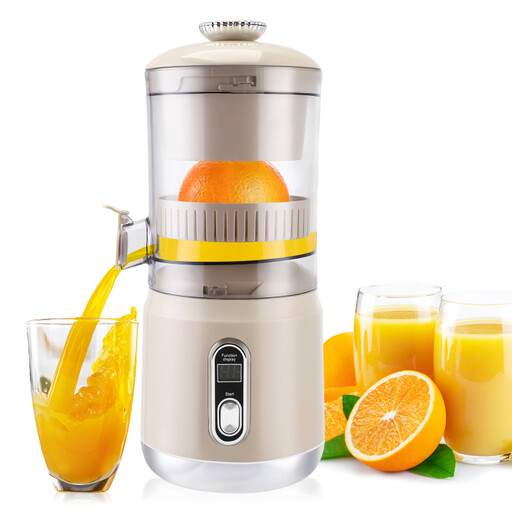 No image available
Suitable for oranges up to 7.5 cm in diameter; check that the stated fruit size matches the oranges you use.
The title specifies battery operation and anti-drip protection. According to the product description, the removable parts are dishwasher-safe.
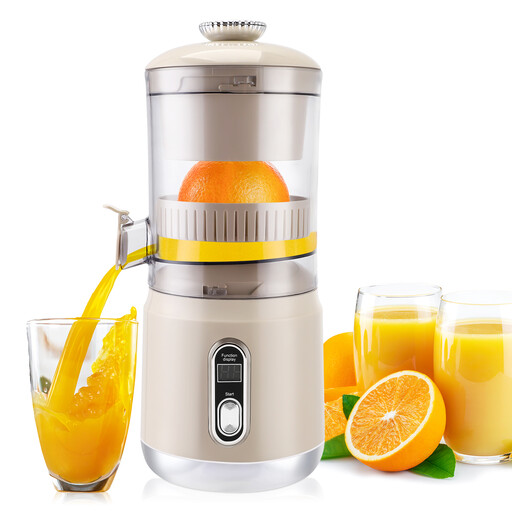 No image available
For anyone who wants to take pulp separation into account when juicing oranges.
The description lists a maximum fruit size of 110 mm and removable parts.
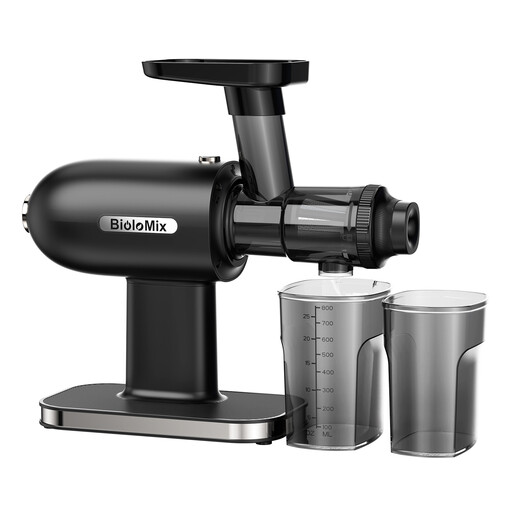 No image available
For anyone who wants to collect juice in an integrated jug.
The title lists an 800 ml capacity, 43 U/min, a two-button control panel and one-step dismantling.
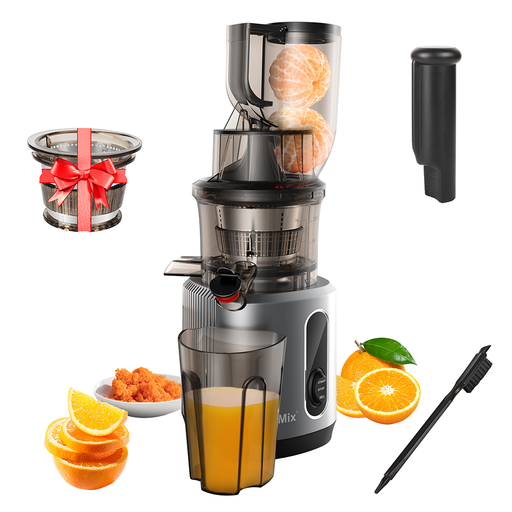 No image available
For anyone who wants to take a stated jug capacity into account when collecting juice.
The title lists a 700 ml capacity, 200 W and 55 U/min. The description mentions a wide feed chute and removable, dishwasher-safe parts.
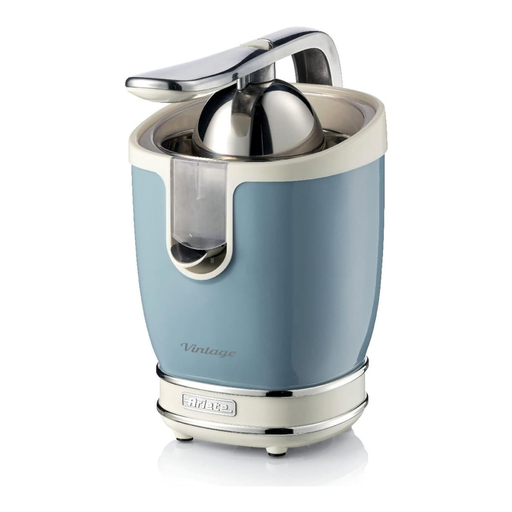 No image available
For anyone looking for a lever arm and drip-free spout when juicing.
The title lists two cones for large and small fruit, along with 85 W. According to the product description, the removable parts are dishwasher-safe.
If you want to collect a larger quantity first, compare the jug capacity and measuring scale. If you’re filling glasses individually, check the spout, drip stop and clearance for your glasses.
Only remove the parts that the instructions say can be taken off, and check the dishwasher guidance for that specific model. WMF lists dishwasher-safe parts for the Stelio, as does CASO for the CP 300; this doesn’t automatically include the motor housing.
For an appliance covered by the EU Low Voltage Directive, which applies to alternating voltages from 50 to 1,000 V, the relevant conformity requirements and CE marking apply. EUR-Lex and Your Europe explain that the manufacturer uses this marking to declare conformity; check the information for the specific appliance on offer.
Your statutory rights are against the seller, while a manufacturer’s guarantee is an additional voluntary offer with its own terms. According to the Verbraucherzentrale, if a product is faulty, the first step may be to have it repaired or replaced.
Take it to an appropriate collection point for electrical waste, separately from other rubbish. The Federal Environment Ministry explains that retailers must take back certain items, depending on their size and the conditions of purchase. If you’re not buying a replacement, the limit explained there is no more than 25 cm for each external dimension.