For one or two lemons, a small or universal juicing cone that is specifically suitable for them, together with easily removable parts clearly identified for cleaning, is a sensible starting point. A direct spout means you don’t have to transfer the juice, while a container catches it and, on suitable models, lets you adjust the amount of pulp. A lever arm changes how pressure is applied, so check how much space it needs. For the specific offer, also check that the required CE marking is present and that the instructions and safety information are in German, as described by the German Federal Network Agency.
Which juicer is right for you?
For those who usually juice enough for one glass
If you mainly juice lemons, look for a small juicing cone or a universal cone specifically suited to lemons. WMF and Rommelsbacher each list two cones for the models described here; CASO says that the cone on its CP 300 is suitable for fruit ranging from limes to grapefruits.
For those who want a quick clean-up after a break
Check which parts that come into contact with juice can be removed, and which ones the manufacturer says are dishwasher-safe. WMF and Rommelsbacher provide this information for the removable parts of their respective models.
For those who prefer to apply pressure with a lever
A lever arm could be a good choice if you’d rather not press the fruit directly onto the cone and have room to spare on your worktop. CASO lists a lever arm for the CP 300 and dimensions of 205 × 320 × 320 mm.
What to look for when buying
First, check that the juicing cone is suitable for lemons and that the parts that come into contact with juice are easy to clean afterwards. Then decide whether you’d prefer the juice to flow straight into a glass or into a container, and whether a lever arm would suit the way you use it.
| Buying priority |
What to look for |
Who it matters most to |
| A suitable juicing cone |
Check whether the specific model comes with a small cone or a universal cone specifically suitable for lemons. |
If I usually juice one lemon, the cone needs to suit smaller fruit; I only want to switch to one for larger fruit if I need to. Around 36% of consumers prioritise the fit of the juicing cone. |
| Cleaning after use |
Check which parts that come into contact with juice can be removed, and which of them the manufacturer says are dishwasher-safe. |
After a quick break, I want to clean the parts that come into contact with juice without taking the whole thing apart. Around 29% of consumers put ease of cleaning first. |
| Juice flow and pulp |
Choose between a direct spout into a suitably sized glass and a collection container; if relevant, also check whether the pulp level can be adjusted. |
When I’m making just a small portion, I want to avoid transferring the juice if possible; with a container, collecting the juice and having the option to adjust the pulp matter more to me. Around 21% of consumers prioritise juice flow and pulp. |
| Pressure and space |
Check the lever arm, stability and dimensions of the specific model rather than comparing wattage alone. |
If I prefer to apply pressure with a lever, I’ll make sure there’s enough room on the worktop. Around 14% of consumers prioritise applying pressure with a lever. |
Common buying misconceptions
-
Comparing wattage alone
Wattage alone won’t tell you whether the juicing cone is suitable for your lemons or how the juice is collected. The models described here differ in several ways, including their cones, juice flow and design.
Check the cone fit, cleaning and spout first; then compare the other details for each model.
-
Assuming the whole appliance is dishwasher-safe
WMF and Rommelsbacher refer to removable parts in their dishwasher-safety information, not the entire electric juicer.
Read the cleaning instructions for the specific model and each individual part.
Parts not specifically described as dishwasher-safe may need to be washed by hand.
-
Assuming an older model page confirms current availability
Bosch marks the MCP3500N as no longer available on its German product page.
Check whether the specific offer is available separately from the documented features of the model.
Brands to consider
Braun
According to the manufacturer, you can adjust the amount of pulp in the Braun CJ3000WH; Braun also offers models with a direct spout.
- Braun describes the CJ3000WH as starting when pressed, with alternating rotation.
- The CJ3000WH description does not confirm a direct spout; these features do not necessarily apply to every Braun juicer.
WMF
According to the manufacturer, the WMF Stelio is designed for citrus fruit of different sizes, with two juicing cones and a direct spout.
- WMF lists a drip-stop feature and removable, dishwasher-safe parts.
- These features are not a comparative measure of how much juice the appliance extracts.
Rommelsbacher
According to the manufacturer, the ZP 60/E combines two juicing cones with a direct spout and a removable sieve.
- Rommelsbacher lists a drip-stop feature and removable, dishwasher-safe parts.
- This information applies to the ZP 60/E, not to every appliance made by the brand.
CASO
CASO describes the CP 300 as an electric lever-arm press with a universal cone for citrus fruit of different sizes.
- CASO lists a lever arm, suction feet and dimensions of 205 × 320 × 320 mm.
- This does not prove that it requires less effort than other juicers.
H.Koenig
According to the manufacturer, the AGR86 is an electric lever-arm press with a spout that pours juice straight into a glass.
- H.Koenig lists an articulated arm, an anti-drip spout and individual dishwasher-safe parts.
- The description of quiet operation comes from the manufacturer; it is not based on a comparative noise test.
Joybuy product selection
This selection includes electric citrus juicers whose product descriptions mention lemons, as well as one item specifically described as an orange juicer. Before buying that model, check that it is suitable for lemons. For the specific offer, also check that the required CE marking is present and that the instructions and safety information are in German.
 No image available
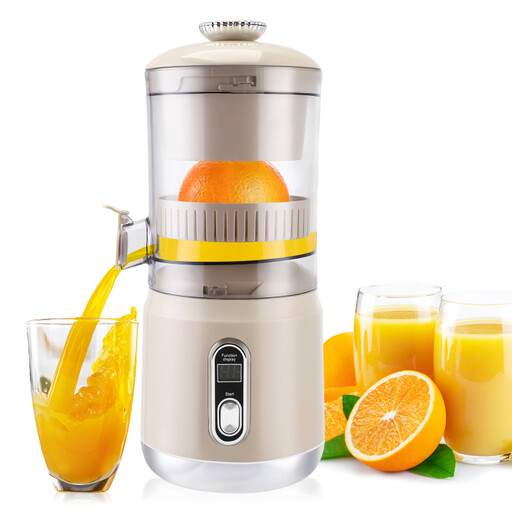
Rechargeable electric citrus juicer with anti-drip spout, white
For juicing lemons when you want a rechargeable appliance with an anti-drip spout.
Suitable for lemons up to 7.5 cm in diameter; removable parts are described as dishwasher-safe.
View at Joybuy
 No image available
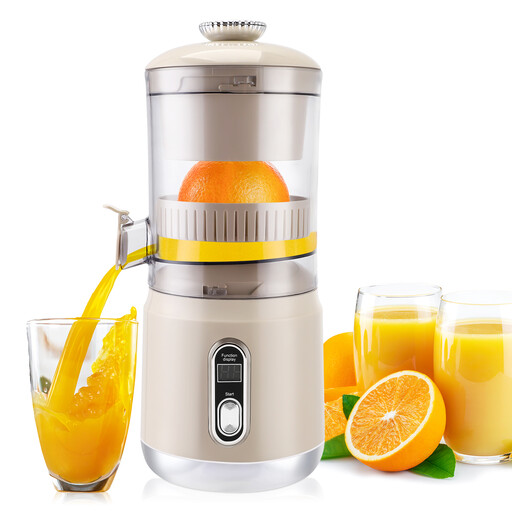
Electric citrus juicer with large capacity and pulp separator
For anyone who wants to juice lemons electrically and separate the pulp from the juice.
The description lists a juicing cone and removable parts, including the cone and juice container.
View at Joybuy
 No image available
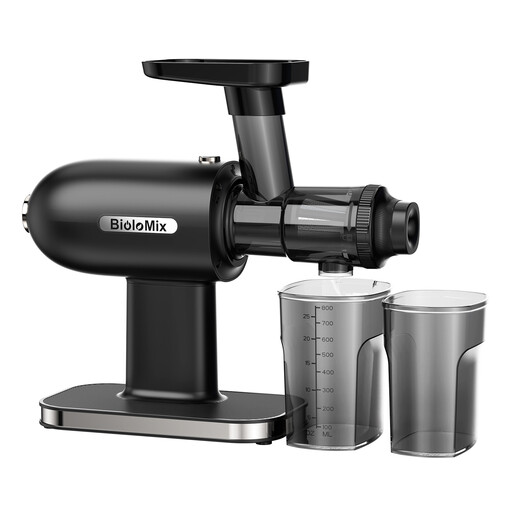
BioloMix SJ012 citrus juicer, 800 ml
An option for anyone who wants to juice lemons and then take the juicer apart in one go.
The product name lists a capacity of 800 ml and a speed of 43 rpm; the description calls it a slow juicer.
View at Joybuy
 No image available
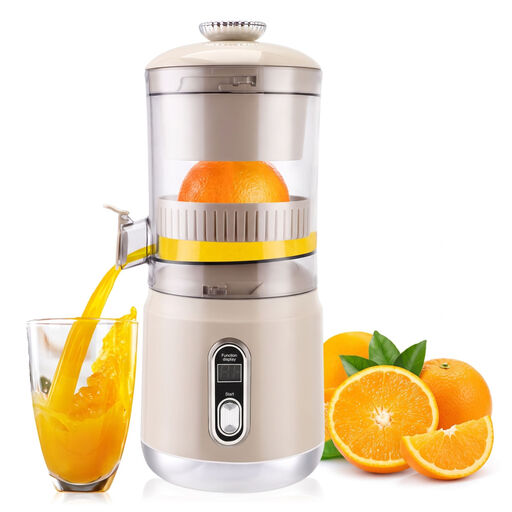
Cordless electric orange juicer with USB charging, beige
This item is specifically described as an orange juicer. If you want to juice lemons, check that the specific model is suitable before buying.
The product name lists USB charging, three speed settings and a 110 mm feed opening.
View at Joybuy
 No image available
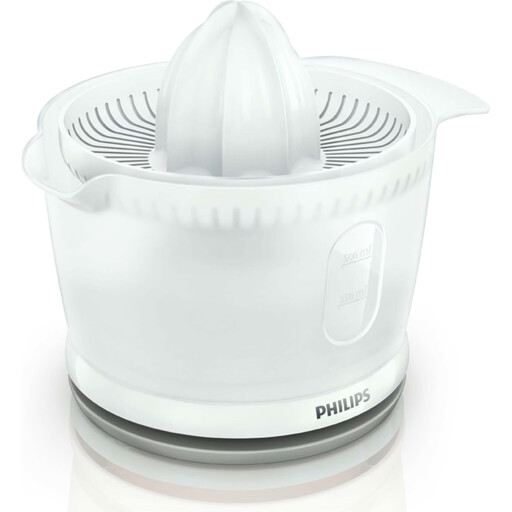
Philips HR2738/00 citrus juicer, 25 W, compact
For juicing individual lemons when a 500 ml container and compact design suit your needs.
25 W; 500 ml container; drip-free spout; removable, dishwasher-safe parts and cord storage.
View at Joybuy
Frequently asked questions
How can I tell if a juicer is suitable for lemons, not just oranges?
Check whether the specific model comes with a small cone or a universal cone specifically suitable for lemons. WMF and Rommelsbacher each list two cones for the Stelio and ZP 60/E; CASO says that the cone on its CP 300 is suitable for fruit ranging from limes to grapefruits.
Can I put the whole citrus juicer in the dishwasher?
No. A statement that parts are dishwasher-safe does not automatically apply to the whole appliance. WMF and Rommelsbacher refer to removable parts; follow the cleaning instructions for the specific model.
What markings and documents should I check when buying in Germany?
For appliances that require it, the German Federal Network Agency highlights the need for correct CE marking and the required accompanying documents, including instructions and safety information in German. Check the details for the specific offer; CE marking is not an independent quality mark.
What are my rights if the juicer is faulty?
When buying from a trader in the EU, you generally have a minimum two-year legal guarantee from the date you receive the goods. The European Union’s Your Europe consumer portal explains this minimum period; an additional manufacturer’s guarantee does not replace your statutory rights.


