What should you look for when buying?
For a family breakfast, first consider whether the juicer is suitable for limes, then choose between a collecting container and a direct spout. After that, think about cleaning and your preferred juice texture.
| What to consider |
What to look for |
Who is it important to? |
| A suitable juicing cone |
Look for an explicit statement that it’s suitable for limes, or a cone designed for small fruit. |
If I’m juicing small limes, I want to be sure the cone is the right size for the fruit. Around 33% of consumers prioritise this fit when buying. |
| Juice for several portions |
Compare the container’s nominal capacity with the direct spout and the space available for glasses. |
If I’m preparing juice for several people, I want to collect it all together or pour it straight into glasses. Around 27% of consumers focus on capacity and serving options. |
| Cleaning |
Check the care instructions for the cone, sieve and container individually. |
If I use the juicer often, I want to know how to clean each part. Around 20% of consumers base their choice primarily on how much cleaning is involved. |
| Pulp and pouring |
Check whether the model has a pulp control or a suitable drip stop. |
If a particular juice texture or mess-free pouring matters at breakfast, I want to compare these features specifically. Around 20% of consumers prioritise texture and pouring. |
Electric citrus juicers at Joybuy
Compare these electric citrus juicers for a lime breakfast by design, stated product specifications and cleaning requirements. For each model, check whether the juicing cone is specifically suitable for limes or small fruit.
 No image available
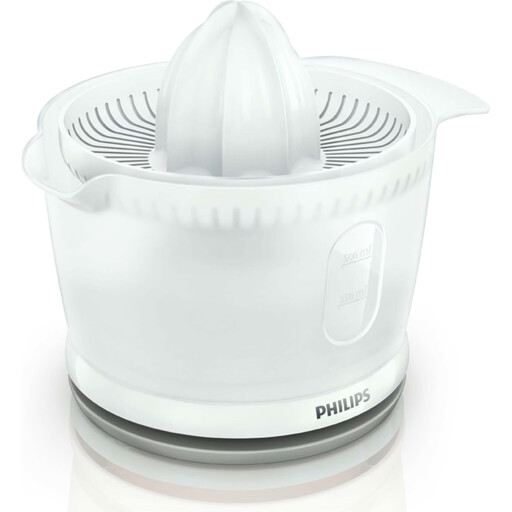
Philips HR2738/00 citrus juicer, 25 W
If you’re looking for a compact juicer for breakfast, its size is worth considering. Also check whether the cone is suitable for small limes.
The product name specifies 25 W and a compact design. According to the appliance instructions, it requires an earthed socket with a 220–240 V supply. Do not immerse the motor unit in water, and unplug the appliance before cleaning.
View at Joybuy
 No image available
Bear CZJ-A04B1 citrus juicer, 5 pulp settings
If different juice textures matter at breakfast, the stated pulp control could influence your choice. Check separately whether the cone is suitable for limes.
The product name specifies five adjustable pulp settings and a 110 mm-wide feed opening. According to the appliance instructions, an earthed socket is required. Do not immerse the main body in water, and place the appliance on a stable, level surface.
View at Joybuy
 No image available
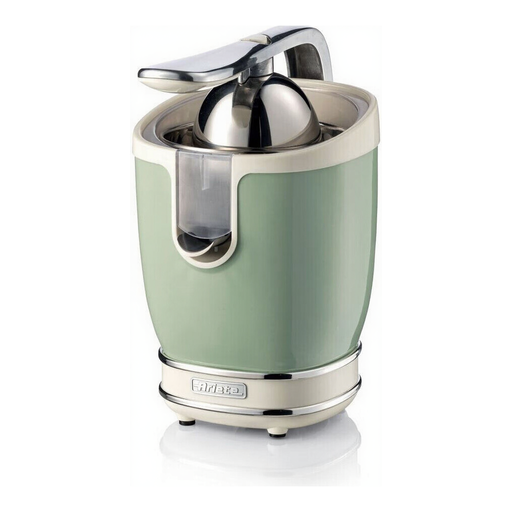
Ariete 0413GR citrus juicer, 0.6 l, Light Green Cream
The stated capacity can help you plan how much breakfast juice to collect, but it doesn’t predict how much juice you’ll get from a particular quantity of limes.
The product name specifies 0.6 l. According to the appliance instructions, it requires a suitable 230-V power supply and an earthed socket. Unplug it before cleaning and do not touch moving parts.
View at Joybuy
 No image available
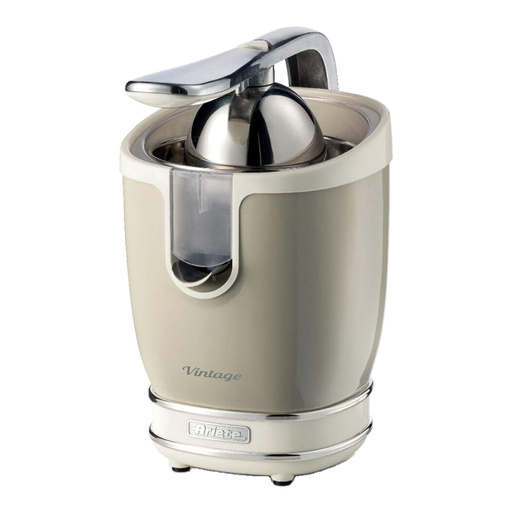
Ariete Vintage citrus juicer, stainless steel
If you plan to keep the juicer on your worktop, its stated dimensions can help you work out how much space you’ll need. For limes, also check that the juicing cone is suitable.
The product name specifies 15D × 17W × 31H cm. According to the appliance instructions, this model is not dishwasher-safe. Clean it with a damp cloth and do not immerse it in water.
View at Joybuy
 No image available
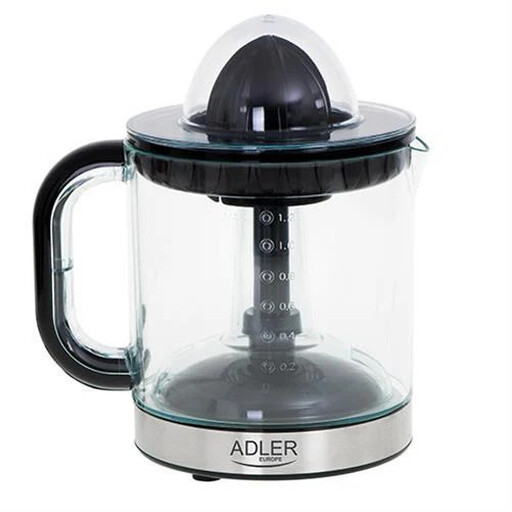
Adler AD 4012 citrus juicer, 40 W, 1.2 l
If you’re making several portions for breakfast, the stated container capacity is one factor to consider. Separately, check whether the juicing cone is suitable for small limes.
The product name specifies 40 W and 1.2 l. According to the appliance instructions, the motor unit and mains cable must not be immersed in liquid. Unplug the appliance before cleaning.
View at Joybuy
Frequently asked questions about electric citrus juicers
Which electric citrus juicer is specifically suitable for limes?
WMF specifically lists limes as suitable for the Stelio, while CASO describes the CP 300’s cone as suitable for fruit ranging from limes to grapefruit. Severin lists cones for small and large fruit for the CP 3535. For every model, check that the cone is the right size for your limes.
Does a 1.0 l container mean I’ll get a certain amount of lime juice?
No. The 1.0 l capacity of the Severin CP 3535 refers to the container’s nominal capacity, not the amount of juice you’ll get from a certain number of limes. Work out how much you need separately.
Can all parts of an electric citrus juicer go in the dishwasher?
No, it depends on the model and the individual part. Severin states that the individual parts of the CP 3535 are not dishwasher-safe; WMF lists dishwasher-safe parts for the Stelio, as does CASO for the CP 300. Follow the care instructions for your specific appliance.
What rules apply to parts that come into contact with lime juice?
EU rules on food contact materials also cover components of food-processing equipment. EUR-Lex explains that, under normal or foreseeable conditions of use, components must not transfer to food in quantities that could endanger health or otherwise be unacceptable. This is a product requirement, not a special authorisation for buyers to use the appliance.
How should I dispose of an old electric citrus juicer?
In Germany, waste electrical equipment is collected separately and must not be put in ordinary household rubbish. The Federal Environment Agency describes local collection points and take-back options offered by retailers, subject to the applicable legal requirements.


