For a small kitchen, start by deciding whether you want to collect juice in a jug, squeeze it straight into a glass or use a lever when juicing several lemons. Then compare the appliance’s actual dimensions, the space beneath the spout and how easy its removable parts are to clean. A lever may need more room to operate. Before buying, also check whether the manufacturer’s documentation confirms that the parts in contact with the juice are suitable for food contact.
Which juicer is right for you?
Short on worktop space
If you want to juice lemons electrically and put the appliance away afterwards, compare its dimensions and check whether it has somewhere to store the cord. Braun lists cord storage for the CJ3000WH; CASO gives the CP 200’s dimensions as 180 × 290 × 250 mm.
Easy clean-up
If you want to keep cleaning to a minimum after juicing, check for each model which parts are removable and which the manufacturer says are dishwasher-safe. WMF, CASO and Princess provide information about certain filters or removable parts on specific models.
Juicing several lemons regularly
If you often make larger quantities of lemonade, or would rather not press the fruit onto the cone by hand, a lever model may be worth considering. Be sure to compare how much space it takes up and how much room you’ll need to operate it.
What should you look for when buying?
Juicer with a collection jug
A good fit if: you want to collect lemon juice and put the appliance away afterwards.
Things to consider: the jug and appliance take up space, and the jug will need washing too.
Juicer with a direct-pour spout
A good fit if: you want to juice straight into a glass or another suitable container.
Things to consider: check that your glass fits beneath the spout. The filter and spout will also need cleaning.
Lever juicer
A good fit if: you regularly juice several fruits and want to press them onto the cone using a lever.
Things to consider: a lever needs room to operate, so it doesn’t automatically make the appliance more compact.
| What to consider |
What to look for |
Who is it important to? |
| Space and storage |
Check the appliance’s width, depth and height, as well as the room needed to operate a lever; package dimensions are no substitute for appliance dimensions. |
If I have little free worktop space and want to put the juicer away after use, every centimetre counts; around 36% of consumers put space requirements first. |
| Cleaning |
Identify each removable part and check the manufacturer’s dishwasher-safety information for those specific parts. |
If I want to tidy up as quickly as possible after juicing, I look at which parts are easy to remove and clean; around 29% of consumers put cleaning first. |
| Juice collection and pulp |
Choose between a collection jug and a direct-pour spout; compare the cone, filter and, where available, pulp settings. |
If I’m collecting lemon juice for lemonade, or juicing straight into a glass and want to adjust the amount of pulp, the way the juice is collected matters; around 21% of consumers prioritise this choice. |
| Juicing several fruits |
Check the lever action, base, spout and cleaning requirements for removable parts on the specific model. The wattage does not tell you how much hand pressure is needed. |
If I regularly juice several lemons and prefer to press the fruit using a lever, this way of operating the juicer is the deciding factor; around 14% of consumers put it first. |
Common buying mistakes
-
Focusing only on the wattage
Wattage tells you neither how much worktop space the juicer needs nor how it operates. Collection jugs, direct-pour spouts and levers all affect how easy a juicer is to use and store in your kitchen.
First, decide which type of juicer suits the way you make lemonade. Then check the appliance’s dimensions and cleaning requirements. Treat the wattage as a model specification, not a measure of the hand pressure required.
-
Confusing package dimensions with appliance dimensions
Published measurements may refer to the packaging. WMF labels the measurements for the Stelio as package dimensions, while CASO gives the appliance dimensions for the CP 200.
For your worktop, specifically compare the assembled appliance’s width, depth and height. If you’re considering a lever juicer, also allow room for the lever’s movement.
-
Assuming ‘dishwasher-safe’ applies to the whole appliance
Manufacturers’ dishwasher-safety information applies to specific removable parts or accessories, not to the electrical unit as a whole.
Check the instructions for your specific model to see which parts can go in the dishwasher, and clean the parts that come into contact with juice after use.
Brands and models at a glance
Braun
The CJ3000WH is an electric juicer with a collection jug.
- Braun says you can adjust the amount of pulp by turning the jug, and that the model has cord storage.
- Check the footprint of the appliance itself; you’ll need to verify the full dimensions of this model separately.
WMF
The Stelio is an electric juicer with a direct-pour spout.
- WMF lists two cones for citrus fruits of different sizes, as well as a fold-away drip stop.
- Check that your chosen glass fits beneath the spout. The measurements published by WMF refer to the packaging.
CASO
The CP 200 is an electric lever juicer with a direct-pour spout.
- CASO gives the CP 200’s appliance dimensions as 180 × 290 × 250 mm (W × H × D) and its power as 160 W.
- Before buying, compare the dimensions with your available worktop space and the room needed to operate the juicer; they don’t prove it produces more juice.
Princess
The 201860 Master Juicer Pro is an electric lever juicer with a direct-pour spout.
- Princess lists a stainless-steel cone, an adjustable pulp filter and removable, dishwasher-safe parts.
- Models with similar names may need careful checking to make sure you have the right version; compare the full model number before buying.
Russell Hobbs
The Classics 22760-56 is an electric juicer with two cones.
- Russell Hobbs specifically says the small cone is suitable for lemons and limes, and lists dishwasher-safe accessories.
- The manufacturer’s claims about juice yield are not an independent comparison with other models.
Joybuy product options
The Joybuy products below are electric juicers for lemons and other citrus fruits. Compare the listed jug details, design and cleaning guidance with the space available in your kitchen.
 No image available
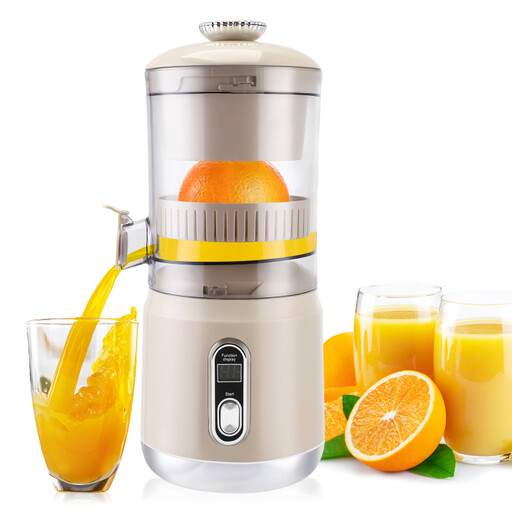
Rechargeable electric citrus juicer with anti-drip spout, white
The product name mentions rechargeable operation and an anti-drip spout. Product information says it is designed for citrus fruits up to 7,5 cm in diameter; check that your fruit is within this limit.
Joybuy
 No image available
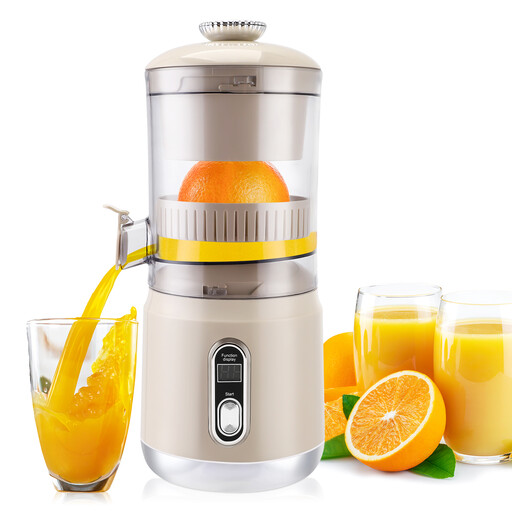
Automatic electric citrus juicer with large capacity
The product name describes an automatic electric juicer for lemons and other citrus fruits. If cleaning is important to you, check the information on removable parts: the juice collector, cone and lid are listed as removable.
Joybuy
 No image available
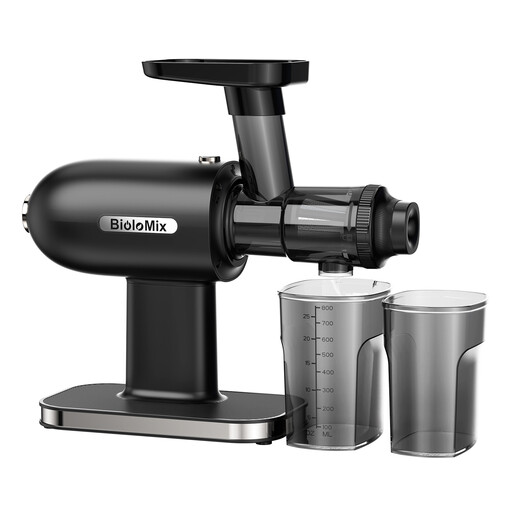
BioloMix SJ012 citrus juicer, 800 ml
Designed for lemons and limes; the product name lists a capacity of 800 ml. It also lists a speed of 43 rpm and a noise level of 60 dB, which can’t be used to compare performance without equivalent testing conditions.
Joybuy
 No image available
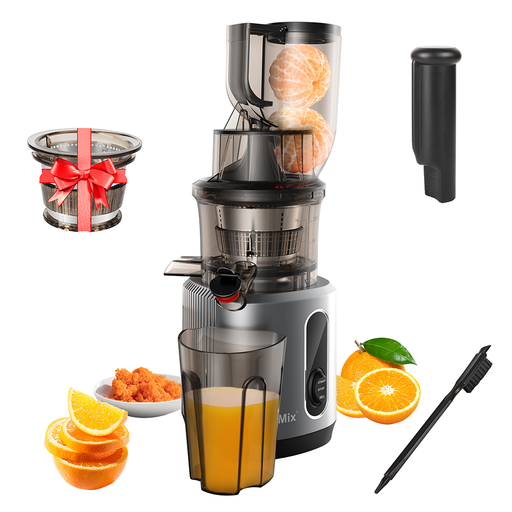
BioloMix 916 citrus juicer, 200 W, 700 ml
The product name lists a capacity of 700 ml and a power rating of 200 W. If you’re making several portions, capacity can help you choose; compare it with the amount of lemonade you usually make.
Joybuy
 No image available
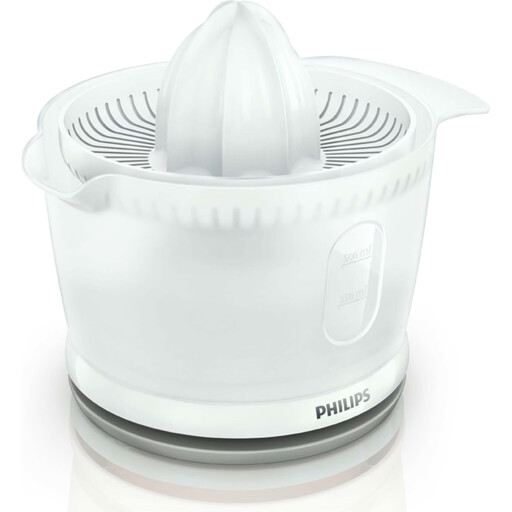
Philips HR2738/00 citrus juicer, 25 W
If you have limited worktop space, the stated appliance dimensions of 14,5 × 19,7 × 16,4 cm give you a specific point of comparison. Product information also lists a 500-ml jug, 25 W, cord storage and removable dishwasher-safe parts; check the instructions for exact cleaning guidance.
Joybuy
Frequently asked questions
Can I use any electric citrus juicer to juice lemons for lemonade?
Check which fruit sizes and cones are listed for the model. Russell Hobbs specifically says the small cone on the Classics 22760-56 is suitable for lemons and limes; WMF also lists these fruits for the Stelio.
What should I clean after juicing?
Clean the parts that come into contact with juice, and follow the instructions for the cone, filter, jug and spout on your specific model. Individual dishwasher-safe parts do not mean that the electrical motor unit can go in the dishwasher too.
Should I wash lemons before juicing them?
Yes. The Verbraucherzentrale recommends rinsing citrus fruit with lukewarm water and drying it before juicing, as substances from the peel can get into the juice.
What requirements apply to parts that come into contact with juice?
Materials intended to come into contact with food must meet the requirements of Regulation (EC) No 1935/2004 when placed on the EU market. The European Commission describes this requirement in general terms; check the manufacturer’s documentation for your specific model and the parts that come into contact with juice.
What are my rights if an appliance is faulty or I buy online?
Your statutory rights against the seller are separate from any voluntary guarantee. With an online purchase, you’ll generally have 14 days from receiving the goods to cancel; statutory exceptions and the details of your particular purchase may apply. The Verbraucherzentrale explains these rights separately.


