
Lieferung heute & morgen

Qualitätsgarantie

Willkommens-Angebote freischalten: KOSTENLOSE Lieferung | Bis zu 80 % RABATT | Kostenlose 30-Tage-JoyPlus-Testphase
App herunterladen
Freshly ground beans can make preparing coffee at home, in the office or on the go much more convenient. However, anyone looking for an electric coffee grinder with burrs will find many devices that differ considerably in terms of technology, operation and intended use. Compact battery-powered models are often advertised with versatile grind settings, while traditional kitchen grinders generally use blade grinders.
As a Joybuy Product Recommendation Officer, I filter the relevant product data and explain what buyers in Germany should look out for before making a purchase. This helps avoid common mistakes – such as choosing a grinder that is unsuitable for espresso or a battery-powered model that does not meet your travel needs.
Compact devices are sometimes generally described as coffee grinders even though they contain a blade rather than conical or flat burrs. In these models, the fineness depends mainly on the running time and manually stopping the grinder. This may be sufficient for everyday filter coffee, but it offers less repeatable control for espresso or Pour Over.
A coffee grinder with stainless steel burrs and defined grind adjustment should therefore be assessed differently from a device with a stainless steel blade. Before buying, check the product type and grinding mechanism carefully.
Claims such as “suitable for all brewing methods” reveal little about how the grinder actually works. What matters is whether the grind can be adjusted finely enough for your own espresso machine and whether sufficiently coarse settings are available for a French Press coffee grinder. With a Pour Over coffee grinder, the dose per brewing session is another important consideration.
The beans also make a difference. Very hard, light roasts may require more motor power from small battery-powered grinders. The manufacturer’s guidance on bean selection and maximum running time should therefore be taken into account.
An electric coffee grinder with a battery does not require a mains socket, but it does need to be charged regularly. Important factors include battery capacity, charging time, charging connection and the number of possible grinding cycles. USB-C is convenient if you already have a compatible charger or power bank. However, a battery does not eliminate the need for care: coffee residue in the grinding channel can affect performance, and on many devices water must not come into contact with the burrs or motor unit.
For espresso, moka pot, Pour Over and French Press, a coffee grinder with adjustable grind size is a sensible choice. Stainless steel conical burrs can allow for a compact design in portable devices. According to the product specifications, the STARESSO D6E PLUS uses stainless steel burrs, triple coaxial alignment and bearing support with two bearings. This construction is intended to reduce play in the burr mechanism and support more consistent grinding results.
When choosing a grinder, the grind range should suit your brewing method:
A blade grinder, on the other hand, generally works according to how long the button is pressed. According to the available product data, the Bosch TSM6A011W, Aigostar CG-200, Melitta Amigo, ADLER AD 4446 and Severin KM 3879 belong to this category. They are suitable for simple applications, but should not be treated as equivalent to a conical burr grinder with precisely defined click settings.
A rechargeable coffee grinder is particularly useful for camping, travel and the office. The STARESSO D6E PLUS is specified with a 1000-mAh battery, USB-C charging and a charging time of approximately 2.5 hours. Its compact design, measuring around 150 millimetres in height and 52 millimetres in diameter, makes it easier to transport.
A larger capacity is more practical when preparing coffee for several people. In this selection, the stated capacities of mains-powered kitchen grinders range from 50 to 75 grams. A portable coffee grinder, by contrast, is often designed for individual portions. This reduces its packed size, but may require several grinding cycles.
Burrs and grinding chambers should be cleaned according to the manufacturer’s instructions. For devices such as the STARESSO D6E PLUS, cleaning with a dry brush is recommended; the burrs must not be rinsed with water. The same applies to blade grinders: unplug the device before cleaning, or switch it off and disconnect it from the charging cable.
You should also look for:
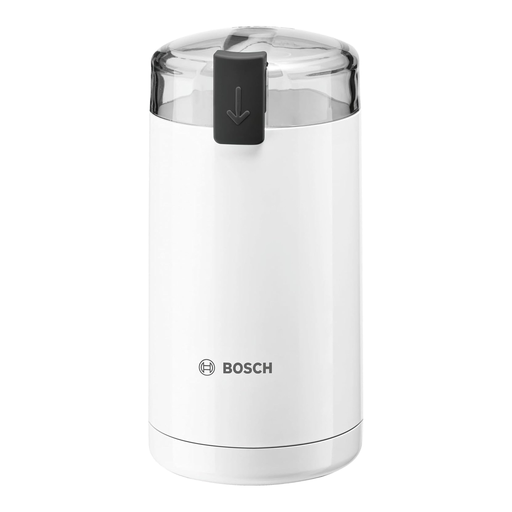
Why this product suits this profile: This mains-powered kitchen grinder is designed for everyday use at home and offers a capacity of up to 75 g together with a 180-W motor.
The product data clearly specifies a stainless steel blade rather than conical burrs. This prevents false expectations about precise grind settings.
75-g capacity, 180 W and a safety mechanism that operates when the lid is closed correctly.
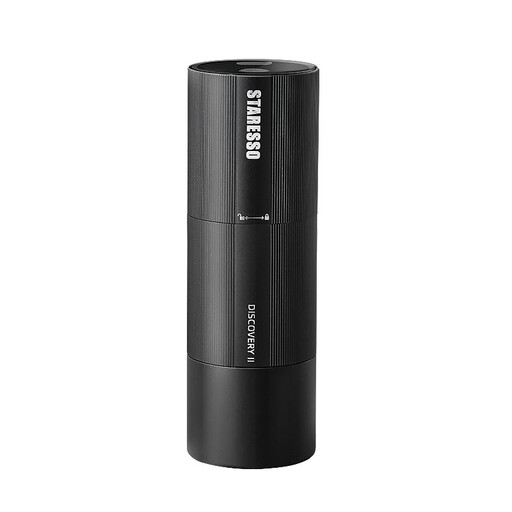
Why this product suits this profile: This portable device combines stainless steel burrs, adjustable grind size and one-touch operation for espresso, moka pot, Pour Over and French Press.
The grind adjustment is described as a dedicated rotary control. The burrs, battery, charging time and cleaning instructions are also specified clearly.
Metal housing, stainless steel burrs, 1000-mAh battery and USB-C charging port, with a height of around 150 mm.
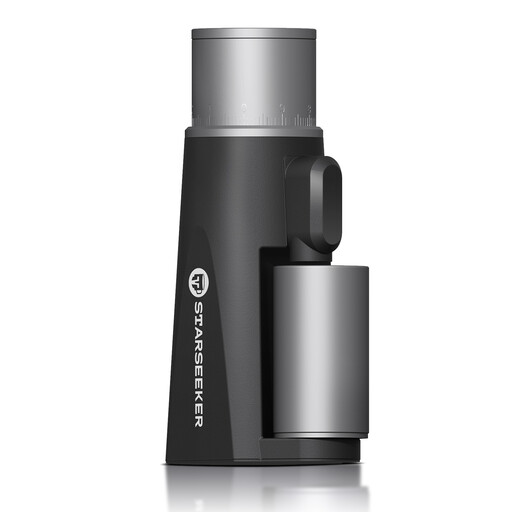
Why this product suits this profile: Its cordless design and 2600-mAh battery are intended for camping, business trips, the office and mobile coffee stations.
The product description specifies the battery, USB-C, dimensions, weight and automatic shut-off. It also highlights possible static build-up and suitable roasts.
38-mm conical burrs, 100-step adjustment according to the supplier’s specifications, and magnetically attached, removable components.
We have put together a complete, regularly updated list of products that fully meet these strict selection criteria and the safety regulations applicable in the EU.
For espresso, a stainless steel burr grinder with adjustable settings and a sufficiently fine range is a sensible choice. A blade grinder can break coffee beans down finely, but generally does not offer clearly defined grind settings. Before buying, you should also consider dosing, bean hardness and compatibility with your own espresso machine.
This depends on battery capacity, grind size, roast level and portion size. The STARESSO D6E PLUS is specified with a 1000-mAh battery and a charging time of around 2.5 hours. The Starseeker EDGEmini is listed with 2600 mAh. Specific running times should always be assessed against the relevant manufacturer’s specifications and your own usage profile.
With mains-powered models, electricity consumption per grinding cycle is generally low, while battery-powered grinders are charged via USB-C. Running costs therefore depend primarily on your electricity tariff, charging frequency and battery lifespan. The right design is more important than a small difference in energy consumption: a battery-powered model may be more convenient for travel, while a mains-powered device with a larger container is better suited to preparing larger quantities at home.