
Lieferung heute & morgen

Qualitätsgarantie

Willkommens-Angebote freischalten: KOSTENLOSE Lieferung | Bis zu 80 % RABATT | Kostenlose 30-Tage-JoyPlus-Testphase
App herunterladen
For many coffee lovers, freshly ground beans are an essential part of making a great cup. An electric coffee grinder can save time and deliver consistent results. However, a wide range of grind settings, a touchscreen or battery specifications don’t automatically make a grinder the right choice. What matters is whether its features suit your preferred brewing method, how much coffee you make and the space you have available.
The number of settings is only a starting point. A coffee grinder with adjustable grind settings should also make it clear how to change them and whether they cover fine, medium and coarse grinds. Espresso requires finer adjustments than a French press. For pour-over, it’s important to have a medium setting that’s easy to control.
A high wattage doesn’t automatically mean better grinding. The burr type, speed, cooling, hopper capacity and ease of cleaning matter just as much. A powerful motor can be useful for larger quantities, while a compact portable electric coffee grinder has different priorities, such as battery life, weight and portability.
Before buying, check whether a grounds container, bean hopper and, where needed, a suitable outlet are included. For manual brewing, filters, a dripper, a carafe and scales are also useful. A grinder on its own won’t meet all your coffee accessory needs.
A conical burr grinder feeds beans between two cone-shaped grinding elements and is widely used in electric coffee grinders. Check the material and stated size of the burrs. Stainless steel or hardened metal components are easier to assess from the product specifications than vague claims such as ‘premium burrs’.
According to the product details, the HiBREW G3 has a high-precision conical burr set and offers 34 grind settings. The HiBREW G5 features a 48 mm CNC conical burr set and 36 settings. Details like these give you a better basis for comparison than unsubstantiated marketing claims.
Espresso usually calls for a fine grind, filter coffee and pour-over need a medium grind, and French press works best with a coarser setting. A versatile grinder should cover all these ranges. If you often switch between brewing methods, 30 or more clearly marked settings can be useful.
A coffee grinder with a timer can control dosing by time. It won’t replace scales, but it can make your routine more repeatable. The HiBREW G7’s timer is stated in the product description to have an accuracy of 0.1 seconds. According to the manufacturer, it also supports 51 mm, 54 mm and 58 mm portafilter modes.
For use in the kitchen, check that the mains power specifications are suitable for the UK. The HiBREW G3 is rated at 220–240 V and 220 W. For mobile use, battery capacity, charging port and weight are more important.
Cleaning matters too. Coffee grounds can build up in the outlet, grounds container and burrs. Removable parts and cleaning with a brush or blower make maintenance easier. Don’t immerse electrical components or burrs in water unless the product instructions specifically allow it.
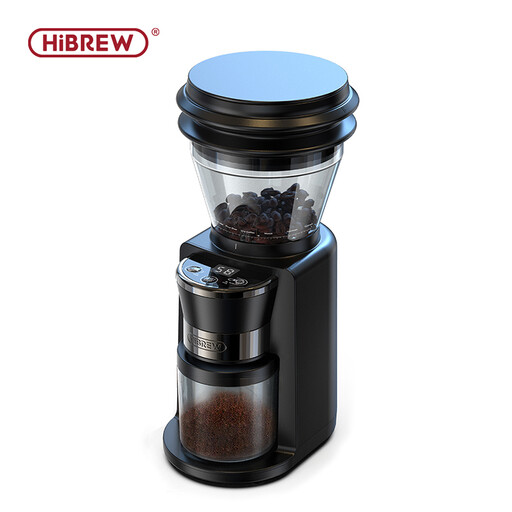
Why it suits this type of user: The grinder offers 34 grind settings, measured one- and two-cup dispensing, and a 210 g bean hopper. It’s a good choice if you’d like to try different brewing methods without buying several appliances straight away.
The grind scale is clearly specified, with 34 settings. The hopper capacity and mains voltage are also stated clearly.
34 grind settings, 210 g bean hopper, 100 g grounds container and a stated anti-static function.
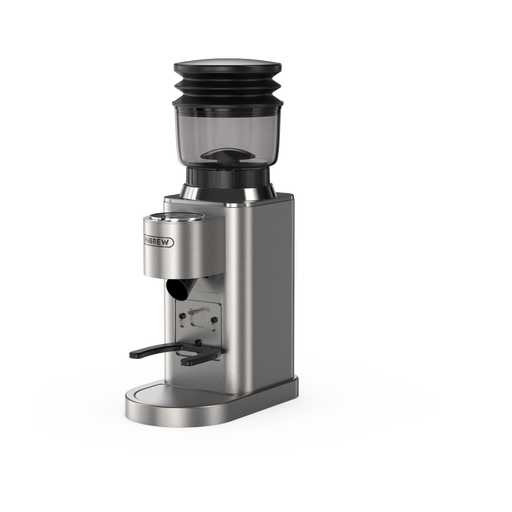
Why it suits this type of user: This model is for anyone who values timed grinding and a digital interface for espresso and pour-over. Its three portafilter modes make it easier to match the grinder to different espresso machines.
Instead of making vague claims about its timer, the product description specifies adjustments in 0.1-second increments and lists compatible portafilter sizes.
48 grind settings, 420 stainless steel conical burrs, touchscreen and a timer with 0.1-second resolution.
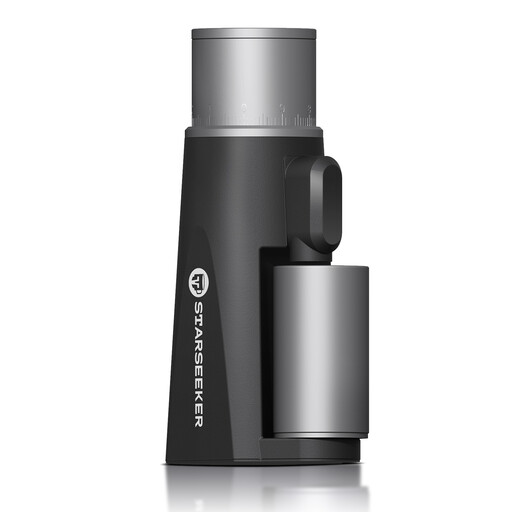
Why it suits this type of user: Its cordless design and 2600 mAh battery make it suitable for the office, camping and travel. According to the product details, it supports espresso, pour-over, moka pot and cold brew.
The product details specify the battery, USB-C charging port and dimensions. Note that no static-reduction feature is listed.
2600 mAh battery, USB-C, 38 mm conical burrs and stepless adjustment according to the product description.
We’ve put together a complete, regularly updated list of products that meet these strict selection criteria and fully comply with the safety regulations in force in the EU.
A suitable grinder should offer both fine and medium grind settings. A coffee grinder with conical burrs and plenty of clearly marked settings makes it easier to switch between brewing methods. For portafilter use, also check whether coffee is dispensed directly into the right portafilter or into a grounds container.
Its lifespan depends on the burrs, motor, hardness of the beans, how often you use it and how well you maintain it. Avoid foreign objects, very damp ingredients and anything the grinder isn’t designed to process. Clean it according to the manufacturer’s instructions. Without a firm statement from the manufacturer, it isn’t possible to give a reliable estimate of its lifespan.
Running costs depend on the grinder’s power, grinding time and how often you use it. Short grinding sessions usually use less electricity than appliances that run for long periods without a break. A battery-powered grinder also needs recharging; here, the key factors are battery capacity and the number of grinding sessions per charge.