
Lieferung heute & morgen

Qualitätsgarantie

Willkommens-Angebote freischalten: KOSTENLOSE Lieferung | Bis zu 80 % RABATT | Kostenlose 30-Tage-JoyPlus-Testphase
App herunterladen
Freshly ground beans can transform your everyday coffee routine. When buying an electric coffee grinder, however, it is not just the wattage or a marketing claim about exceptionally even grinding that matters. The key factors are the design, adjustment options, capacity and intended use.
Many disappointing purchases result from three common marketing traps:
Before buying, you should therefore check whether the electric coffee grinder suits your brewing method, household size and available space.
An electric coffee bean grinder with blades breaks the beans up using rotating blades. The desired fineness is usually controlled by adjusting the grinding time. This design is simple and common in compact appliances. However, achieving a precisely repeatable setting between coarse and fine is more difficult.
A device with a conical burr coffee grinder or flat burr grinder feeds the beans between two burrs or through a conical grinding mechanism. The grind size is adjusted mechanically. This is particularly important if you regularly switch between espresso, filter coffee, pour-over and French press.
For occasional preparation and smaller quantities, a blade grinder may be sufficient. For repeatable results and several brewing methods, an adjustable burr grinder gives you more control in everyday use.
An adjustable coffee grinder should have a clearly described adjustment mechanism. Espresso generally requires a fine setting, while a coffee grinder for French press should produce a considerably coarser grind. Pour-over usually falls within the medium to medium-fine range.
The number of settings is only a guide. 14 clearly defined settings may be enough for household use; 36 or 48 settings offer more intermediate options, but also require more time to find the right adjustment. Stepless systems allow very fine-tuned adjustments, but are less intuitive for beginners.
For one or two people, 20 to 60 g of beans per grinding cycle is often sufficient. Appliances with a 75 g capacity are suitable for several cups. A 220 g hopper is useful if you regularly grind larger quantities.
Look out for:
With blade grinders, the blade must only be touched when the appliance is completely disconnected from the power supply. The motor housing should not be submerged in water.
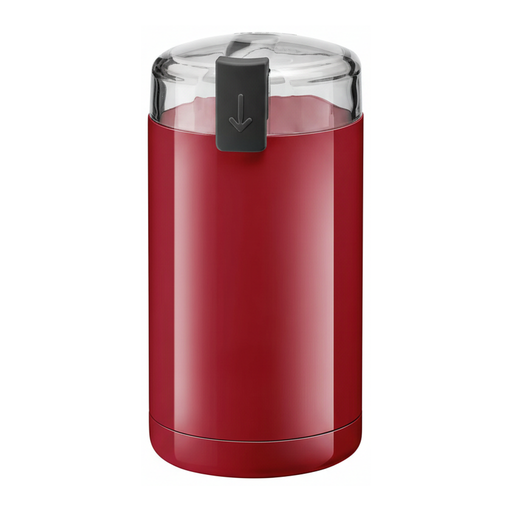
Why this product suits this profile: This compact grinder is suitable for households that want to prepare coffee simply and in larger portions. According to the product details, it holds up to 75 g of beans and operates at 180 W.
The capacity and operation are clearly specified. The integrated safety mechanism prevents the grinder from starting if the lid is not fitted correctly.
180 W motor, 75 g capacity, 220–240 V mains operation and compact dimensions of 9 × 9 × 17 cm.
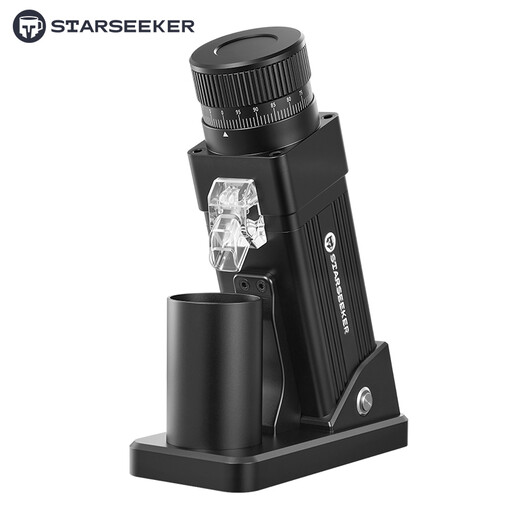
Why this product suits this profile: For users who want to prepare espresso and pour-over coffee using different settings, this model offers 55 mm conical burrs and stepless adjustment.
Rather than merely changing the running time, the grind size is adjusted using a stepless control ring, according to the product description.
55 mm titanium-alloy conical burrs, metal housing and a magnetically removable outlet for easy cleaning.
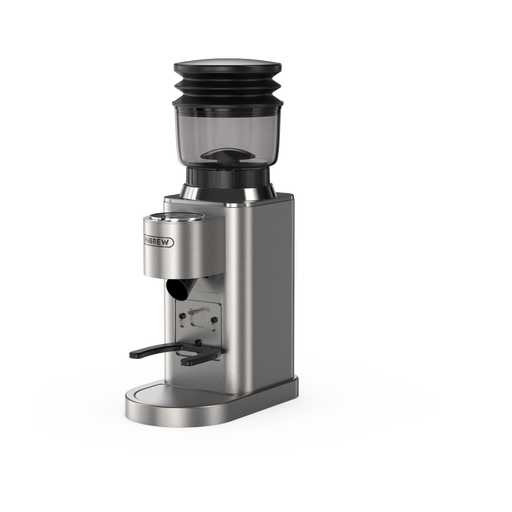
Why this product suits this profile: This model is aimed at users who regularly prepare different espresso and filter coffee recipes. According to the product details, it offers 48 grind settings and three portafilter modes for 51, 54 and 58 mm.
The adjustment ranges, portafilter sizes and 0.1-second time increments are clearly specified, making repeatable operation easier.
48 grind settings, 150 W rated power, conical stainless-steel burrs and touchscreen operation.
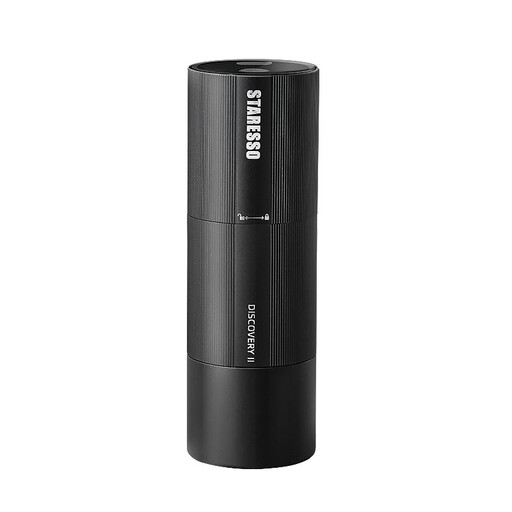
Why this product suits this profile: The rechargeable design is suitable for workplaces, travel and camping when there is no power socket nearby.
It does not rely on mains power. According to the product description, the grind size can be adjusted for espresso, pour-over and French press.
1000 mAh battery, USB-C charging, one-touch operation and metal housing with stainless-steel burrs.
An electric coffee grinder usually only needs to run for a short time per grinding cycle. The main factors affecting running costs are therefore grinding time, motor power and frequency of use. Electricity costs are generally low when the grinder is used for a few seconds or minutes each day. With a battery-powered coffee grinder, charging requirements also need to be taken into account.
Maintenance is more important than small differences in power consumption:
An adjustable coffee grinder should be operated according to the instructions before changing the grind setting. With some appliances, the setting may only be changed while the motor is running, to prevent beans from becoming trapped.
We have put together a complete, regularly updated list of products that fully meet these strict selection criteria and the safety regulations applicable in the EU.
For espresso, an adjustable conical burr grinder or flat burr grinder with fine intermediate settings is generally more suitable than a simple blade grinder. A sufficiently fine grinding range, a stable setting and compatibility with the portafilter are important. The exact setting also depends on the beans, dose and machine.
Its lifespan depends on the burrs, motor, daily use, quantity of beans and maintenance. It would not be reliable to give a blanket time estimate. Material specifications, the availability of spare parts, warranty terms and the permitted capacity can indicate the expected durability. Overfilling and cleaning with moisture can impair its operation.
Yes, provided it can be adjusted to a sufficiently coarse grind. A coffee grinder for French press should offer more than just fine espresso settings. With blade models, it is harder to reproduce the desired coarseness; a burr grinder with clearly defined coarse settings gives you more control.