
Lieferung heute & morgen

Qualitätsgarantie

Willkommens-Angebote freischalten: KOSTENLOSE Lieferung | Bis zu 80 % RABATT | Kostenlose 30-Tage-JoyPlus-Testphase
App herunterladen
The aroma of freshly ground coffee beans is, for many, the epitome of a perfect start to the day. Switching from pre-ground powder to your own electric coffee grinder is a crucial step towards maximising flavour. However, the market is crowded and filled with products whose marketing promises often fall short in practice. As your Joybuy Product Recommendation Officer, I'll help you identify the common pitfalls and make an informed decision.
Before we dive into the technical details, let's highlight the most common reasons for buyer's remorse. Knowing these will save you not only money but also frustration.
Many budget-friendly, entry-level models aren't true grinders; they use a spinning blade. This blade shatters the coffee beans uncontrollably rather than grinding them. The result is an inconsistent powder with a mix of coarse chunks and fine dust. During brewing, this leads to uneven extraction: the fine particles over-extract, making the coffee bitter, while the coarse ones under-extract, leaving a sour note. A true electric coffee bean grinder should always feature a burr mechanism.
Some manufacturers advertise a handful of grind settings, claiming they are suitable for everything from espresso to French press. In reality, the steps between these settings are often too coarse. Espresso preparation, in particular, demands micro-adjustments. Without this precision, pulling a balanced shot is impossible. A good grinder offers either a large number of fine steps or a stepless adjustment mechanism.
Coffee contains oils that become rancid over time, ruining the taste of every fresh bean. A coffee grinder that is difficult or impossible to disassemble quickly becomes a flavour trap. Ensure that at least the burr set can be easily removed for cleaning. Models with permanently fixed components pose a long-term problem for both hygiene and taste.
To make the right choice, focus on the following three core features. They are the foundation for a consistent and aromatic grind.
The burr set determines the quality of the ground coffee. There are two main types relevant for home use:
Both options are vastly superior to a blade grinder. The choice between a conical and a flat burr grinder is often a matter of personal preference and budget.
The ability to precisely adjust the grind size is essential. A coffee grinder with adjustable settings gives you the control you need for various brewing methods.
A sturdy construction of metal or high-quality plastic reduces vibrations and ensures precise alignment of the burrs. The burrs themselves should be made of hardened stainless steel or ceramic. These materials are durable, wear-resistant, and taste-neutral.
Here are some recommendations tailored to different user profiles that take the above criteria into account.
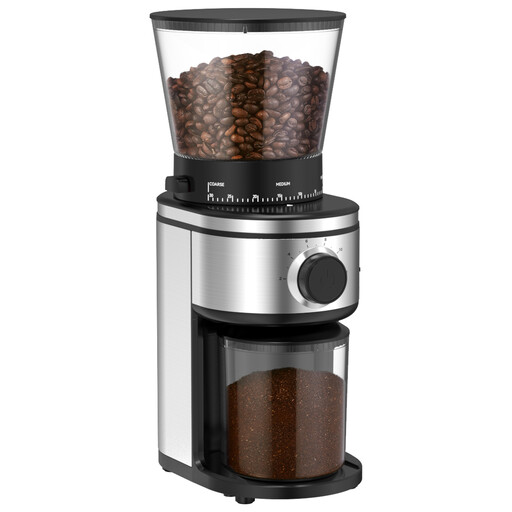
Why This Fits Their Persona: Ideal for anyone upgrading from a blade grinder or pre-ground coffee. It offers the essential features of a true coffee grinder—a conical burr set and a wide range of settings—at an accessible price point.
With its conical burr set, it bypasses the inconsistent blade grinder trap. The 30 grind settings offer far greater control than basic models, solving the "one-size-fits-all" problem.
Precise conical burr set to preserve aroma; 30 grind settings for flexibility from filter coffee to initial espresso attempts.
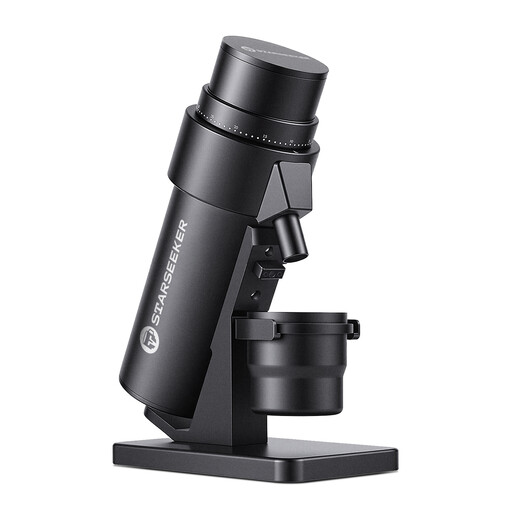
Why This Fits Their Persona: For coffee enthusiasts who strive for maximum control and consistency. This grinder is a great option for a pro-level home coffee grinder, suitable for both precise espresso and nuanced filter coffee.
The large 63mm burrs and precise adjustability are specifically designed to debunk the "universal grind setting" myth. It delivers the fine-tuned steps necessary for demanding brewing methods.
Large 63mm burrs for high consistency and low heat generation; designed for the demands of both espresso and pour-over.
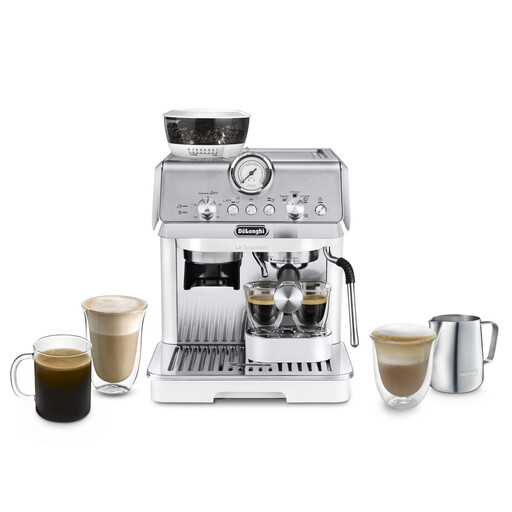
Why This Fits Their Persona: Perfect for users seeking a high-quality, single-unit espresso solution. This machine combines a portafilter espresso maker with an integrated grinder, simplifying the entire process from bean to cappuccino.
As an integrated system, the grinder and brew group are perfectly matched. The 8 grind settings are optimised for making espresso with this specific machine, which minimises the guesswork involved in dialling it in.
All-in-one solution with grinder, machine, and barista accessories; streamlined workflow for consistent espresso and milk-based drinks.
We have compiled a complete, up-to-date list of products that fully meet these strict selection criteria and safety standards.
A superficial cleaning to remove coffee grounds from the chute and container with a brush should ideally be done after each use. A deep clean, where the burr set (if removable) is taken out and cleared of coffee oils, is recommended every few weeks to once a month, depending on usage. This prevents rancid oils from affecting the taste of fresh beans.
As a rule of thumb:
Yes, a high-quality espresso coffee grinder typically has a wide enough adjustment range to also grind coarser for filter coffee. However, on some models, frequently switching between very fine and very coarse settings can be a bit cumbersome. If you regularly switch between brewing methods, a model with an easily adjustable grind setting is advantageous.