
Lieferung heute & morgen

Qualitätsgarantie

Willkommens-Angebote freischalten: KOSTENLOSE Lieferung | Bis zu 80 % RABATT | Kostenlose 30-Tage-JoyPlus-Testphase
App herunterladen
Freshly ground coffee beans don’t require complicated equipment. However, the electric coffee grinder you choose should suit your brewing method, household size and available space. Compact blade grinders, conical burr grinders and portable models all have their differences.
Many people make the wrong choice not because of the motor’s power, but because grind settings are unclear, the grinding chamber is difficult to clean or a safety feature is missing. This guide explains the key points to consider and shows which electric coffee grinder may suit different needs.
A higher wattage simply means the grinder has a more powerful motor. On its own, it says little about how evenly the coffee is ground. A basic blade coffee grinder may be enough for filter coffee or French press. If you want to switch between a fine espresso grind and a coarse French press grind, look for a grinder with adjustable settings.
A wide range of settings sounds appealing, but it’s only useful if they’re easy to adjust and the grinder works consistently. Some models let you control the grind by pressing the button for different lengths of time. This gives you flexibility, but takes a little practice and won’t automatically produce identical results every time.
A 75-gram grinding chamber is suitable for several cups, but takes up more space than a compact grinder designed for single servings. A larger capacity may be useful in an office or a household with several coffee drinkers. If you only make one cup, a smaller grinder that’s easier to store may be a better choice.
An electric coffee bean grinder with blades usually works in short bursts. The grinding time affects how fine the coffee becomes. Models such as the Bosch TSM6A014R and Aigostar CG-200 use stainless steel blades and are designed to be easy to operate.
A conical burr grinder crushes the beans between two grinding surfaces. Models with this design often offer several clearly defined grind settings. This is especially useful if you regularly switch between filter coffee, espresso and French press. However, suitability still depends on the specific settings available and the instructions for use.
A coffee grinder with adjustable grind settings should offer clearly marked steps or straightforward instructions for adjusting the grind. Espresso is usually ground more finely, while French press requires a coarser grind. The right setting also depends on the beans, brewing equipment and your personal taste.
It’s also useful to be able to measure out servings by cup or time. With basic models, you add the required amount by hand and operate the grinder with a button. Models with a timer or memory function can make things easier in an office or when grinding several times a day.
Check the maximum fill level and don’t exceed it. Figures such as 50, 60 or 75 grams refer to the capacity of the individual grinding chamber. A transparent lid makes it easier to keep an eye on the beans while they’re being ground.
On several models, a safety lock prevents the grinder from operating if the lid isn’t fitted correctly. This feature is included on the ADLER AD 4446wg and various Bosch models, for example. Unplug the grinder before cleaning it. Never immerse the motor housing in water. Clean the blades and grinding mechanism with a dry brush or cloth, following the manufacturer’s instructions.
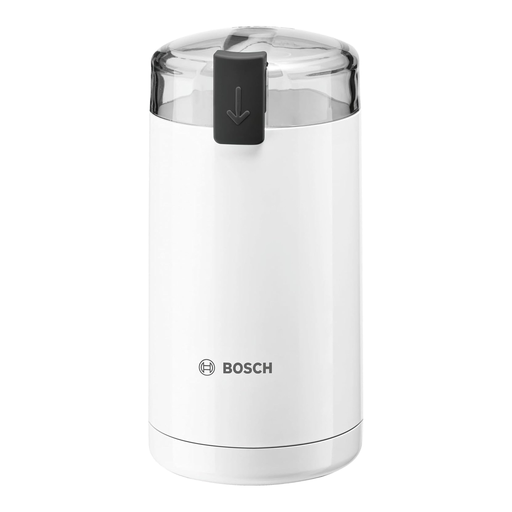
Why it suits this profile: According to the product details, this compact home coffee grinder has a 180-watt motor, a 75-gram capacity and push-button operation.
The maximum fill level and stainless steel blade are clearly specified. The built-in safety system prevents the grinder from starting if the lid isn’t fitted correctly.
75 g capacity, compact dimensions of 90 × 90 × 170 mm and a safety lock, according to the product details.
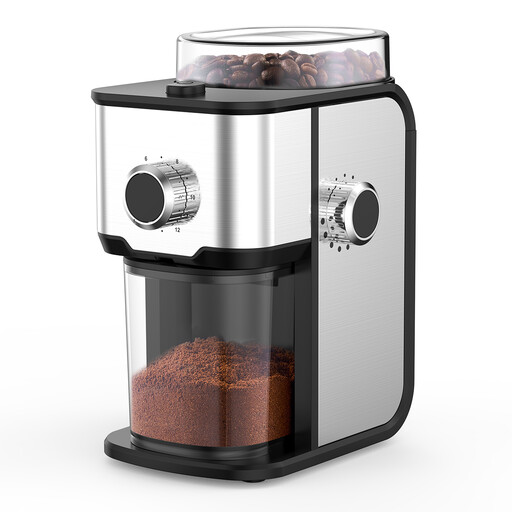
Why it suits this profile: According to the supplier, this electric coffee grinder with flat burrs offers 14 grind settings and can prepare enough coffee for two to twelve cups.
The grind settings are shown on a clear scale, rather than being controlled solely by pressing the button for different lengths of time.
Flat burrs, 14 settings and dosing for two to twelve cups, according to the product description.
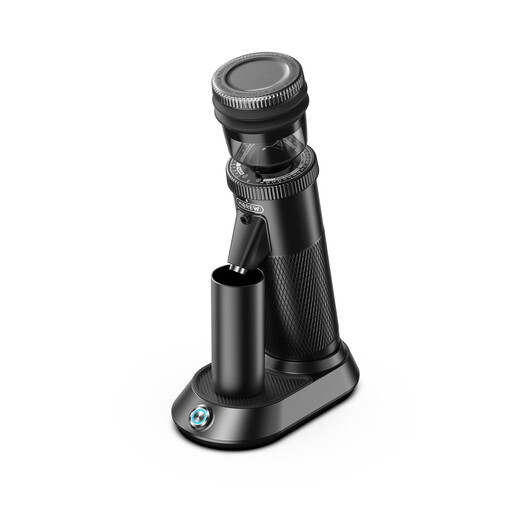
Why it suits this profile: According to the product name, this model features 48 mm conical burrs, 36 grind settings and two grinding speeds.
The choice isn’t based solely on motor power: the grind settings are clearly listed and the conical burr design is specified.
48 mm conical burrs, 36 grind settings and slow and fast grinding speeds, according to the product details.
We’ve put together a complete, regularly updated list of products that meet these strict selection criteria and fully comply with the safety regulations in force in the EU.
When grinding coffee beans, don’t exceed the maximum fill level. With blade grinders, short bursts are best. This helps prevent the coffee from becoming unnecessarily unevenly ground and gives the motor time to cool between bursts. On models with conical burrs, select your preferred grind using the adjustment ring.
Use a soft brush to remove coffee residue regularly. Oily beans can leave behind deposits that affect the flavour of later servings. Don’t use sharp objects on the blades or burrs. If the grinder makes unusual noises, emits smoke or has a damaged cable, stop using it.
A model with several grind settings is usually more practical than a basic blade grinder. Models with conical or flat burrs, offering 14, 30 or 36 settings, for example, let you adjust the grind more precisely. How well a grinder works for your needs depends on its specific grind range and the espresso machine you use.
Its lifespan depends on how often you use it, the type of beans you grind, how well you clean it and whether you follow the recommended operating intervals. Overfilling, moisture and running the grinder for long, uninterrupted periods can put strain on it. You should also follow the manufacturer’s care and warranty guidance.
Most compact household models run for just a few seconds or minutes per serving. The wattage shown on the rating plate indicates power consumption while the grinder is running, not its total daily energy use. With occasional use, consumption remains limited because the running time is so short.