
Lieferung heute & morgen

Qualitätsgarantie

Willkommens-Angebote freischalten: KOSTENLOSE Lieferung | Bis zu 80 % RABATT | Kostenlose 30-Tage-JoyPlus-Testphase
App herunterladen
An electric coffee grinder can make your daily coffee routine easier, as long as it suits your preferred brewing method. But buying decisions often go wrong not because of the motor’s power, but because of an unsuitable grinding mechanism, limited control over dosing or a design that takes up too much space.
This buying guide explains what households, offices, espresso drinkers and French press fans should look for. The product selection is based on the technical specifications provided for each model.
A motor rated at 150 or 200 watts tells you little on its own about how evenly it grinds coffee. With a blade grinder, the result also depends on grinding time, the amount of coffee and the technique used. Holding the button down for longer can produce a finer grind, but it won’t automatically give you a consistent particle size.
A compact blade grinder may be enough for filter coffee or occasional use. If you make espresso or pour-over coffee, it’s better to choose a grinder with flat or conical burrs and clearly defined settings.
An electric coffee grinder with 30 or 48 settings offers more ways to adjust the grind than a model where the grinding time is the only control. What matters, though, is whether you can repeat your preferred setting reliably and whether the grinder is designed for the grind range you need.
Small adjustments matter for espresso, while a French press usually needs a coarser grind. A scale is most useful when the grinder produces consistent results at each setting and you can easily return to your preferred one.
A bean hopper holding 200 or 240 g is handy for making several cups or for use in an office, but it usually takes up more worktop space. For a two-person household, 50 to 75 g per grind is often enough. It’s also best not to leave the hopper full of beans if you use a different variety each day.
Think about cleaning, too. Removable hoppers, an easily accessible grinding area and a grounds container that is less prone to static can all make day-to-day use easier.
An adjustable coffee grinder should cover the grind range you need. Espresso calls for a fine grind, while a French press needs a coarser one. Dosing by cup or using a timer can save time when you’re making coffee for several people.
For appliances rated at 220–240 volts, check the power supply details, make sure the lid closes securely and follow the cleaning instructions. Many models will only start when the lid is fitted correctly. Never immerse the motor housing in water. With blade and conical burr grinders, always unplug the appliance before cleaning and keep your hands out of the grinding area.
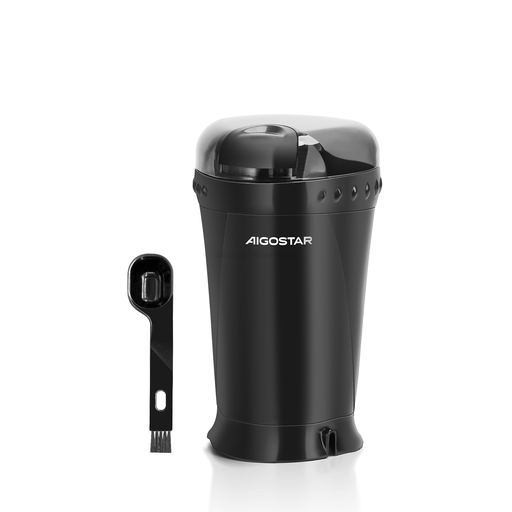
Why this product suits this profile: This compact grinder has a 200-watt motor, stainless steel blades and a 60 g capacity. Its one-button operation suits households looking for a simple way to grind coffee beans in small batches.
The transparent chamber lets you keep an eye on the amount of coffee and the grinding process. You adjust the grind by changing the grinding time, rather than relying on a fixed grind scale that the grinder doesn’t have.
60 g capacity, 200-watt motor, 220–240-volt operation and compact dimensions of 108 × 105 × 180 mm.
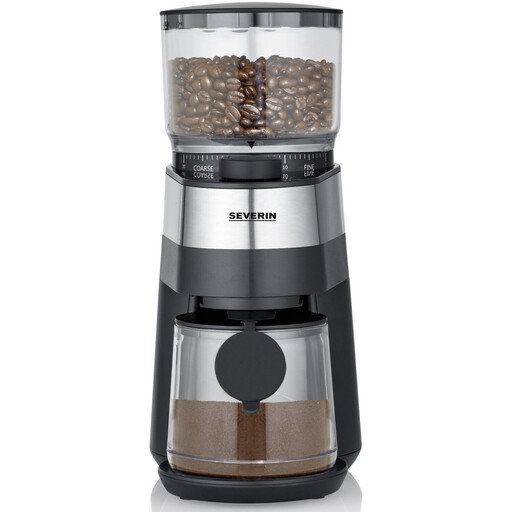
Why this product suits this profile: This model has stainless steel flat burrs, 30 grind settings and a dose selector for 2 to 12 cups. It’s a good fit if you like to switch between espresso and French press.
The 30-step adjustment gives you clearer control than a simple timer. The removable bean hopper and aroma-protecting grounds container also make it easier to use.
240 g bean hopper, 140 watts, 30 grind settings and a dose selector for 2 to 12 cups.
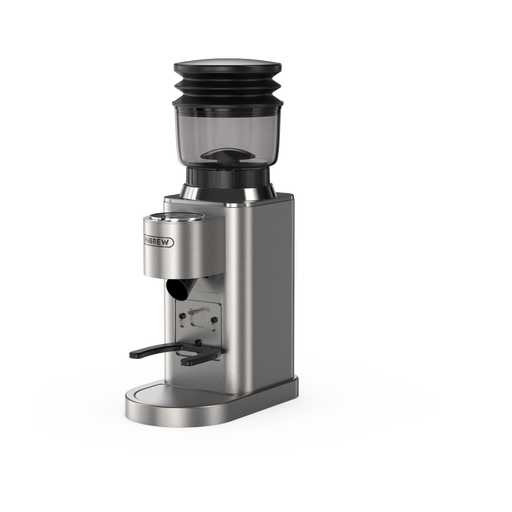
Why this product suits this profile: According to the product specifications, this grinder has conical stainless steel burrs, 48 settings and three modes for 51, 54 and 58 mm portafilters. It’s designed for households with several espresso set-ups.
The timer, which is accurate to 0.1 seconds according to the product details, makes it possible to repeat your dose consistently. The conical burrs are designed to cover several grind ranges.
48 grind settings, 150 watts, conical 420 stainless steel burrs and three portafilter modes.
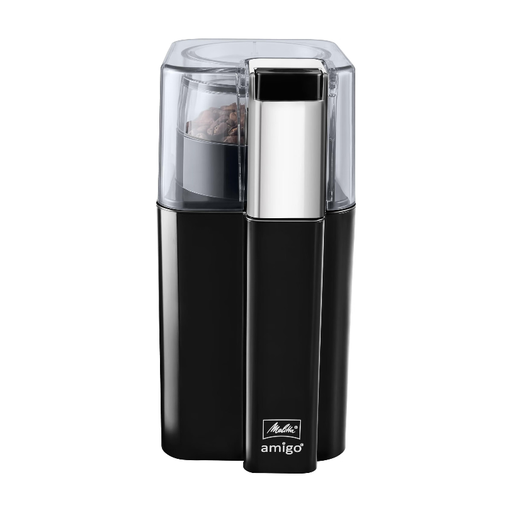
Why this product suits this profile: This compact electric coffee grinder can process up to 60 g of beans and makes enough for 2 to 8 cups. The transparent lid lets you see the beans as they grind.
Adjust the grind by changing the grinding time. This keeps the controls simple, while the limited capacity helps prevent you from keeping more beans in the grinder than you need.
60 g capacity, stainless steel blades, a safety feature that operates when the lid is closed and a compact design.
We’ve put together a complete, regularly updated list of products that meet these strict selection criteria and the safety regulations in force in the EU.
For consistent results, adjust the amount of beans to the number of cups you’re making and use blade grinders in short bursts. This makes the grind easier to control and puts less continuous strain on the motor. With flat and conical burr grinders, follow the manufacturer’s recommended capacity.
Regularly remove any grounds left in the hopper, outlet and grinding mechanism. Use a dry brush or soft cloth unless the instructions say otherwise. Keep water away from the motor housing. If the appliance makes unusual noises, starts to smoke or has a damaged cable, stop using it.
For espresso, it’s worth choosing a model with fine grind settings and dosing you can repeat reliably. Conical or flat burr grinders, such as the HiBREW G7 and Severin KM 3880, offer more defined settings than a basic blade grinder. The right result still depends on the combination of grinder, beans, portafilter and your personal settings.
Lifespan depends on the grinding mechanism, care, how often you use it and how much coffee you grind each day. Don’t run a grinder over its stated capacity on a regular basis. Regular cleaning, dry storage and allowing blade grinders to cool between uses can help you get the most out of your appliance.
Electricity use per grind is usually low because the grinder only runs for a short time. Ongoing costs are therefore more affected by the amount of coffee you use, how many cups you make each day and your electricity tariff than by the wattage alone. When comparing models, also look at the dosing features and capacity that suit you, so you’re less likely to leave coffee unused.