
Lieferung heute & morgen

Qualitätsgarantie

Willkommens-Angebote freischalten: KOSTENLOSE Lieferung | Bis zu 80 % RABATT | Kostenlose 30-Tage-JoyPlus-Testphase
App herunterladen
Freshly ground coffee beans can transform the way you prepare coffee at home. An electric coffee grinder saves time and effort, but it is not automatically suitable for every brewing method. Blade grinders, conical burr grinders and flat burr grinders differ considerably in terms of control, particle distribution and ease of use.
If you focus only on wattage, capacity or sweeping marketing claims, you can easily end up with a machine that does not suit your coffee. The following criteria will help you avoid common buying mistakes.
A power rating such as 150 or 200 watts primarily describes the motor’s power. On its own, it says little about how evenly a coffee bean grinder grinds. For filter coffee, pour-over or espresso, the burr or blade system, grind adjustment and control over the running time are much more important.
Even a powerful motor can produce a mixture of very fine and coarse particles when used with a basic blade grinder. This makes it harder to prepare coffee consistently.
With a blade grinder, the grind is usually controlled by how long you hold down the button. This is simple, but less precise than clearly defined notched settings. Therefore, check whether the manufacturer actually states the number of grind settings and whether they are sufficient for your chosen brewing method.
An electric coffee grinder with burrs generally offers a more predictable setting. However, even a grinder with numerous settings may have increments that are too coarse for espresso. Finer or stepless adjustment is more relevant here.
A 220 g hopper sounds convenient if several people regularly drink coffee. However, only a small amount is usually needed for a single cup. Large storage hoppers can also hold more beans than will be used within a short period.
A capacity that matches your daily consumption makes more sense. For one or two people, 20 to 60 g per grinding session is often enough; for an office or several pots of coffee, a larger model may be more practical.
A blade coffee grinder uses rotating stainless-steel blades. According to the product specifications, Bosch TSM6A014R, Bosch TSM6A011W, Bosch TSM6A017C, Severin KM 3879, Aigostar CG-200, Melitta Amigo and the BODUM BISTRO Matt 150W use a blade system. These machines are compact and easy to operate. The fineness is generally determined by the grinding time.
A conical burr grinder crushes the beans between two burrs. According to the manufacturers’ specifications, models such as the BODUM BISTRO with a 220 g hopper, CHEFFANO BG710, HiBREW G5, HiBREW G7, STARESSO D6E PLUS and Starseeker E55 Pro offer adjustable grind settings. This is particularly useful if you switch between espresso, filter coffee and French press.
As a general guide:
A grinder with 14 or 30 settings can cover several brewing methods, but the actual increments depend on the individual burr system. The claim ‘from espresso to French press’ should therefore be understood as a range of suitability, not a guarantee of professional espresso results.
Before buying, check the following:
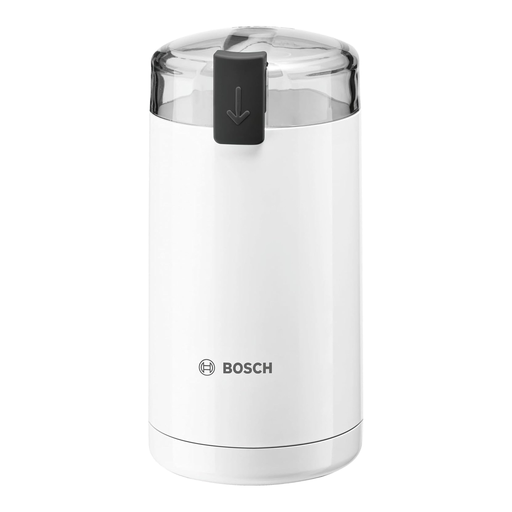
Why this product suits this profile: This compact model uses 180 W, holds up to 75 g of beans and is operated with a push button. It is ideal for users who want to grind coffee for several cups without any fuss.
The product specifications clearly state the capacity, blade technology and safety system. The grind is controlled by grinding time, so it is less precise than a notched adjustment system.
75 g capacity, 180 W motor, compact dimensions of 9 × 9 × 17 cm and lid safety lock according to the product description.
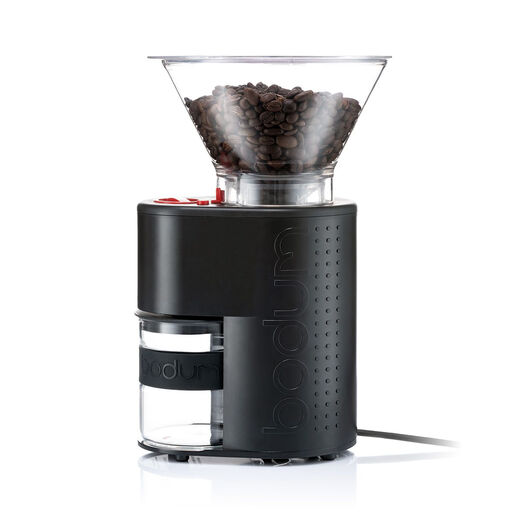
Why this product suits this profile: According to the specifications, this machine has a conical burr grinder, a timer, a 220 g bean hopper and a borosilicate glass grounds container.
The conical burr grinder and timer allow more controlled adjustment than simply grinding by feel. However, the large capacity may be excessive for individual portions.
220 g capacity, timer function and glass container with anti-static properties according to the product description.
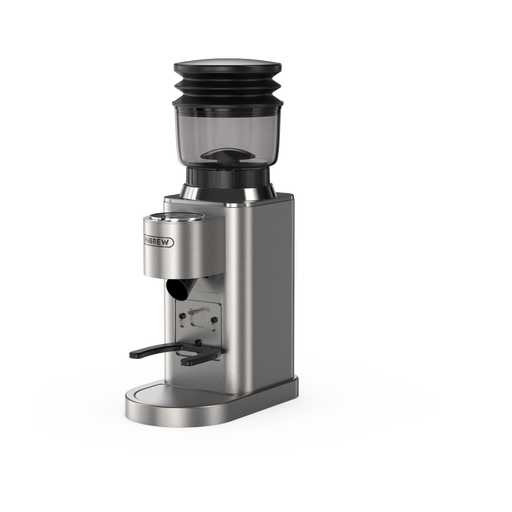
Why this product suits this profile: This model features a conical burr grinder, 48 grind settings, timed operation and modes for 51, 54 and 58 mm portafilters.
The number of grind settings and the timer control are clearly specified. Nevertheless, check before buying that your portafilter dimensions match one of the three supported modes.
48 grind settings, 0.1-second timer control according to the description and compatibility with three portafilter sizes.
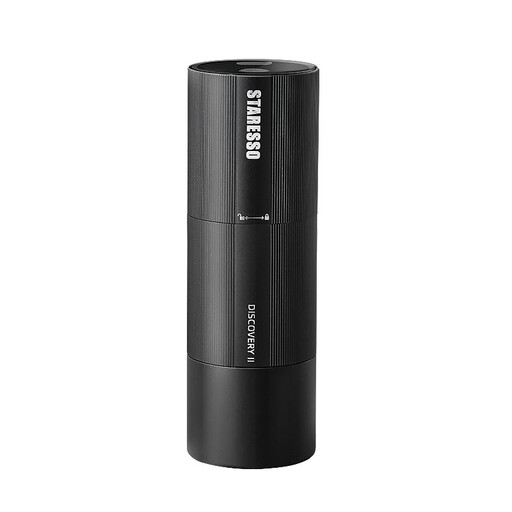
Why this product suits this profile: This battery-powered grinder features one-touch operation and charges via USB-C. It is specified for espresso, moka, pour-over and French press.
The power supply is clearly described as a 1000 mAh battery with USB-C charging. If you grind many portions every day, weigh up the smaller portable design against your intended usage.
Battery power, USB-C charging, metal housing and adjustable grind according to the product specifications.
We have put together a complete, regularly updated list of products that fully meet these strict selection criteria and the safety regulations applicable in the EU.
Coffee residue and oils can build up in the burrs or grounds container. Clean the machine regularly with a dry brush or a suitable cleaning brush. With a conical burr grinder, follow the manufacturer’s instructions when removing individual parts. Never allow liquid to enter the motor unit.
Ongoing costs mainly come from electricity, cleaning and, where applicable, replacement parts. With short grinding sessions, electricity consumption is generally less significant in everyday use than the lifespan of the burrs and the availability of replacement parts. If you grind several portions every day, you should also choose a design suitable for the intended duration and volume of use.
For filter coffee, a model with predictable grind adjustment is a sensible choice. A coffee bean grinder with conical burrs and several settings makes it easier to fine-tune the grind. Basic blade grinders can also be used, but they require greater control over the grinding time.
Its lifespan depends on the burr or blade system, build quality, amount of use, bean hardness and maintenance. Avoid overfilling, allow the motor to cool between grinding sessions on machines designed for this, and clean the burrs or blades according to the manufacturer’s instructions.
A manual coffee grinder does not require electricity and is suitable for travelling or small individual portions. An electric model saves time and effort when preparing several cups. The right choice therefore depends on the quantity you grind, portability, the level of precision you want and your available budget.