
Lieferung heute & morgen

Qualitätsgarantie

Willkommens-Angebote freischalten: KOSTENLOSE Lieferung | Bis zu 80 % RABATT | Kostenlose 30-Tage-JoyPlus-Testphase
App herunterladen
Freshly ground beans can make preparing coffee at home far more flexible. However, choosing the right electric coffee grinder depends on more than wattage or design. The key factors are the burr type, grind-size settings, capacity, cleaning requirements and your preferred brewing method.
Many disappointing purchases result from three common marketing traps:
A coffee grinder with burrs crushes beans between two grinding elements. In an electric coffee grinder with conical burrs, the beans are ground between two cone-shaped surfaces. Models such as the Ariete 3023 are stated to use stainless steel conical burrs and offer 14 grind settings.
Flat burr grinders work with two opposing grinding discs. They can also be designed for different brewing methods. The Ollygrin BG705, for example, uses flat burrs and has 14 settings.
Blade grinders cut or crush the beans in a container. Bosch models such as the TSM6A014R are listed as having stainless steel hammers or stainless steel blades. This design is suitable for simple applications, but it does not offer a conventional grind-size scale. The desired coarseness is mainly controlled by the running time.
Practical guide:
A coffee grinder with adjustable grind size is useful if you use several brewing methods. The number of settings is only a guide, however. It is more important that the setting is easy to access and can be clearly identified again after cleaning.
Fine adjustment can be helpful for espresso. According to the product description, the Starseeker E55 Pro offers stepless adjustment with a stated precision of up to 0.01 mm. The HiBREW G7 has 48 grind settings and can be adjusted for different portafilter sizes of 51, 54 and 58 mm.
The dosing system should also suit your household. The Ariete 3023 has a 200 g bean hopper and offers a choice of 2 to 12 cups. A compact grinder for preparing a single serving needs considerably less space and can process the beans in individual portions.
An electric coffee grinder with a rechargeable battery is useful in the office, when camping or while travelling if no socket is available. The STARESSO D6E PLUS uses a 1000-mAh battery and charges via USB-C. The stated charging time is around 2.5 hours. For continuous use by several people, a corded model is usually more straightforward.
With any coffee grinder, check the removable parts, access for the cleaning brush and the instructions regarding moisture. The burrs and motor areas of the devices mentioned here must not be cleaned with water or immersed in liquid. For blade models, you should also take care around the sharp blades and check that the lid lock is working correctly.
A suitable mains connection is also important in Germany. Several of the models in this selection are designed for 220–240 V. Before buying, check the instruction manual, contents, manufacturer’s information and guidance on safe use.
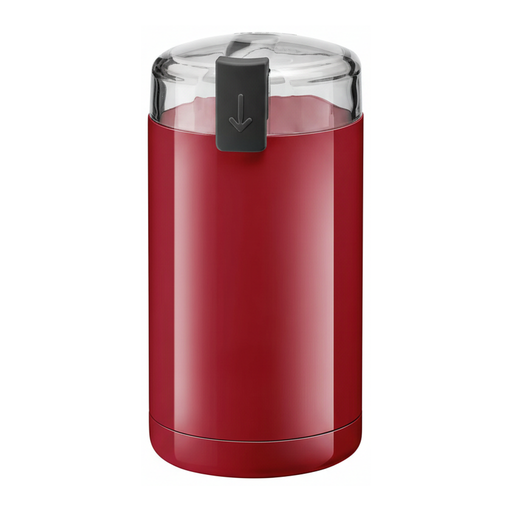
Why this product suits this profile: This compact coffee grinder for home use operates at 180 W, holds up to 75 g of beans and requires a standard 220–240-V socket.
The safety lock prevents operation when the lid is not fitted correctly. Its capacity is suitable for several portions without requiring a large bean hopper.
Compact dimensions of 9 × 9 × 17 cm, a 75 g filling capacity and operation via a safety switch.
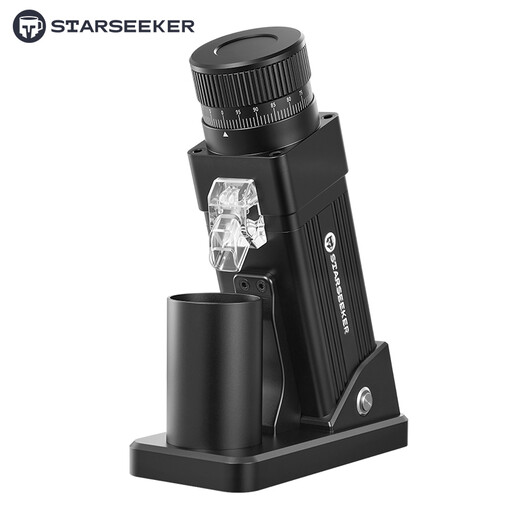
Why this product suits this profile: This electric coffee grinder with conical burrs is aimed at users who want precise control when preparing espresso and Pour Over coffee.
Stepless adjustment avoids large jumps between grind settings. The removable grounds outlet makes it easier to access for cleaning.
55-mm titanium-alloy conical burrs, a metal housing and stepless adjustment according to the product description.
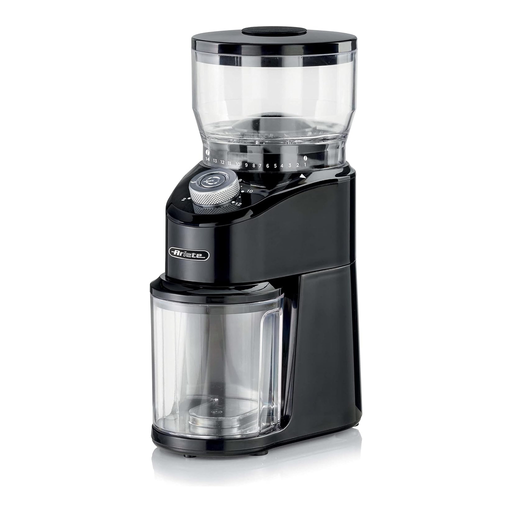
Why this product suits this profile: The 200 g hopper and 2 to 12-cup selection suit households where several portions are ground regularly.
The 2 to 12-cup dosing selector helps match the quantity to your needs, rather than grinding by guesswork each time.
14 grind settings, a 200 g bean hopper, removable grinding elements and a cleaning brush.
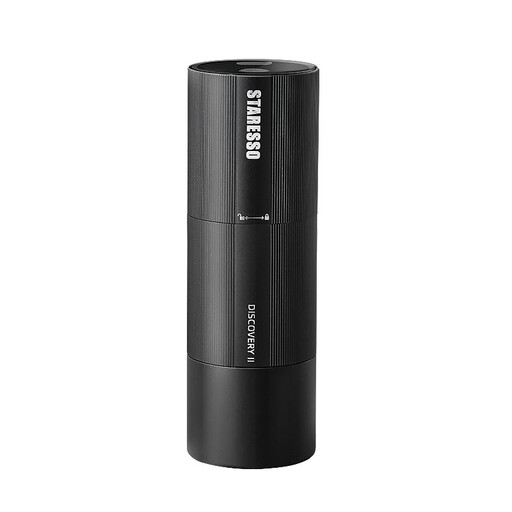
Why this product suits this profile: This portable coffee grinder works without a cable and, according to the product information, is suitable for use at home, in the office, while travelling and when camping.
The battery removes the need for a socket. The metal housing and removable parts are designed with mobile use in mind.
1000-mAh battery, USB-C charging, one-button operation and stainless steel burrs with adjustable coarseness.
We have put together a complete, regularly updated list of products that fully meet these strict selection criteria and the safety regulations applicable in the EU.
For espresso, a fine and highly repeatable setting is important. Models with conical burrs and numerous or stepless settings offer more adjustment options than appliances with simple blades. The grind size must also suit the espresso machine, basket and beans being used.
There is no universally applicable fixed lifespan. It depends on the motor, burrs, frequency of use, bean hardness and cleaning routine. The grinder should only be used for dry coffee beans, should not be overfilled and should be cleaned regularly with a dry brush. Always unplug the appliance or switch it off before carrying out any maintenance.
Individual grinding cycles usually last only a short time. Actual consumption depends on the motor power and running time. With a battery-powered grinder, energy use is reflected in the charging cycles, while corded appliances such as Bosch, Ariete and HiBREW run directly from the 220–240-V mains. For ongoing costs, daily usage time is therefore the main factor.