
Lieferung heute & morgen

Qualitätsgarantie

Willkommens-Angebote freischalten: KOSTENLOSE Lieferung | Bis zu 80 % RABATT | Kostenlose 30-Tage-JoyPlus-Testphase
App herunterladen
Freshly ground beans can make preparing coffee at home, in the office or on the go more flexible. An electric coffee grinder saves you the effort of grinding by hand, but it is not automatically suitable for every brewing method. Before buying, you should therefore check how evenly the appliance grinds, how much it can process and whether its operation suits your daily routine.
High motor power alone says little about the quality of the ground coffee. What matters includes the grinding method, the construction of the grinder and the ability to adjust the grind size. An appliance with stainless-steel blades can chop beans quickly, but often produces particles of varying sizes. This may be sufficient for a simple cup of coffee, but espresso or pour-over generally requires a more even distribution.
Anyone who switches between espresso, filter coffee and French Press needs a coffee grinder with adjustable grind settings. An electric coffee bean grinder with just one fixed setting can hardly be adapted to different methods. Descriptions such as “fine to coarse” should ideally be supplemented with a specific number of settings or stepless adjustment.
A large bean hopper is not automatically practical. A smaller hopper may be enough for individual portions, while a higher capacity saves time in the office or when preparing several cups. Easily accessible grinding chambers, removable containers and cleaning with a brush or dry cloth are also important. Otherwise, coffee grounds left behind may affect the flavour of later portions.
A traditional blade grinder uses rotating blades. The desired fineness is usually controlled by adjusting the grinding time. Bosch TSM6A014R and TSM6A011W are examples of compact appliances with stainless-steel blades or impact blades and a capacity of 75 g. They are suitable for users who want to grind coffee beans without complications and do not need an extensive grind-size scale.
A coffee grinder with conical burrs, on the other hand, works with two interlocking grinding surfaces. With suitable models, the distance between them can be changed, allowing the grind size to be adjusted more precisely. Flat-burr grinders, also known as flat grinders, follow a similar principle using parallel grinding discs. According to the product description, the Ollygrin BG705 has flat burrs and 14 grind settings.
The right setting depends on the brewing method:
An espresso grinder should offer precise adjustment. For users who prepare coffee using several methods, 14, 30, 36 or 48 settings, or stepless adjustment, are worth considering. However, the numbers used by different brands cannot be compared directly. What matters is whether the available settings suit your own brewing methods.
For a single preparation, 20 to 30 g of beans is often enough. An appliance with a capacity of 50 to 75 g is suitable for several portions, while a 220 g hopper is designed more for larger quantities. You should also check:
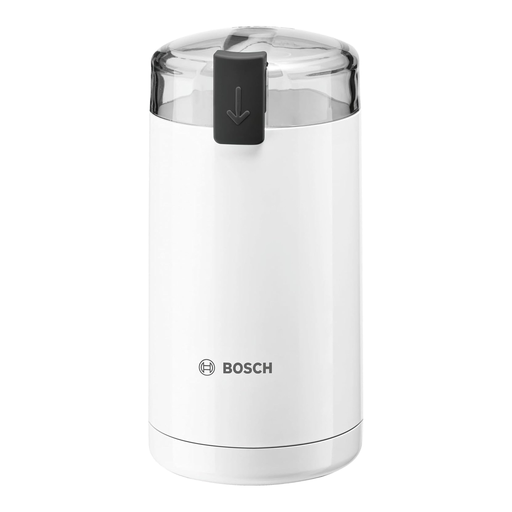
Why this product suits this profile: The compact appliance operates at 180 W, processes up to 75 g of beans according to the product details and is operated using a push button. It is designed for simple preparations at home or in the office.
The capacity and appliance dimensions are clearly specified. At the same time, it is clear that there is no extensive grind-size scale.
75 g capacity, 180 W motor, safety system and compact dimensions of 90 × 90 × 170 mm.
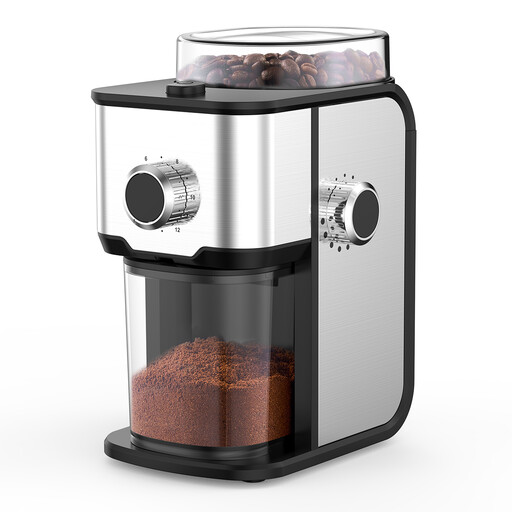
Why this product suits this profile: The flat burrs and 14 specified grind settings offer more flexibility for espresso, filter coffee and French Press than a basic blade grinder.
The grind size is not controlled solely by grinding time, but by 14 specified settings. The stated range of 2 to 12 cups makes planning quantities easier.
Flat burrs, 14 grind settings, compact design and capacity for 2 to 12 cups.
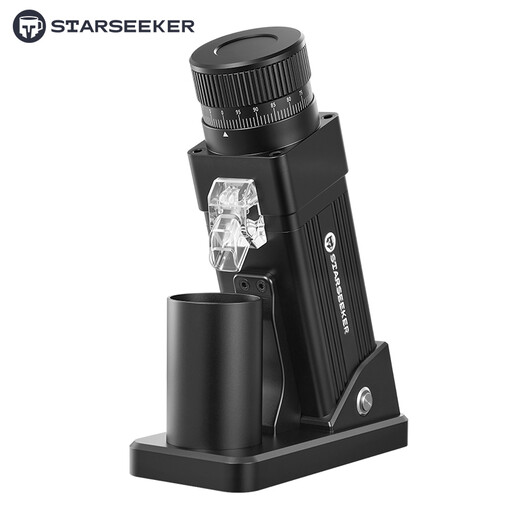
Why this product suits this profile: This model is aimed at users who regularly prepare espresso and pour-over coffee and want to fine-tune the grind size.
The adjustment is described as stepless. This means the grind size can be adapted more precisely than with just a few coarse settings.
55 mm conical burrs, stepless fine adjustment, metal housing and removable ground-coffee outlet.
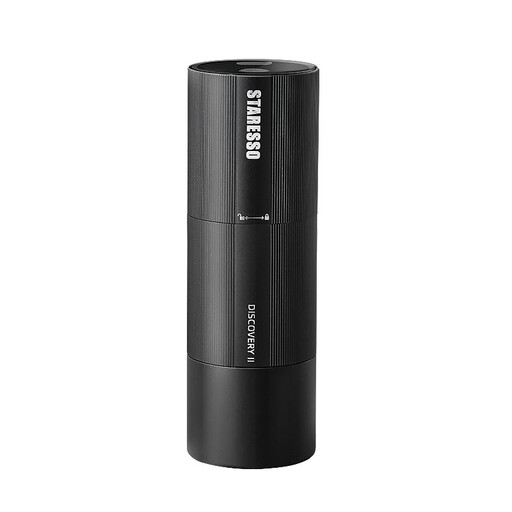
Why this product suits this profile: According to the product description, this rechargeable coffee grinder has a 1000-mAh battery, USB-C charging and a metal housing. It is designed for use at home, in the office, while travelling and when camping.
The power supply is clearly specified. Before buying, you should still compare the charging time, available sockets and the portion size you require.
Stainless-steel conical burrs, one-touch operation, USB-C charging and suitability for espresso, pour-over and French Press.
We have put together a complete, regularly updated list of products that fully meet these strict selection criteria and the safety regulations applicable in the EU.
When using an electric coffee bean grinder, you should add the beans in portions wherever possible. This leaves fewer grounds in the hopper. Only grind dry coffee beans and do not use the appliance for other ingredients unless the manufacturer expressly permits this.
Before cleaning:
Running electricity costs depend on the power rating, grinding time and frequency of use. As a portion usually takes only a few seconds or short intervals to grind, the energy used per grinding cycle is generally lower than the purchase cost. With rechargeable models, charging cycles and the battery’s long-term capacity are additional factors to consider.
For French Press, you need a coarse grind. A coffee grinder with conical or flat burrs and several settings usually gives you more control than a basic blade grinder. The key is to ensure that a coarse setting is explicitly available.
Its lifespan depends on the burrs, motor, frequency of use, overheating and cleaning. Observe the maximum filling quantity and allow the appliance to cool down during longer grinding sessions if this is specified in the instructions. If a fault occurs, do not open the appliance yourself unless the manufacturer provides a specific maintenance procedure for this.
Yes, if you regularly prepare several portions or different types of coffee. For a single cup, a compact model with a small capacity is sufficient. In the office, a larger bean hopper, easy cleaning and a stable base are more important. For travelling, a rechargeable coffee grinder may be more practical than a mains-powered appliance.