
Lieferung heute & morgen

Qualitätsgarantie

Willkommens-Angebote freischalten: KOSTENLOSE Lieferung | Bis zu 80 % RABATT | Kostenlose 30-Tage-JoyPlus-Testphase
App herunterladen
Freshly ground coffee beans can make everyday preparation more flexible. However, not every electric coffee grinder is suitable for every brewing method. If you focus only on wattage, casing or as many marketing claims as possible, you can easily overlook crucial differences.
Three common purchasing pitfalls occur particularly often:
In an electric coffee bean grinder with conical burrs or another burr system, the beans are crushed between two grinding surfaces. The gap between them determines the grind size. This generally makes it easier to adjust the setting more precisely to suit the preparation method.
Blade grinders, on the other hand, use rotating blades. The fineness is usually controlled by running time and short pulses. This may be sufficient for classic filter coffee or occasional use, but it offers less repeatable settings. Therefore, look for clear details such as:
An adjustable grind size is important if you switch between espresso, filter coffee, French press or pour-over. Fine settings are generally suitable for espresso, while coarser settings are intended for filter methods and cafetière brewing.
However, the number of settings is only a guide. 48 settings do not automatically mean that every setting will be suitable for your espresso machine. Also check:
For a household of one or two people, 50 to 75 g of beans per cycle is often enough. Offices or larger households may benefit from a larger hopper. Figures such as 150 or 200 watts describe electrical power, not necessarily the consistency of the grind.
You should also check the safety interlock, mains voltage and cleaning instructions for every appliance. In Germany, 220 to 240 V is standard for many household appliances. The lid should remain securely locked during operation. Motorised appliances with blades must only be cleaned after being disconnected from the mains; the motor housing must never be submerged in water.
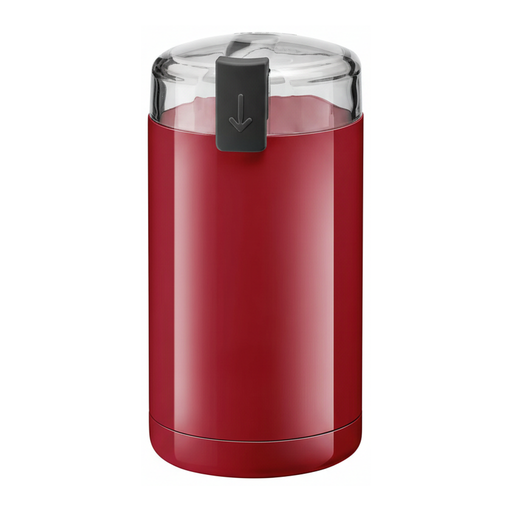
Why this product suits this profile: This compact pulse grinder is suitable for households that occasionally want to grind up to 75 g of coffee beans and prefer straightforward operation.
The specifications identify the grinding principle as stainless-steel blades or blade grinding. This makes it clear that expectations of a stepless espresso grinder should be limited.
75 g capacity, 180 W power and a lid safety system for operation.
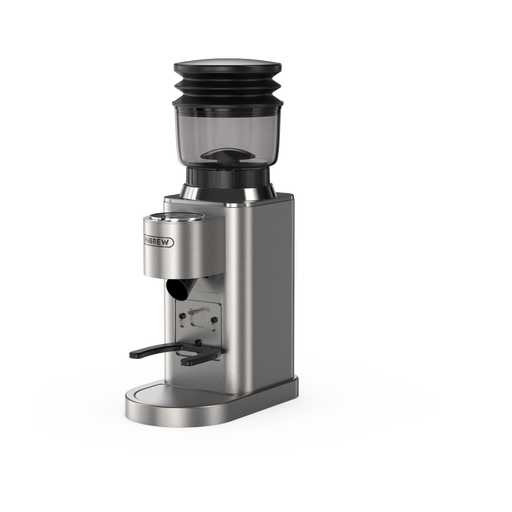
Why this product suits this profile: This electric coffee grinder is designed for users who switch between espresso and different filter methods and want to record their settings consistently.
The conical burrs and stated 48 grind settings clearly distinguish this model from a simple blade grinder.
48 grind settings, 0.1-second timer control and three modes for 51, 54 and 58 mm portafilters according to the product specifications.
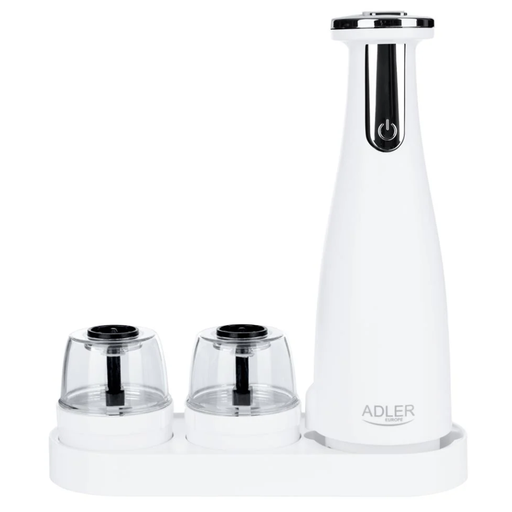
Why this product suits this profile: For pepper, salt and dry spices, a dedicated electric spice grinder makes more sense than using a coffee grinder for several types of food.
Its intended use for dry spices is clearly stated. Coffee, grains and moist ingredients should not be put in this appliance.
150 ml container, adjustable grind fineness, USB-C charging and automatic shut-off after three minutes.
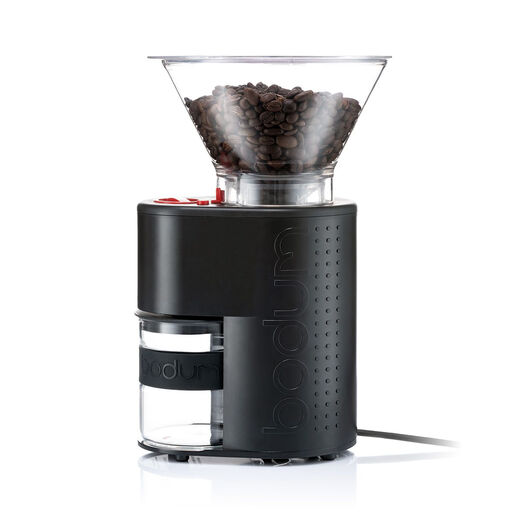
Why this product suits this profile: The 220 g capacity is designed for several portions and can be practical for families, meetings or office kitchens.
The product data explicitly lists conical burrs, a timer and an anti-static glass container instead of merely promoting the motor power.
220 g bean hopper, 160 W power, adjustable timer and grind range from fine to coarse.
We have put together a complete, regularly updated list of products that fully meet these strict selection criteria and the safety regulations applicable in the EU.
For consistent results, always use a similar quantity of beans and adjust the grind size gradually. With blade grinders, short pulses help prevent the grounds from being processed for unnecessarily long. With a conical burr grinder, choose the setting according to your preferred brewing method.
Clean the bean hopper and discharge area regularly with a dry brush. The motor housing must not be immersed in water. Only process ingredients specified by the manufacturer in a coffee grinder. A food chopper such as the Bear QSJ-D03W5, for example, is designed for meat and vegetables but, according to the product specifications, is expressly not suitable for coffee beans, grains or dry spices.
For espresso, an appliance with conical burrs or another adjustable burr system is usually more suitable than a blade grinder. Also check the available fine settings, dosing options and compatibility with your portafilter.
Its lifespan depends on how often it is used, cleaning, the quantity of beans and the type of burr or blade system. Follow the operating and cooling intervals in the instruction manual, do not overfill the hopper and do not use unsuitable ingredients.
In addition to electricity consumption, replacement parts such as burrs, blades, containers or batteries may be relevant. Appliances with replaceable grinding mechanisms or readily available spare parts can be easier to maintain over the long term with regular use. Check these details directly with the relevant product before buying.