
Lieferung heute & morgen

Qualitätsgarantie

Willkommens-Angebote freischalten: KOSTENLOSE Lieferung | Bis zu 80 % RABATT | Kostenlose 30-Tage-JoyPlus-Testphase
App herunterladen
Freshly ground beans can make preparing coffee at home or in the office more flexible. An electric coffee grinder is particularly well suited to people who regularly prepare several portions or would rather not adjust the grind setting entirely by hand. However, the technical differences between models can be significant.
If you only look at wattage, design or a large bean capacity, you may overlook important details. Three common purchasing misconceptions are particularly widespread:
In a coffee grinder with a burr mechanism, the beans are crushed between two grinding discs or by a conical burr. Depending on the design, the grind size can usually be adjusted more precisely. Conical and flat burr grinders are therefore appealing to people who regularly switch between espresso, filter coffee, pour-over and French press.
A blade chops the beans inside a container. The fineness is often controlled by how long you press the button. This design is compact and generally straightforward, but it requires more attention when dosing and stopping the grinding process. Such a system may be sufficient for occasional coffee preparation at home or in the office.
Before buying, check the specific details:
A coffee grinder with adjustable grind size gives you more control than a model that only operates with timed or manual pulses. However, it is not just the number of settings that matters, but also the intended range of use.
A higher number of grind settings is therefore only relevant if you will actually use those adjustments. For everyday use, a clear scale with straightforward controls may be more practical than a fine adjustment system that is difficult to understand.
The bean capacity should match the portions you prepare. Models holding around 50 to 75 g are suitable for individual cups or a smaller pot. Larger containers make sense when several people drink coffee one after another. With a compact coffee grinder for a small kitchen or office, available space, cable length and storage are also important.
Wattage primarily describes the motor’s electrical power consumption. It does not directly indicate noise levels, particle distribution or durability. When it comes to running costs, the individual grinding session is usually less significant than the operating time, number of grinding cycles and standby consumption. Battery-powered models also require charging time and should be used according to the manufacturer’s instructions.
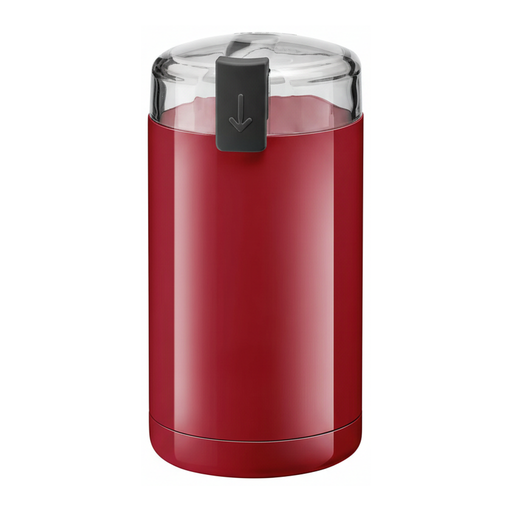
Why this product suits this profile: This compact coffee grinder operates at the touch of a button and has a capacity of up to 75 g for several portions.
The product details clearly specify a blade system with one grinding option. This makes its limitations compared with a grinder with adjustable grind size transparent.
180 W motor, 75 g capacity and an integrated safety system when the lid is correctly fitted.
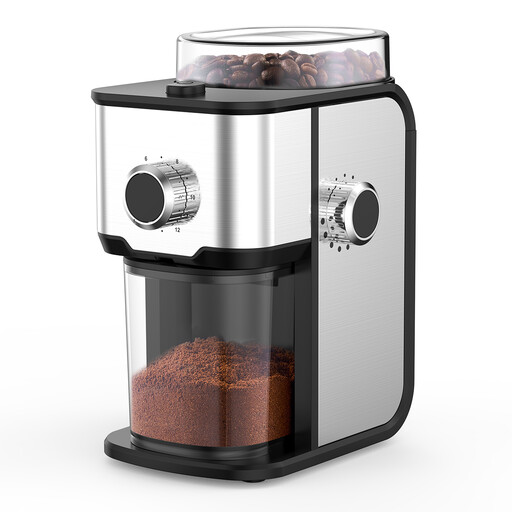
Why this product suits this profile: The flat burr mechanism and 14 grind settings appeal to people who switch between several brewing methods.
The grind selection is explicitly stated as 14 settings. This makes the level of adjustability easier to understand than with a purely time-controlled system.
Flat burr mechanism, 14 settings and dosing for 2 to 12 cups according to the product description.
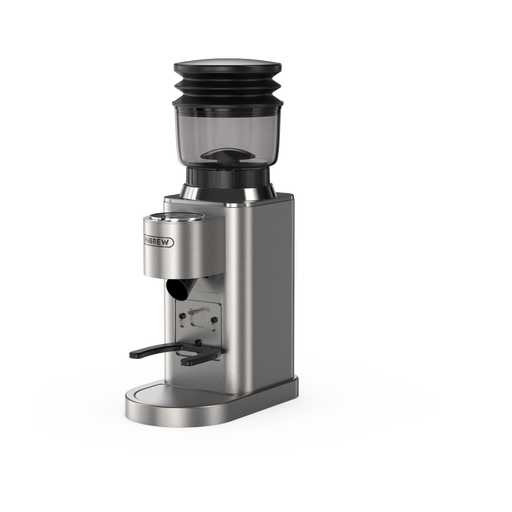
Why this product suits this profile: Digital controls, 48 grind settings and three portafilter modes are designed for users with different espresso and filter coffee setups.
The product details specify exact grind settings and compatible portafilter sizes rather than making a blanket claim that it is suitable for every type of coffee.
48 settings, timed dosing and a 420 stainless steel conical burr mechanism according to the product details.
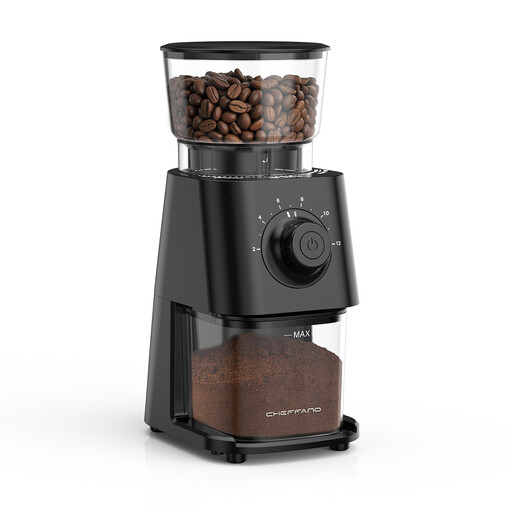
Why this product suits this profile: The conical design, 30 grind settings and dosing for up to 12 cups suit households with different coffee preferences.
The choice of 30 settings makes its suitability for fine and coarse preparations verifiable against a specific specification.
Conical stainless steel burr mechanism, 30 grind settings and pulse function according to the manufacturer’s specifications.
We have put together a complete, regularly updated list of products that fully meet these strict selection criteria and the safety regulations applicable in the EU.
To ensure that an electric coffee grinder continues to work reliably for longer, follow the operating instructions for the model in question. The following points are particularly important:
Noise levels are also relevant in an office. As decibel values are not stated consistently in the available product details, check the relevant product page and operating instructions rather than relying on general advertising claims.
For espresso, a model with a fine grind setting and as many clearly defined increments as possible is a sensible choice. A conical or flat burr mechanism may be more suitable than a simple blade system. What matters is whether the grinder actually reaches the fine range required and whether its dosing suits your espresso machine.
There is no single standard service life. It depends on the grinding mechanism, frequency of use, quantity of beans, cleaning and whether the recommended operating breaks are observed. Overfilling, moisture and continuous grinding without allowing the appliance to cool down can put it under greater strain.
The cost per grinding cycle depends on power consumption and operating time. A model with a higher wattage uses more electricity over the same period; at the same time, the actual operating time can vary depending on the quantity of beans and the desired grind size. For a realistic comparison, consider wattage, operating time and frequency of use together.