
Lieferung heute & morgen

Qualitätsgarantie

Willkommens-Angebote freischalten: KOSTENLOSE Lieferung | Bis zu 80 % RABATT | Kostenlose 30-Tage-JoyPlus-Testphase
App herunterladen
Freshly ground coffee beans can make everyday preparation more flexible. However, an electric coffee grinder is not automatically suitable for every brewing method. There are clear differences between a compact coffee bean grinder with blade cutters, an electric coffee grinder with a conical burr grinder and a manual coffee grinder when it comes to grind size, operation and maintenance.
Manufacturers often advertise 30, 36 or more settings. What matters, however, is whether the grind can actually be adjusted finely enough for espresso or coarsely enough for French press. With stepless systems, it is also important to consider whether the setting can be reproduced reliably and adjusted easily in everyday use.
A coffee grinder with a stainless-steel burr grinder may feature conical or flat burrs. Compact appliances with blade cutters, on the other hand, chop the beans in short bursts. This can result in greater variation in particle size. That may be sufficient for occasional filter coffee, but a more even distribution is generally more practical for espresso or pour-over coffee.
75 grams is enough for several cups, while 220 or 240 grams offers more flexibility for households, offices or larger coffee pots. However, a large bean hopper is not always useful if you only grind one portion each day. Small containers or a single-dose workflow are better suited to preparing fresh individual portions.
For different brewing methods, a coffee grinder with grind-size adjustment is particularly important. Depending on the model, an electric coffee grinder with conical burrs may offer fine settings for espresso and coarser settings for filter coffee. Check the following:
For espresso, a fine and precisely controllable setting is important. A coffee grinder for French press, on the other hand, needs to offer a much coarser range. If you use several brewing methods, compare not only the number of settings but also the actual stated application range.
A container holding 50 to 75 grams is suitable for smaller households or individual brewing sessions. Models with a capacity of 220 to 240 grams are more suitable for several people, offices or larger coffee pots. Adjustable time or quantity dosing can make operation easier, but it does not replace individual adjustment for the beans, brewing method and desired quantity.
Coffee grounds collect around the outlet, container and burr grinder. Removable parts and an included brush make regular care easier. Internal burr grinders should be cleaned dry in accordance with the manufacturer’s instructions; the motor unit must not be immersed in water.
For mains-powered appliances intended for Germany, you should pay attention to 220–240 Volt compatibility and the information in the instruction manual. On several compact models, a lid or safety switch prevents operation if the container is not closed correctly. Unplug the appliance before cleaning.
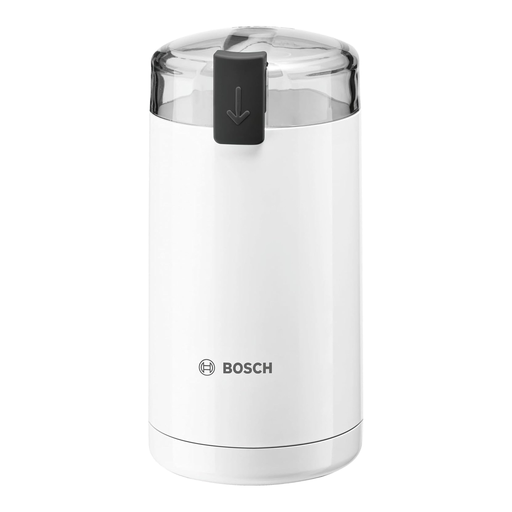
Why this product suits this profile: This compact appliance is designed for everyday household use and takes up very little space. The 75-g container holds enough for several cups per grinding cycle.
The specifications clearly identify the blade-cutter system. If you are not expecting stepless espresso adjustment, you can choose this appliance specifically for simpler applications.
180 W power, 75 g capacity and a safety switch that activates when the lid is closed.
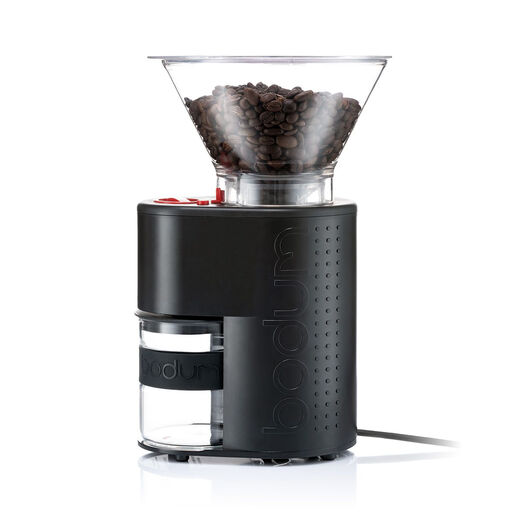
Why this product suits this profile: The conical burr grinder, timer and 220-g bean hopper appeal to users who want to combine several brewing methods with larger quantities.
The burr type, timer and container volume are clearly specified. This reduces the risk of choosing a small portion grinder for a multi-person household.
Conical burr grinder, 160 W, 220 g capacity and anti-static borosilicate glass grounds container.
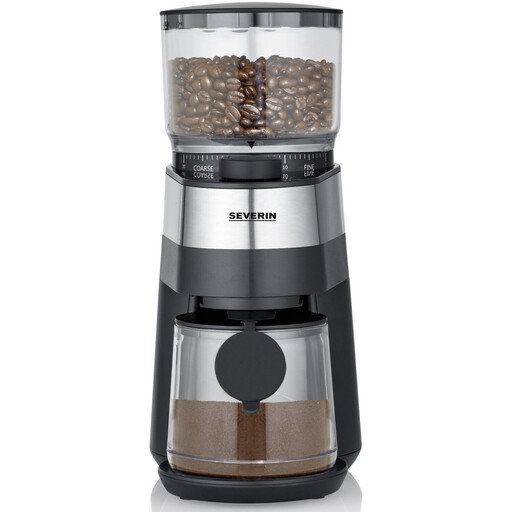
Why this product suits this profile: For households or offices using different types of coffee, this model offers a 240-g bean hopper, 30 grind settings and quantity dosing for 2 to 12 cups.
The 30-step adjustment and suitability for everything from espresso to French press are clearly stated. The removable container supports cleaning between different beans.
140 W, stainless-steel flat burr grinder, 240 g capacity and grounds container with aroma seal.
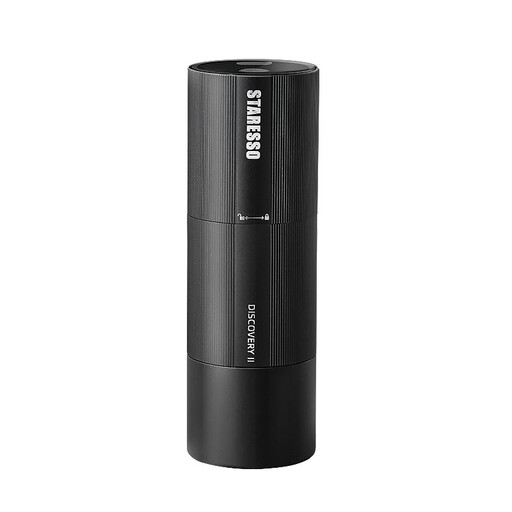
Why this product suits this profile: The battery-powered design and metal housing are ideal for the office, travelling and camping when a permanent power socket is not available.
The power supply is specified as a rechargeable 1000-mAh battery with a USB-C connection. This clearly distinguishes mobile use from mains-powered operation.
Electric stainless-steel conical burr grinder, grind-size adjustment and USB-C charging.
We have put together a complete, regularly updated list of products that fully meet these strict selection criteria and the safety regulations applicable in the EU.
A manual coffee grinder does not require electricity, making it an appealing choice for travelling, camping or small individual portions. It is generally slower and requires some effort, but offers a compact alternative. An electric coffee grinder for home use makes sense if you regularly grind several portions or want the convenience of a timer and quantity dosing.
For espresso, the grind should be fine and precisely adjustable. Pour-over coffee requires a medium, controllable range. A coffee grinder for French press must be able to produce coarse particles. Before buying, you should therefore decide on your preferred brewing method first, then compare capacity, design and additional features.
For espresso, consider models with conical or flat burrs and fine grind-size adjustment. A basic blade grinder often does not offer comparable adjustability. The outlet should also be easy to clean, as fine grounds can stick more readily to surfaces.
Its service life depends on how often it is used, as well as the motor, burr grinder, quantity of beans and cleaning routine. Avoid overfilling and continuous operation, observe the cooling breaks specified in the instructions, and clean the burr grinder and container regularly using a dry method. If you notice unusual noises or damaged parts, stop using the appliance.
In addition to electricity consumption, you may need to factor in replacement parts, cleaning accessories and, where applicable, a replacement burr grinder. With battery-powered appliances, charging frequency also plays a part. When calculating the total cost, it is therefore important to consider not only wattage and purchase price, but also spare-part availability, maintenance requirements and expected daily use.